
Picking the right telehandler is tough. A bad choice hurts your efficiency and your budget. This guide makes it simple to find the perfect model for your specific needs.
Telehandler models are mainly categorized by their lift capacity and boom height. Mini models (2.5-3.5 tons) are for tight spaces, medium models (4 tons) are great all-rounders, and heavy-duty models (5-8 tons) handle the biggest jobs. The best choice balances your specific needs with budget.
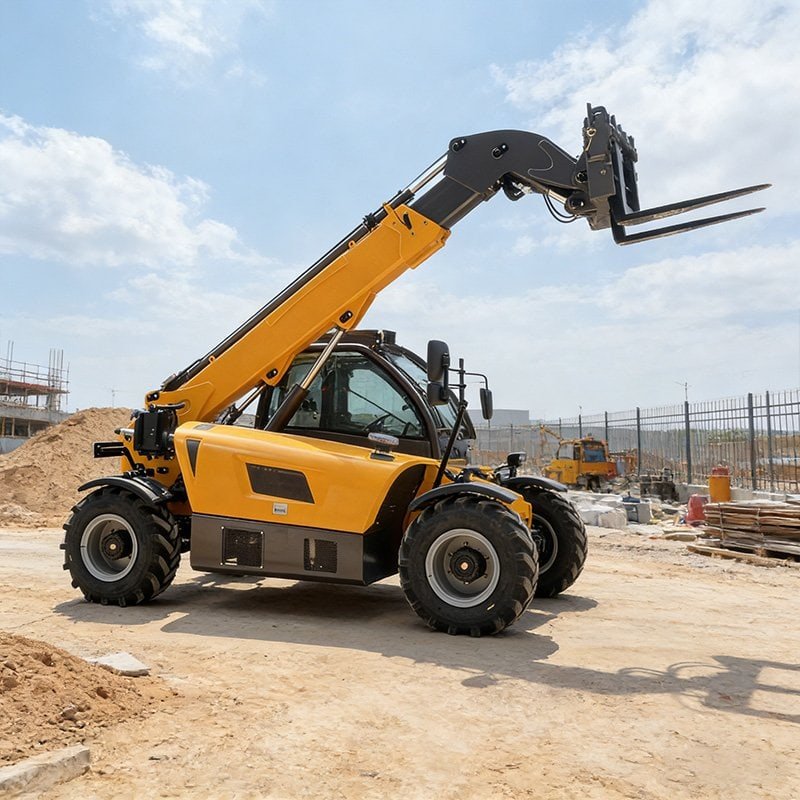
I’ve seen it many times over my 15 years in this business. A customer buys a telehandler that’s too small and struggles with every lift, or one that’s too big and just wastes fuel on simple jobs. It’s a common and costly problem. But understanding the key differences between models is the first step to avoiding this mistake. Before we get into specific tonnages and heights, let’s look at what makes these machines so special in the first place.
1,What Makes Telehandlers So Unique Compared to Other Machines?
A normal forklift just can’t reach high or far enough for many jobs. This slows down your work and can force you to use multiple machines. A telehandler’s telescopic boom gives you incredible reach and versatility.
A telehandler is unique because of its telescopic boom, which extends forward and upward. This gives it the combined abilities of a forklift and a crane. It can lift loads to greater heights and distances, and work on rough terrain where traditional forklifts cannot go.
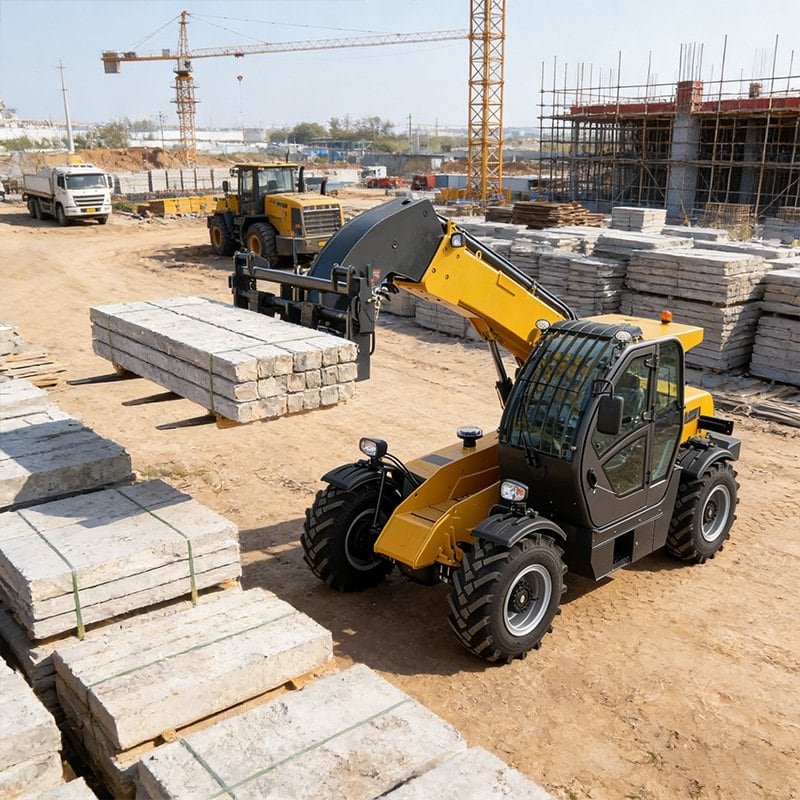
The real magic of a telehandler is its boom. Unlike a forklift mast that only moves vertically, a telehandler’s boom extends telescopically. This means I can pick up a pallet and place it not just on a high shelf, but deep inside a truck or on the second story of a building under construction. It’s this combined forward and upward reach that truly sets it apart. Then there’s the sheer versatility. One minute, I can have forks on to move pallets. The next, I can swap them for a bucket and use it like a wheel loader to move gravel. Or, I can attach a work platform and safely lift workers for maintenance jobs.
It’s like having several machines in one. Plus, most telehandlers are built for rough ground. With powerful four-wheel drive and rugged tires, they handle muddy fields or uneven construction sites with ease. A standard warehouse forklift would get stuck immediately in those conditions. This unique combination of reach, all-terrain performance, and versatility with attachments is what makes a telehandler an indispensable tool on so many job sites.
2,What Are The Main Types of Telehandler Models Available?
Looking at all the different telehandler models can be overwhelming. You might wonder if you need a small one for your farm or a huge one for a big project. We can simplify this by looking at three main types based on their lifting capacity.
Telehandler models are mainly typed by lifting capacity. Mini models (2.5-3.5 tons) are for tight spaces. Medium models (4 tons) are all-around performers. Heavy-duty models (5-8 tons) are for the biggest industrial, port, and construction jobs, offering maximum power and stability.
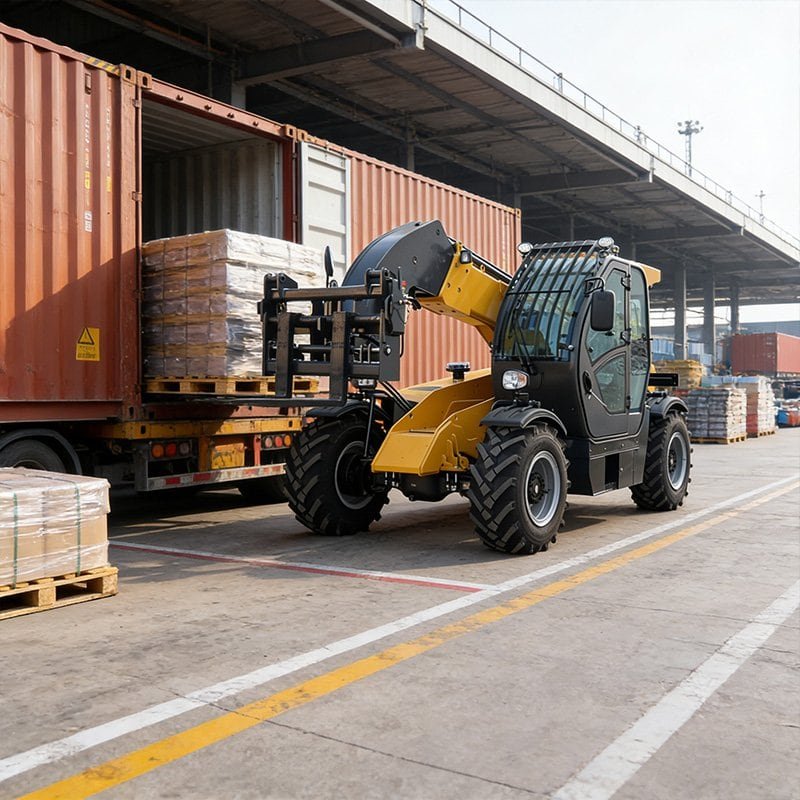
Choosing the right capacity is the most important decision you will make. It directly impacts your machine’s performance, efficiency, and cost. Over the years, I’ve helped thousands of customers find the right fit, and it almost always comes down to breaking down their needs into one of these three categories. Let’s look at each one more closely to see where your work fits in.
① Mini Telehandler Models (2.5-3.5 Ton)
These are the compact giants of the telehandler world. I often recommend them to customers with small farms, warehouses, or jobs in tight urban areas where space is limited. Their main advantage is their small footprint. They can easily navigate narrow aisles and tight corners where a larger machine just can’t go. This agility makes them incredibly efficient for tasks like moving animal feed, stacking pallets in a crowded warehouse, or performing building maintenance.
Because they are lighter, they also consume less fuel and the initial investment is lower, which is a huge plus for smaller businesses. For example, our HIXEN HX3007 и HX3507 models are perfect for this category. A 3-ton telehandler can easily handle most pallet transport and light material handling, making it a smart, cost-effective choice for operations that need precision and flexibility over brute strength.
② Medium Telehandler Models (4 Ton)
This is the most popular category, and for a very good reason. I often call the 4-ton telehandler the “universal model” because it hits the perfect balance for the majority of users. It is strong enough for serious construction and agricultural work but still mobile and agile enough to not be clumsy. Rental companies absolutely love them because a single model can serve a wide range of customers with different needs. Whether you are on a farm loading grain, on a construction site lifting bricks, or in an industrial warehouse managing large inventory, a 4-ton machine can probably do the job efficiently.
It finds that sweet spot between lifting capacity, working height, price, and mobility. For example, our HIXEN HX4007, with its 4-ton capacity and 7-meter reach, is a fantastic all-rounder for general lifting. If you need more height, the HX4010 provides that same 4-ton power but with a 10.5-meter reach for multi-story construction. This versatility makes it the go-to choice for most of my customers.
③ Heavy Duty Telehandler Models (5-8 Ton)
When the job gets really big, you need to bring in a heavy-duty model. These machines, with capacities from 5 to 8 tons, are designed for the most demanding environments. Think of large-scale construction projects, busy ports, massive farms, and heavy industrial applications. Their key features are massive lifting capacity and superior stability provided by a wider, heavier chassis. They can handle things like large precast concrete sections, heavy steel beams, or even loaded shipping containers with confidence and safety.
The increased weight and stronger frame mean they remain stable even when lifting heavy loads at a significant forward reach. A 5-ton or 6-ton telehandler becomes essential for efficiently moving bulk materials or lifting heavy equipment. These are not for small, everyday jobs; they are for projects where power, reach, and rock-solid stability are absolutely non-negotiable. They are the powerlifters of the telehandler world, built for maximum productivity.
3,How Do I Choose a Telehandler Model Based on Boom Height?
You might know the weight you need to lift, but what about the height? Choosing the wrong boom means you either cannot complete the job, or you have paid for extra reach you will never use.
Choose boom height based on your most common tasks. 7-meter models are great for farm work and truck loading. 10-14 meter models suit most construction and high-stacking warehouse jobs. 17+ meter models are for specialized high-rise construction and engineering projects.
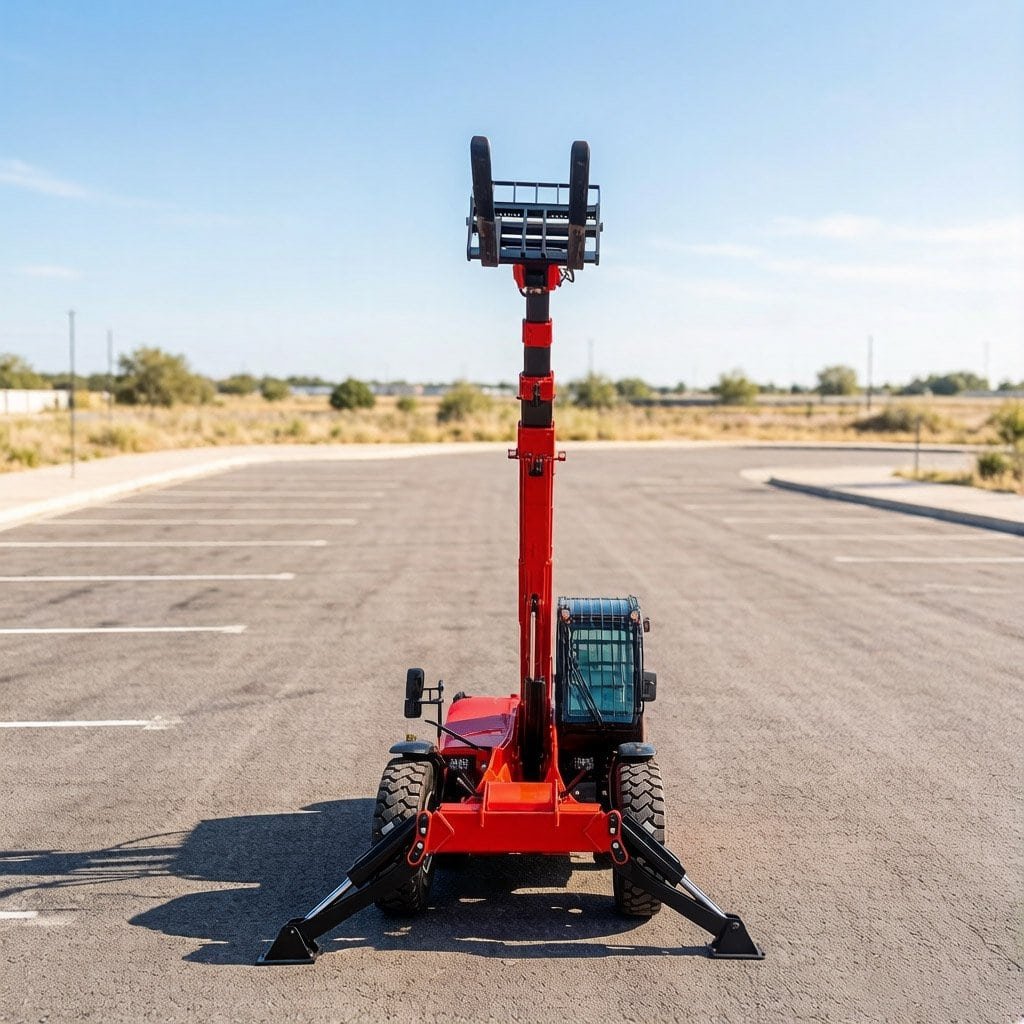
Many of my customers search online for terms like “7m telehandler” or “14m telehandler.” It’s a very common way to shop because, after weight, height is often the main limiting factor for a job. Getting this right is crucial for your daily operations. Let’s break down the common height ranges.
7 Meter Telehandler Models
These models are the perfect choice for most farm and warehouse tasks. A 7-meter boom provides enough height for loading and unloading nearly any truck or trailer. It’s also ideal for stacking hay bales or moving pallets onto standard industrial racking. It’s a very practical and efficient height for daily operations without the extra cost and size of a longer-boom machine.
10-14 Meter Telehandler Models
When you move into multi-story construction or large-scale warehousing, you need more reach. Models in the 10-14 meter range can lift materials to the second or third story of a building, or place items on top of very high racking in a logistics center. Our popular HIXEN HX4014 (4 ton, 14m) and HX5014 (5 ton, 14m) models fit right in this versatile and highly-demanded category.
17+ Meter Telehandler Models
These are for specialized, high-reach jobs. Think multi-story building construction, bridge maintenance, or large industrial installations. A model like our HIXEN HX6018, with its impressive 17.6-meter reach, is a specialist tool for when you absolutely need to get materials or personnel to extreme heights safely and efficiently.
4,So, How Do I Choose The Right Telehandler Model for Me?
All this information is great, but picking that one final model can still feel tough. You do not want to make a costly mistake that will affect your business for years. Let’s use a simple chart to simplify your decision.
To choose the right telehandler, first determine your maximum lifting weight and required height. Then, consider your work environment (tight spaces or open fields?). Finally, think about the attachments you will need. This process will narrow your options to the most efficient model.
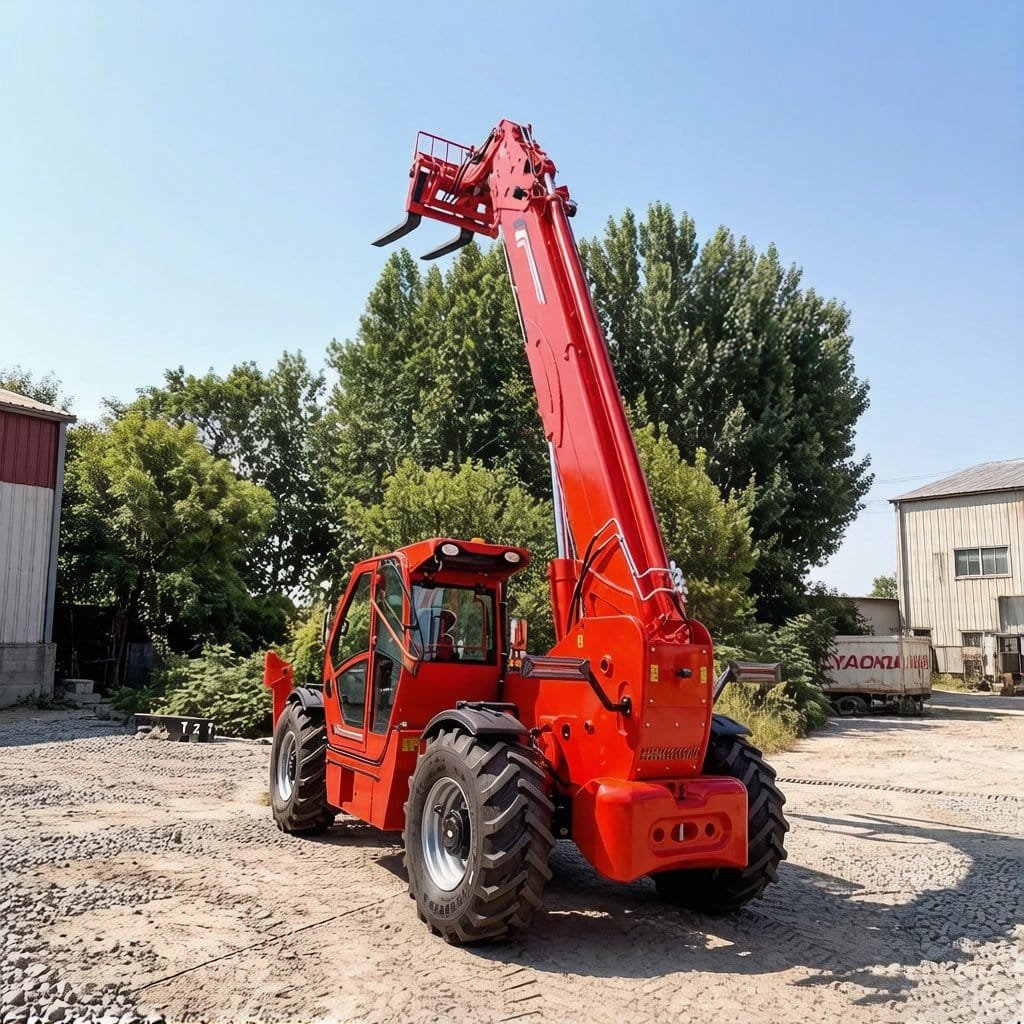
I always tell my clients to think about their top three most common tasks. What do you do every single day? Let that be your primary guide. To make it even clearer, I have put together a quick selection guide based on hundreds of conversations I’ve had with customers. This table matches common jobs with the telehandler model that usually works best and provides the best value.
| Work Need | Recommended Model |
|---|---|
| Daily farm handling & transport | 3-4 Ton Telehandler |
| Grain & bulk material loading | 4-5 Ton Telehandler |
| Warehouse pallet moving & stacking | 2.5-4 Ton Telehandler |
| Lifting building materials | 4-6 Ton Telehandler |
| High-altitude construction work | 10m+ Boom Telehandler |
Look at the table and find the task that is closest to your own work. This gives you a great starting point and a clear idea of the capacity you should be looking for. From there, you can consider the specific boom height you need for your tallest lifts. This simple process helps you avoid buying too much machine, or even worse, not enough.
5,How Does a Telehandler Compare to a Forklift or a Wheel Loader?
You may already own a forklift or a loader on your job site. Buying another large machine seems like an extra cost. But what if one machine could do the job of many others?
A telehandler is more versatile than a forklift due to its extended reach and rough-terrain ability. Compared to a wheel loader, it offers greater lifting height and precision. Its main advantage is using various attachments to perform the jobs of a forklift, loader, and even a crane.
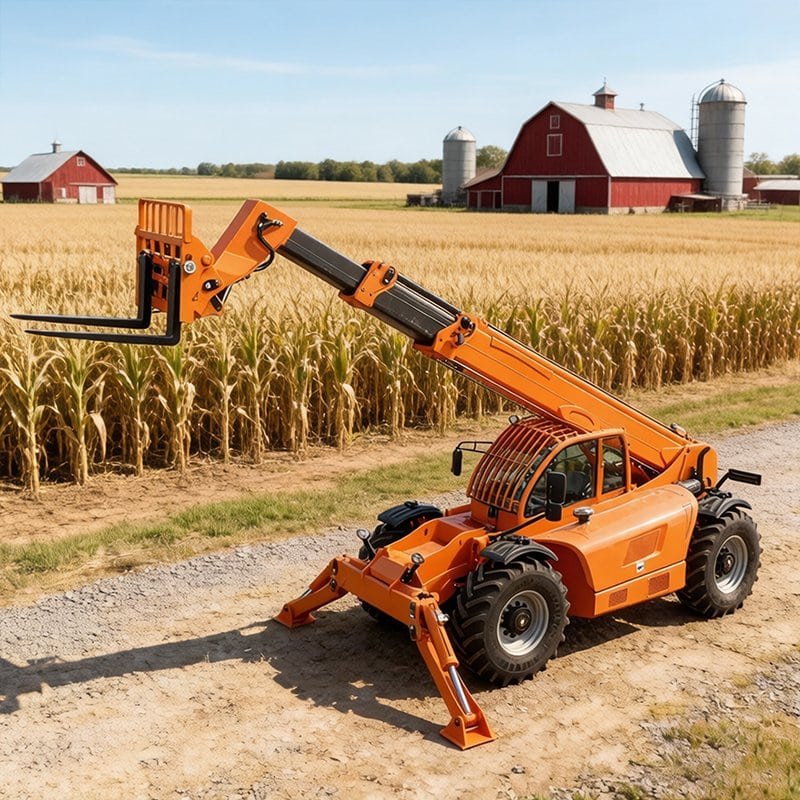
Customers often ask me, “I have a forklift, so why do I need a telehandler?” The difference is reach and terrain. A forklift’s mast only goes up and down. A telehandler’s boom goes up и out. That is a huge advantage for placing loads precisely. Plus, it works on mud, gravel, and uneven ground where a standard forklift just can’t go. Then they ask about wheel loaders. A loader is great for scooping and moving massive amounts of loose material, but it can’t lift high or with much precision.
A telehandler offers the finesse to place a pallet on a third-story balcony. But the biggest advantage is its motto: “one machine, multiple functions.” With a telehandler, you can use attachments to do the work of several machines:
- Fork: For standard pallet work, just like a forklift.
- Bucket: To function like a wheel loader for moving soil or gravel.
- Auger: To drill holes for posts or footings.
- Work Platform: To act as a safe man lift for aerial work.
It can do parts of the job of a forklift, a loader, and a light crane, all in one efficient package.
6,Why Should I Choose HIXEN for My Next Telehandler Model?
Buying equipment from an overseas factory can feel uncertain. You might have questions about the quality of the machine, the final price, and what happens if you need after-sales support. We make the process simple, direct, and reliable.
HIXEN offers a wide range of telehandler models from 2.5 to 8 tons with factory-direct pricing. With 15 years of export experience, we provide customized options, guaranteed quality, and reliable spare parts support, ensuring you get the best value and long-term performance.
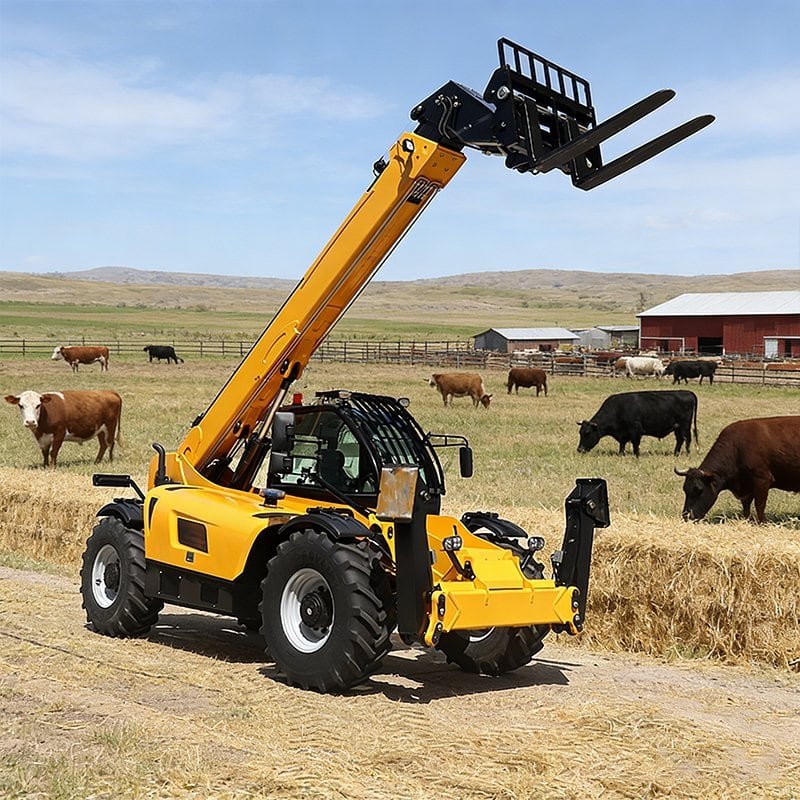
I understand the concerns when buying heavy machinery, especially from a factory in another country. People worry about price, quality, shipping, and what happens if something goes wrong. At HIXEN, we have built our business over 15 years by solving these exact problems for our customers in over 20 countries. You are not dealing with a middleman or a local dealer adding their own markup; you get factory-direct pricing, which means better value for your investment. We cover all the bases to make you feel confident in your purchase:
✔ Wide Range: We offer 2.5-8 Ton Telehandler Models with 7m-17.6m working height options.
✔ Customization: Want a specific color to match your company brand? We can do that.
✔ Value: Our factory-direct pricing means you do not pay extra commissions.
✔ Application-Ready: Our machines are proven to work hard in agriculture, construction, and industrial settings.
✔ Support: We provide full and reliable spare parts support to keep your machine running for years.
We are not just selling you a machine; we are providing a complete, long-term solution you can trust.
Заключение
Choosing the right telehandler model comes down to your specific weight, height, and application needs. Analyze your job, use this guide, and you will find the perfect machine. And follow us on Linkedin for more machine information.
