
Struggling to place materials on a congested, complex job site? Constantly repositioning your standard telehandler burns fuel, wastes time, and adds unnecessary risk. A rotating telehandler provides a more efficient and flexible solution, allowing you to lift, reach, and position loads with precision without constantly moving the entire machine.
A rotating telehandler, also known as a rotary telehandler or 360-degree telehandler, is a versatile lifting machine that combines the reach of a telescopic boom with an upper structure that can continuously rotate 360 degrees. This unique design allows operators to pick up, move, and place loads over a wide area from a single, fixed position, dramatically increasing efficiency on complex job sites.
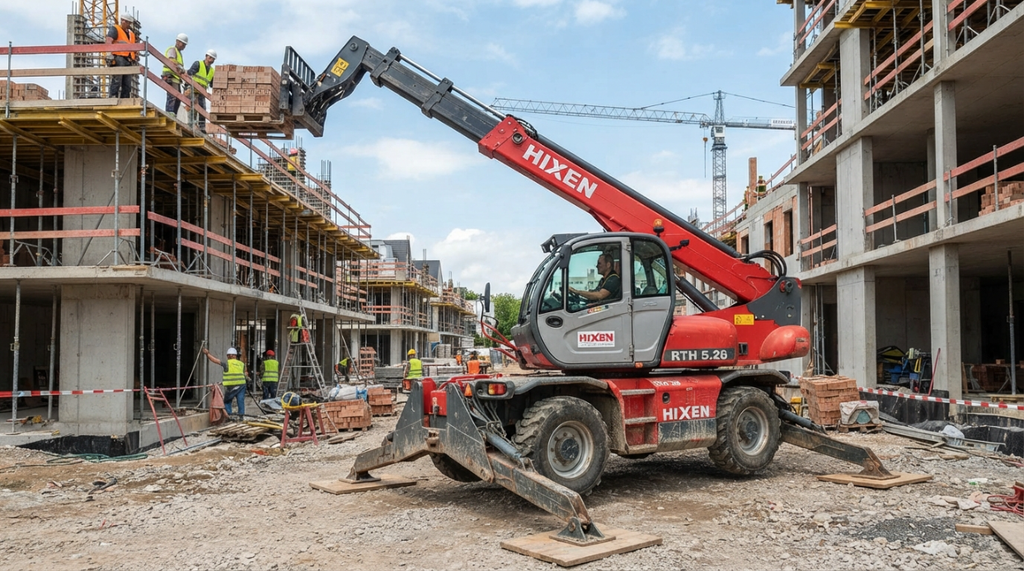
Now that you understand the basic concept, let’s explore what truly sets this machine apart. We’ll dive into its core components, compare it to standard models, and see how its unique capabilities translate into real-world benefits across various industries.
1,What Is a Rotating Telehandler and Why Does It Matter?
Ever seen a piece of equipment on a job site that seems to be doing the work of a forklift, a crane, and an aerial work platform all at once? You were likely looking at a rotating telehandler. But what exactly is this machine, and why is it becoming so indispensable?
A rotating telehandler is essentially a hybrid machine. It takes the telescopic reach of a standard telehandler and mounts it on a rotating turret, much like a crane. This allows the entire upper structure—including the cab and the boom—to spin 360 degrees while the chassis remains stationary.
Dive Deeper
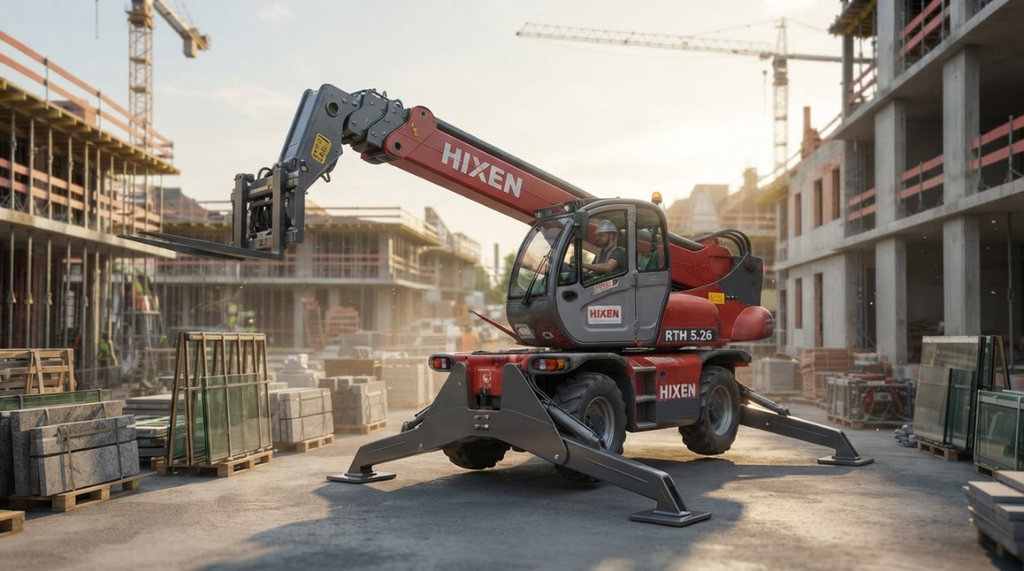
UM rotating telehandler isn’t just a telehandler that spins. It represents a fundamental shift in how material handling is approached on a modern work site. To understand its value, let’s break down its key parts and what they do.
Key Components of a Rotating Telehandler
- Telescopic Boom: The extendable arm that lifts and reaches with the load.
- Rotating Upper Structure (Turret): This is the game-changer. It houses the operator’s cab and the boom, allowing them to rotate independently of the chassis.
- Chassis: The stable base of the machine, which includes the engine, drivetrain, and wheels.
- Hydraulic System: Powers the boom’s lift, extension, and rotation, as well as the stabilizers.
- Operator Cab: The control center, which rotates with the boom, always giving the operator a direct line of sight to the load.
- Stabilizers (Outriggers): Extendable legs that provide a wide, stable base, allowing for safe lifting at height and reach.
- Quick Coupler: A hydraulic or manual system at the end of the boom that allows for fast and easy switching of attachments.
- Anexos: A wide array of tools like forks, jibs, buckets, and platforms that make the machine incredibly versatile.
Beyond the Definition: A New Way of Working
The key concept to grasp is that the rotation feature fundamentally changes the workflow. Instead of driving the entire machine to align with a new drop-off point, the operator can simply swing the boom. This is especially crucial in tight spaces or on crowded sites where moving a large machine is difficult and time-consuming. At HIXEN, we design our rotating telehandler solutions so they can be configured for different lifting capacities, working heights, and attachments, focusing on how the machine solves real-world application challenges.
Common Terminology
You’ll hear this machine called by several names in the industry, all referring to the same equipment:
- Rotary telehandler
- Roto-telehandler
- Rotating telescopic handler
- Rotating telescopic forklift
- 360-degree telehandler
2,Why Does 360° Rotation Make Such a Difference on the Job Site?
Is the continuous rotation feature just a nice-to-have, or is it a genuine productivity multiplier? For many projects, the ability to rotate completely transforms site efficiency and safety, turning logistical headaches into straightforward tasks.
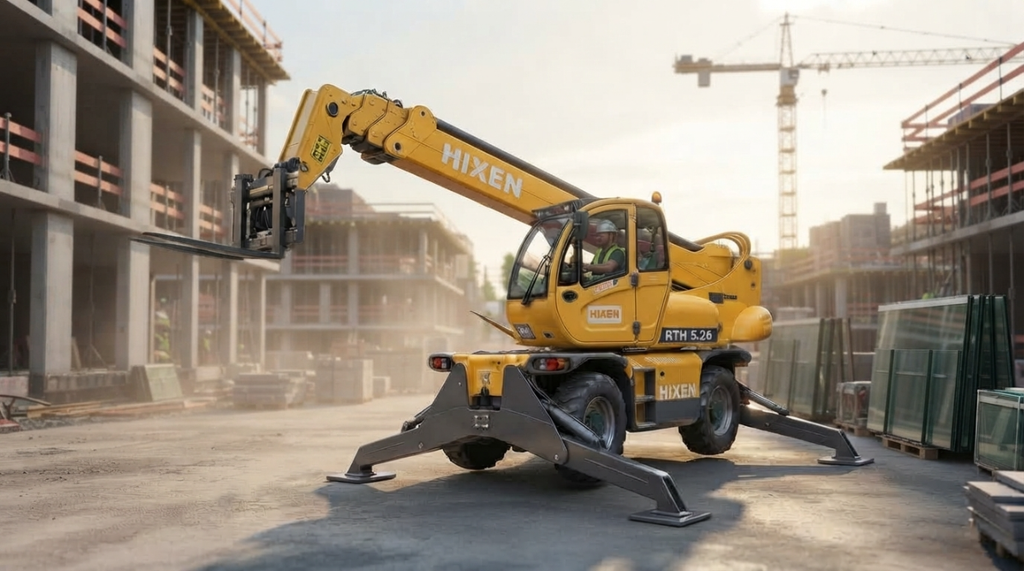
The 360-degree rotation of a rotating telehandler significantly reduces the need for machine repositioning. This allows one machine to cover a large work area from a single setup, saving immense amounts of time and fuel while minimizing ground disturbance and traffic on the job site.
Dive Deeper
In my experience visiting various construction sites, the most significant source of lost time is often not the lifting itself, but the constant need to maneuver equipment into the correct position. This is where the value of a rotating telehandler becomes crystal clear.
Standard Telehandler vs. Rotating Telehandler Workflow
To illustrate, consider a typical task of distributing materials around a building foundation.
- Standard Telehandler Workflow:
- Pick up the load.
- Drive forward to the first drop point.
- Lift and extend the boom to place the load.
- Retract the boom and lower it.
- Reverse and drive to a new position to face the second drop point.
- Repeat the entire process.
- Rotating Telehandler Workflow:
- Drive to a central position and deploy stabilizers.
- Pick up the load.
- Lift, extend, and rotate to the first drop point.
- Retract, then simply rotate to the second drop point.
- Continue serving multiple points without moving the chassis.
This simplified workflow leads to several distinct advantages:
- More Flexible Load Positioning: You can place materials on all four sides of the machine, over obstacles, or through window openings with unmatched precision.
- Reduced Site Congestion: With less need to drive around, the machine contributes to a safer, less cluttered site. This is invaluable in urban construction or industrial maintenance projects.
- Greater Site Coverage: A single rotating telehandler can effectively serve a much larger working radius than a standard machine, acting as a central hub for material distribution.
- Improved Operator Efficiency: Operators spend less time on repetitive repositioning maneuvers and more time on the value-added task of placing materials. The rotating cab also ensures they always have the best possible view of the load and the landing zone.
3,Rotating Telehandler vs. Standard Telehandler: What Is the Real Difference?
You’re evaluating equipment for your next project and face a choice: the trusted standard telehandler or the more advanced rotating telehandler. Is the rotating model always the better option? Understanding their core differences is key to making a cost-effective decision.
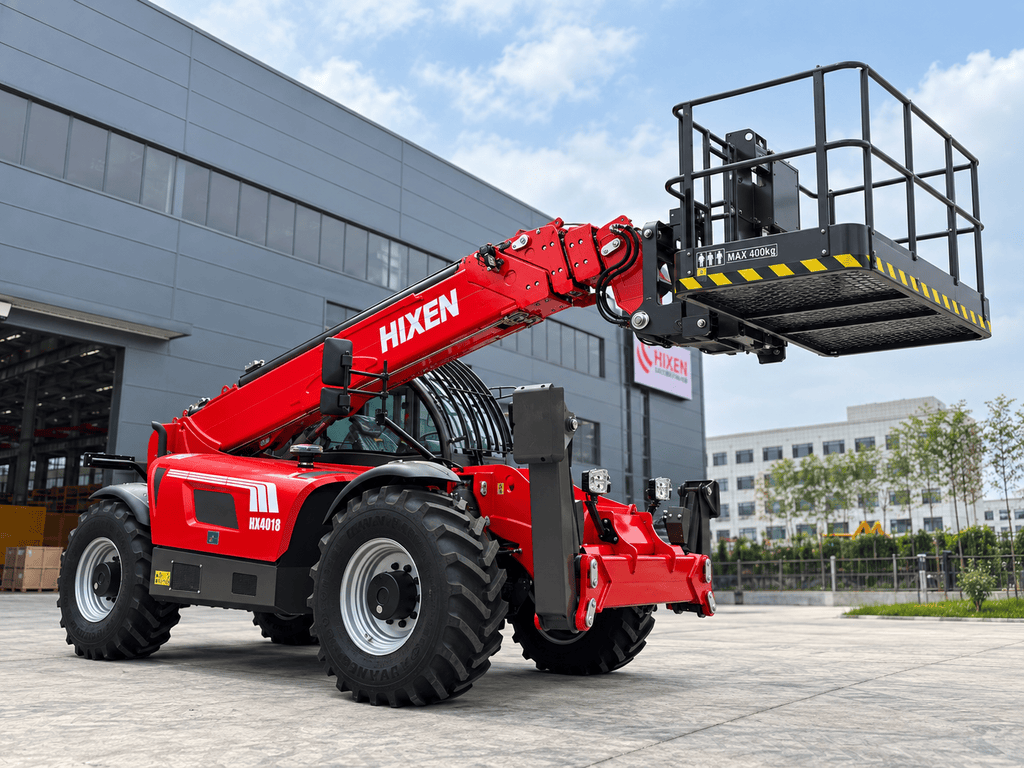
The primary difference is the rotating upper structure. A standard telehandler operates like a forklift with a telescopic boom, requiring the entire machine to move for repositioning. A rotating telehandler adds a 360-degree rotating turret, allowing it to place loads in multiple directions from a fixed position.
Dive Deeper
While a rotating telehandler offers more functionality, it’s not always the necessary choice. The decision should be based on your specific application and budget. Let’s compare them directly.
| Recurso | Standard Telehandler | Rotating Telehandler |
|---|---|---|
| Upper Structure | Fixed to the chassis | Rotates 360 degrees |
| Load Placement | Primarily in front of the machine | All directions (360° radius) |
| Positioning Method | Must drive the entire machine to reposition | Can rotate the boom from a stationary position |
| Site Footprint | Requires more space for maneuvering | Smaller operating footprint once stabilized |
| Primary Use Cases | Pick-and-carry, direct line lifting | Complex lifting, multi-directional placement |
| Complexity | Simpler operation and maintenance | More complex systems (rotation, sensors) |
| Custo Inicial | Mais baixo | Mais alto |
When is a Standard Telehandler a Better Choice?
Don’t discount the workhorse of the industry. A standard telehandler is often the more economical and practical choice if your primary tasks involve:
- Simple “pick and carry” work, like moving pallets from a truck to a storage area.
- Loading and unloading trucks in an open yard.
- Straight-line lifting where the drop-off point is directly in front of you.
- Projects with ample space for maneuvering the machine.
If your needs are straightforward, the simplicity and lower cost of a standard telehandler make it a very smart investment.
When Does a Rotating Telehandler Justify the Investment?
UM rotating telehandler shines and provides a significant return on investment when your projects involve:
- High-rise construction where materials need to be lifted to multiple floors and locations.
- Confined urban job sites with limited space to maneuver.
- Working around obstacles like existing structures, scaffolding, or trenches.
- Infrastructure projects like bridge or tunnel work, where you need to reach over and around barriers.
- Maximizing the utility of a single machine to reduce the need for a separate mobile crane.
For these complex scenarios, the increased productivity, reduced labor hours, and enhanced safety can quickly offset the higher initial cost.
4,Where Are Rotating Telehandlers Used? 6 Common Applications
Curious where this versatile machine makes the biggest impact? A rotating telehandler is far from a niche product. Its unique combination of reach, lift, and rotation makes it a valuable asset across a wide range of industries and demanding environments.
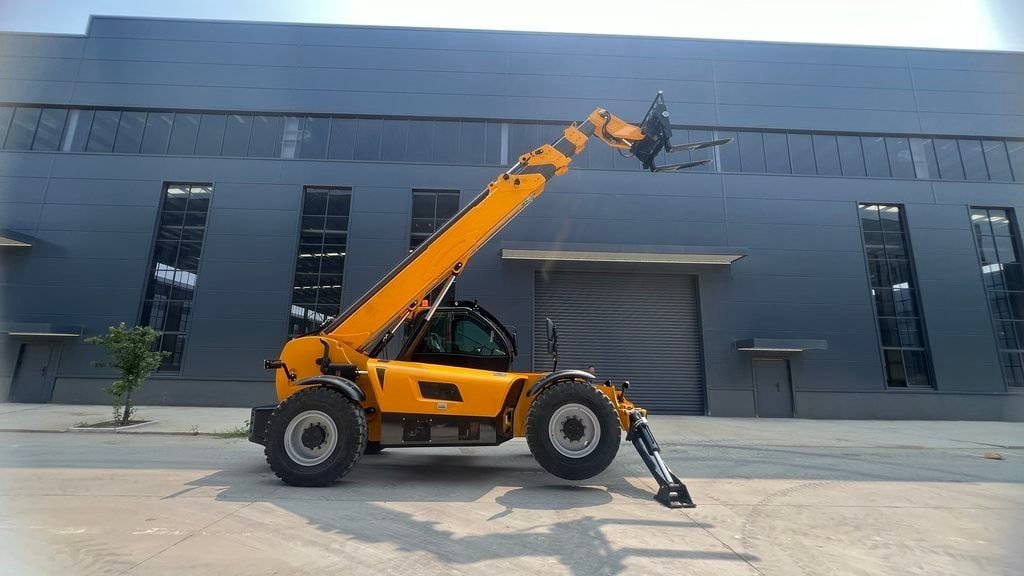
From high-rise buildings to sprawling infrastructure projects, rotating telehandlers are used wherever materials must be placed with precision in complex or congested environments. Their versatility makes them a favorite in construction, industrial maintenance, and specialized rental fleets.
Dive Deeper
The adaptability of a rotating telehandler allows it to excel in applications where standard machines would struggle. Here are six common areas where they have become essential.
1. Construction Sites
On general construction sites, these machines are masters of logistics. They can unload trucks, distribute materials like bricks, concrete components, and steel structures around the site, and then lift them directly to the work area, all from a central position.
2. High-Rise Construction
This is a core application. A rotating telehandler can be positioned at the base of a building and act as a mini-tower crane. It lifts panels, windows, roofing materials, and tools floor by floor, rotating to place them exactly where needed without having to constantly drive around the building’s perimeter.
3. Industrial and Warehouse Projects
During the construction of factories, warehouses, and large industrial plants, these machines are used to install steel beams, place large HVAC units, and move heavy machinery inside partially built structures. Their ability to reach over installed equipment is a major advantage.
4. Infrastructure Projects
For building bridges, roads, and tunnels, a rotating telehandler can reach over barriers, down into excavations, or across gaps to place rebar, concrete forms, and utility pipes. It provides crane-like functionality with the mobility of a telehandler.
5. Rental Fleets
Rental companies love the rotating telehandler because one machine can serve many different customer needs. A single unit equipped with various attachments can be rented out for a construction job one week, an industrial maintenance task the next, and an event setup after that, maximizing its utilization rate and profitability.
6. Agriculture and Specialized Applications
While less common, with the right attachments like bale clamps or buckets, a rotating telehandler can be used in large-scale agricultural operations for handling hay, loading materials, or performing maintenance on tall farm structures. HIXEN can provide specific attachment configurations to meet these diverse work requirements.
5,Rotating Telehandler Attachments: One Machine, Multiple Jobs?
UM rotating telehandler is powerful, but its true versatility is unlocked by the attachments you put on the end of its boom. Is it possible for one machine to truly perform the work of several?
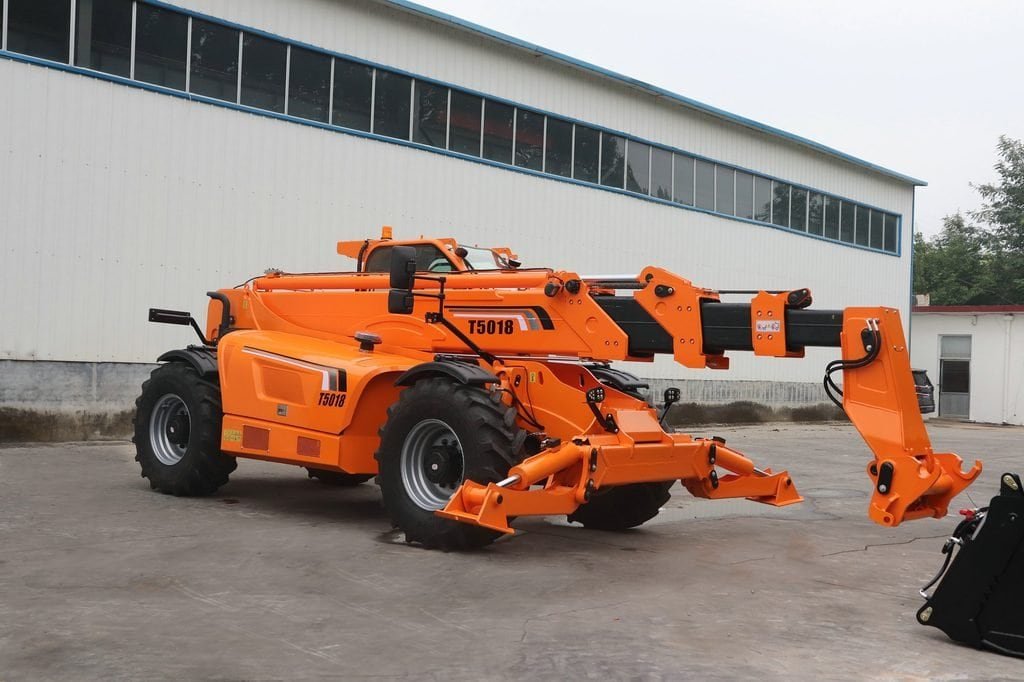
With the right set of quick-connect attachments, a single rotating telehandler can transform from a forklift to a crane to an aerial work platform in minutes. This adaptability is what makes it one of the most valuable machines on any job site.
Dive Deeper
The core principle behind investing in a rotating telehandler is maximizing efficiency. Instead of having multiple specialized machines sitting idle, you have one prime mover that can tackle a variety of tasks by simply swapping its tool. At HIXEN, we work with customers to ensure they get the right attachment package for their specific jobs, not just a standard set of forks.
Here are some of the most common attachments and their uses:
- Forks: The standard attachment for lifting pallets of bricks, lumber, and other general construction materials.
- Lifting Hook or Winch: This attachment effectively turns the telehandler into a mobile crane, ideal for lifting and suspending loads like steel trusses, engine blocks, or large pipes.
- Jib: A jib is a truss structure that extends from the boom, providing additional reach for lifting with a hook. A jib with a winch is a very popular combination.
- Work Platform (Man Basket): A secure platform for lifting personnel to perform tasks at height, such as inspections, repairs, or installations. This often eliminates the need for a separate scissor lift or boom lift.
- Bucket: Used for moving loose materials like sand, gravel, or dirt. This is particularly useful in landscaping and site cleanup.
- Bale Clamp: A specialized attachment for agricultural use, designed to safely grip and move large round or square bales of hay.
The phrase “One rotating telehandler + multiple attachments” truly can cover a wide spectrum of material-handling tasks. While it won’t replace every single piece of equipment, it consolidates the roles of the most common machines, reducing fleet size, maintenance costs, and operator training requirements.
6,How Much Can a Rotating Telehandler Lift?
When evaluating a rotating telehandler, the first questions are always about capacity: “How much can it lift?” and “How high can it go?” While the maximum capacity rating is important, it’s only one piece of a much larger puzzle.
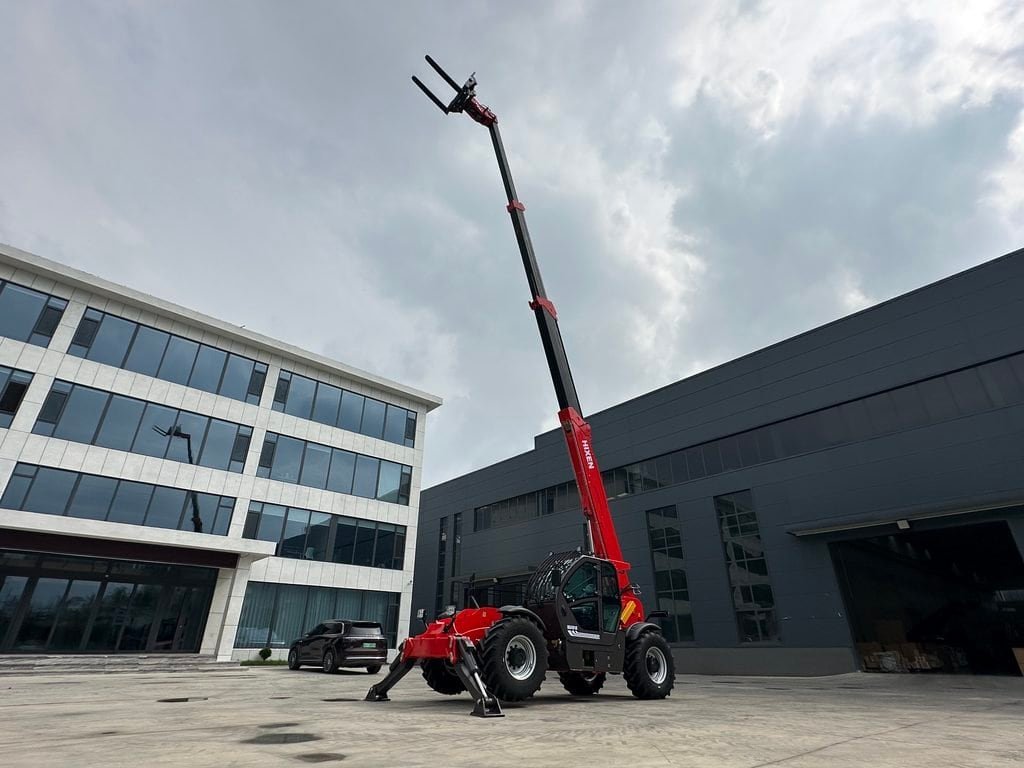
The lifting capacity of a rotating telehandler is not a single number. It varies depending on the boom extension, angle, and whether the machine is on stabilizers. This relationship is detailed in the machine’s load chart, which is the most critical document for safe operation.
Dive Deeper
New buyers often focus on the “Maximum Lifting Capacity” listed on a spec sheet. However, this number almost always refers to the weight the machine can lift at a minimal boom extension and height. As you extend the boom horizontally (increase the reach), the safe lifting capacity decreases dramatically.
Key Specifications to Understand
- Maximum Lifting Capacity: The heaviest load the machine can lift, typically measured close to the chassis. (e.g., 5 tons, 6 tons).
- Maximum Lifting Height: The highest point the boom can reach, usually measured at the fork carriage. (e.g., 18 meters, 25 meters).
- Maximum Forward Reach: The furthest horizontal distance the boom can extend from the front of the tires.
- Working Radius: The horizontal distance from the center of the machine’s rotation to the center of the load.
The Critical Importance of the Load Chart
The load chart is the single most important tool for choosing and operating a rotating telehandler safely. It’s a diagram or table, usually found in the operator’s cab, that clearly shows the maximum allowable load for any combination of boom height and forward reach.
For example, a machine rated for a 6-ton maximum capacity might only be able to safely lift 1 ton at its maximum forward reach. Attempting to lift 6 tons at full extension would be extremely dangerous and could cause the machine to tip over. Always, always consult the load chart before performing any lift.
HIXEN Telehandler offers a range of rotating telehandler models with different capacities and reach specifications. We work with clients to analyze their typical lifts—weight, height, and reach—to ensure the selected machine’s load chart aligns perfectly with their project demands.
7,How to Choose the Right Rotating Telehandler for Your Project?
You’re convinced a rotating telehandler is the right solution. Now comes the hard part: selecting the perfect model from the dozens available. How do you navigate the specifications to find a machine that meets your needs without overspending?
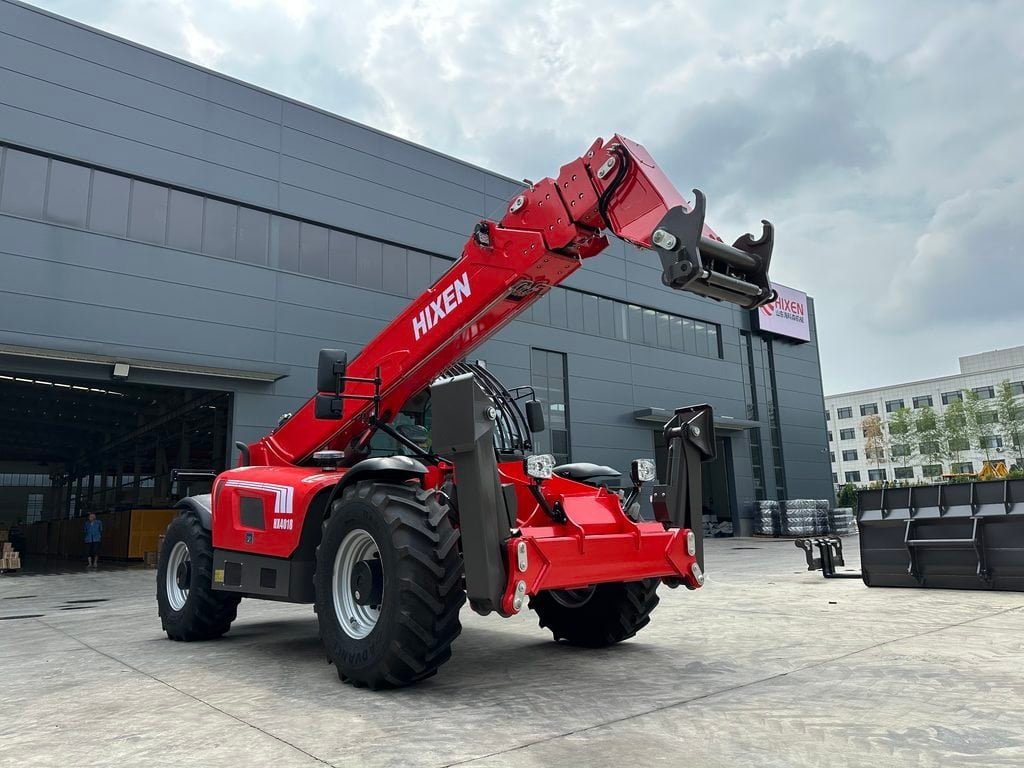
Choosing the right rotating telehandler involves a systematic, 6-step process. You must define your lifting capacity, height, and reach needs, carefully analyze the load chart, select the right attachments, and consider your region’s regulations before making a final decision.
Dive Deeper
Follow this step-by-step guide to make an informed purchasing decision.
Step 1: Determine Your Heaviest Typical Load
Start with weight. What is the heaviest object you need to lift on a regular basis? This will determine your minimum required maximum lifting capacity. Common classes are 4-ton, 5-ton, and 6-ton models.
Step 2: Determine Your Maximum Lifting Height
Next, consider height. What is the highest point you need to place materials? Are you working on two-story buildings or 8-story high-rises? This will dictate the required boom length, with common options ranging from 14 meters to over 30 meters.
Step 3: Determine Your Maximum Forward Reach
This is often overlooked. How far out do you need to place a load horizontally? Is your main challenge reaching up (height) or reaching out (reach)? Sometimes, a machine with less height but greater forward reach is more useful.
Step 4: Check the Load Chart Meticulously
Once you have your three key numbers (weight, height, reach), find models that meet these specs and immediately ask for the load chart. Confirm that the machine can lift your required weight at your required height and reach. Do not assume.
Step 5: Select the Necessary Attachments
What jobs will the machine perform? Make a list of the attachments you’ll need, like a personnel platform, a winch, or a jib. Ensure the machine you’re considering is compatible with them and that their weight has been factored into the load chart calculations.
Step 6: Consider Local Regulations and Support
Finally, consider the destination market. What are the local requirements for engine emissions (e.g., Euro V, Tier 4 Final)? Are there specific safety certifications needed, like CE for Europe? As an experienced exporter, HIXEN can help customers navigate these requirements, providing machines with the correct engine configurations and necessary documentation to ensure a smooth import and compliance process.
Frequently Asked Questions
What is the difference between a rotating telehandler and a standard telehandler?
A standard telehandler has a fixed boom and requires the entire machine to move for positioning. A rotating telehandler has an upper structure that spins 360 degrees, allowing it to lift and place loads in a full circle from a stationary position, making it more versatile in complex or tight job sites.
Can a rotating telehandler replace a crane?
For many tasks, yes. A rotating telehandler with a winch or hook attachment can perform lifts traditionally done by small mobile cranes. It offers the added benefits of faster setup, greater mobility, and the ability to switch to other attachments like forks or work platforms, making it more versatile than a dedicated crane.
How high can a rotating telehandler lift?
Lifting heights vary significantly by model. Smaller rotating telehandlers might have a maximum lift height of around 14 meters (46 feet), while larger models can exceed 35 meters (115 feet). The choice depends entirely on the vertical reach required for your specific projects, such as the height of the buildings you work on.
What should I check on a load chart?
When reviewing a load chart, first find your required lifting height on the vertical axis and your required horizontal reach on the horizontal axis. The point where they intersect will show the maximum safe lifting capacity for that specific position. Always ensure this capacity is greater than the weight of your intended load.
Conclusão
Making the right equipment choice is critical to project profitability and safety. While a standard telehandler is perfect for straightforward lifting, the rotating telehandler offers a superior solution for complex, multi-directional material handling. Its ability to lift, reach, and position loads over a 360-degree radius from a single spot saves time, reduces site congestion, and boosts overall efficiency. By understanding its capabilities, carefully analyzing load charts, and selecting the right attachments, you can unlock a new level of productivity.
If you’re looking to enhance your fleet’s capabilities or need a versatile lifting solution for your next project, explore our range of HIXEN telehandlers. Contact our team today to discuss your specific requirements and find the perfect rotating telehandler configuration for your application.
