
Struggling to pick the right telehandler? The wrong choice costs you money and efficiency. I’ll help you decide between a 2.5 ton and a 4 ton telehandler for your needs.
Choose a 2.5-ton telehandler for light-duty tasks in confined spaces like farms or small warehouses. Opt for a 4ton telehandler model for heavier lifts on medium construction sites, where you need greater capacity and reach. Your job site and load requirements are the key factors.
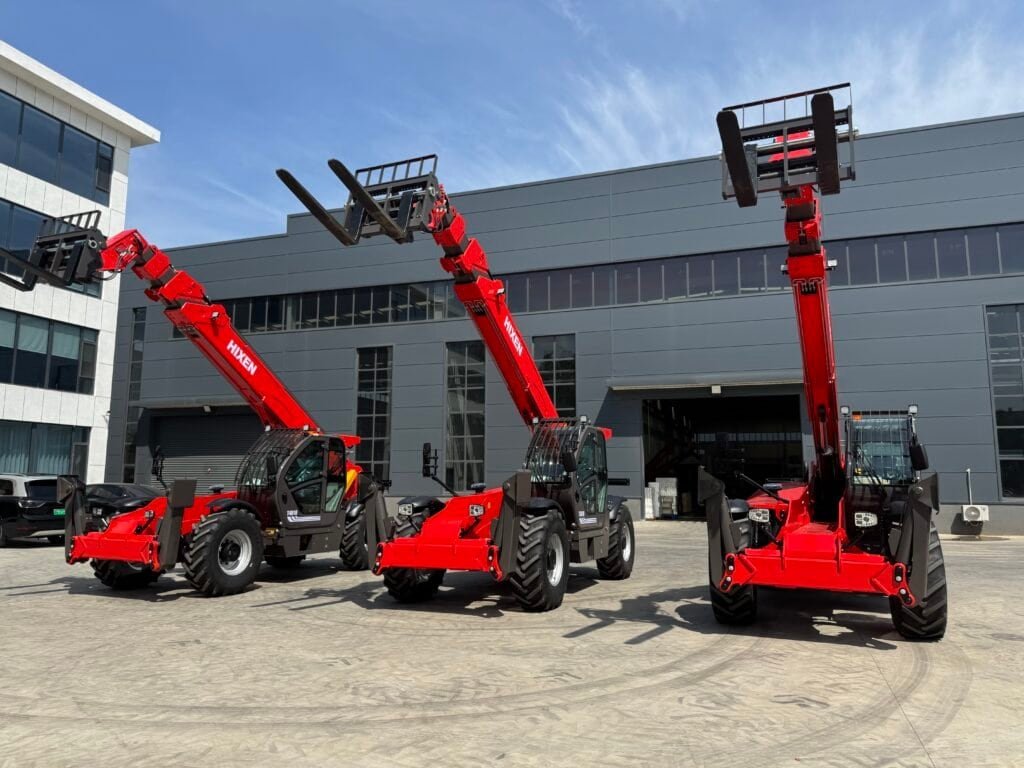
Making the right choice can feel overwhelming. I’ve been exporting telehandlers for 15 years, and I’ve seen hundreds of customers face this exact problem. Let’s break it down together, step by step, so you can buy with confidence. This guide will walk you through everything you need to know to find the perfect fit for your business.
1,Telehandler Capacity: Choosing Between 2.5 Ton and 4Ton Telehandler?
Picking the wrong capacity is a costly mistake. You either overspend on power you don’t need or stall projects with a machine that’s too small. Let’s get it right.
Your decision depends on your daily tasks. A 2.5-ton model is perfect for agility and lighter loads. A 4-ton model offers the raw power needed for more demanding jobs. Match the machine’s capacity directly to your most common lifting requirements to ensure efficiency and safety.
Choosing the right capacity goes beyond just looking at the maximum weight. As a manufacturer producing over 100 telehandlers a month, I see exactly which models different industries order. The key is to match the machine to your most frequent, everyday tasks, not just the one heavy lift you do once a year.
Analyzing Your Daily Workload
Think about what you will be lifting 90% of the time. Is it hay bales, bags of seed, or pallets of light materials? A 2.5-ton machine will handle these jobs perfectly. If you are consistently moving heavy pallets of bricks, concrete blocks, or steel components, you need the muscle of a 4-ton model.
The “80% Rule” for Telehandler Capacity
A good rule of thumb I share with my clients is the “80% Rule.” You should choose a machine where your typical load is 80% or less of its maximum rated capacity. Lifting at the machine’s absolute limit all day puts unnecessary strain on the engine and hydraulics, leading to more wear and tear. Following this rule ensures a longer life for your equipment and a safer work environment for your team.
2,Key Differences Between 2.5 Ton and 4Ton Telehandler?
Do they just lift different weights? There’s more to it. Understanding the subtle differences in design and function is key to avoiding buyer’s remorse and maximizing your investment.
The main differences are lift capacity, reach, physical size, and cost. A 4-ton telehandler is larger, lifts more weight higher, and costs more to buy and run. A 2.5-ton model is smaller, more maneuverable in tight spaces, and has a lower initial investment.
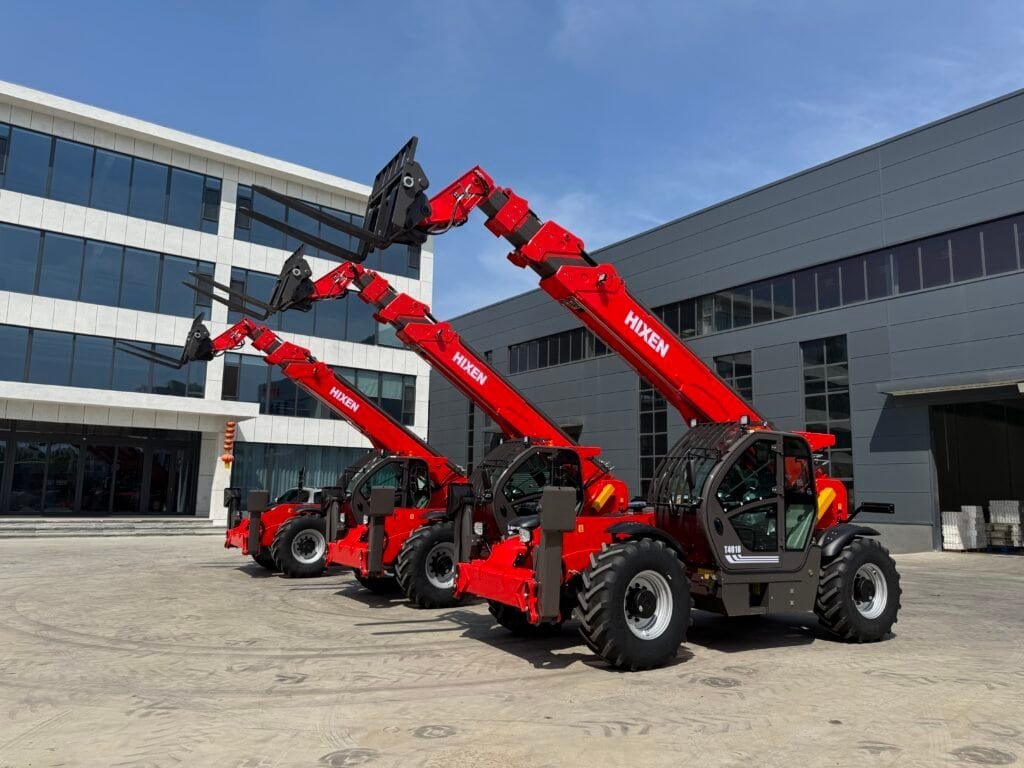
The specifications on paper only tell part of the story. How those numbers translate to real-world performance is what truly matters for your operations. I’ve seen customers in different parts of the world, from Europe to South America, make their choice based on these specific differences.
Head-to-Head Comparison
Let’s look at a simple breakdown of what sets these two models apart.
| Recurso | 2.5 Ton Model | 4 Ton Model |
|---|---|---|
| Max Lift Capacity | 2,500 kg | 4.000kg |
| Typical Lift Height | 7 meters | 9-17 meters |
| Machine Footprint | Compact, Narrow | Larger, Wider |
| Turning Radius | Tighter | Wider |
| Fuel Consumption | Mais baixo | Mais alto |
| Purchase Cost | Mais baixo | Mais alto |
Beyond the Spec Sheet
What these numbers mean on your job site is crucial. The compact footprint of a 2.5-ton telehandler means it can get into older buildings, navigate crowded farmyards, or work inside a warehouse. I once had a customer in Brazil who chose a 2.5-ton model for his coffee plantation specifically because it could drive between the narrow rows of coffee plants. A 4-ton model would have been impossible to use there. On the other hand, the higher power and stability of a 4-ton machine mean it can work faster and more safely on the rough, uneven ground of a new construction site.
3,Which Telehandler Is Right for Your Job Site?
Your job site has unique demands. A machine that shines on a construction site might be useless in a warehouse. Let’s match the telehandler to your specific working environment.
For tight, indoor spaces or small farms, the compact and agile 2.5-ton telehandler is ideal. For open construction sites, large yards, or ports that require moving heavy materials over uneven ground, the stability and power of a 4-ton model is the better choice.
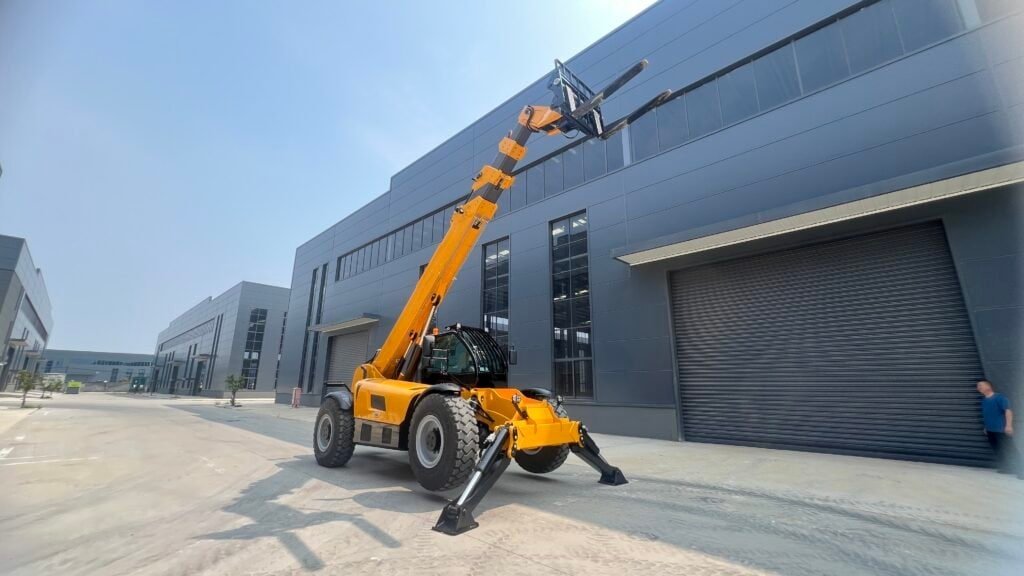
Over my 15 years of exporting these machines, I’ve learned that the environment is everything. Our European clients, for example, often work on renovation projects in historic cities with narrow streets and tight access. For them, the 2.5-ton model is often the only option. In contrast, our clients in North America who work on large-scale construction prefer the power of a 4-ton machine.
Analyzing Your Workspace
Let’s break down the most common job sites and which machine typically fits best.
- Construction: For large commercial or residential projects, a 4-ton model is necessary for lifting pallets of bricks, rebar, or roofing materials to upper floors. A 2.5-ton model is better suited for smaller projects, interior finishing work, or cleanup.
- Agriculture: A 2.5-ton telehandler is the king of the farm. It’s perfect for moving hay bales, stacking feed pallets in a barn, and cleaning out sheds. A 4-ton model is usually only needed for very large-scale agricultural operations.
- Warehousing & Logistics: The 2.5-ton model is almost always the winner here. Its small size and tight turning radius make it perfect for navigating narrow aisles. You would only consider a 4-ton model for a large, outdoor storage yard or a port.
4,Performance, Maneuverability, and Cost Comparison?
It’s a classic trade-off: power versus agility. Do you need a nimble machine or a powerful workhorse? Making the wrong choice impacts your daily productivity and your bottom line.
A 4-ton telehandler offers superior performance in lifting and reach but is less maneuverable. The 2.5-ton model excels in agility and tight spaces. Cost-wise, the 2.5-ton has a lower purchase price, while the 4-ton may offer a lower cost per ton moved on large jobs.
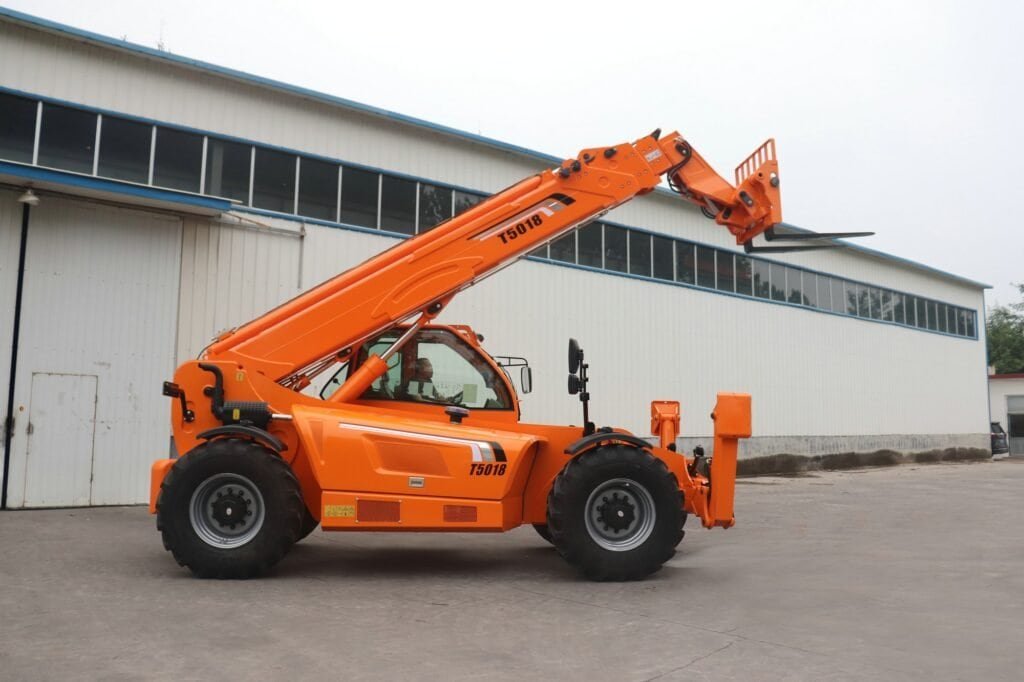
Thinking about performance isn’t just about speed; it’s also about the operator’s experience and the total cost of getting the job done. Both aspects are critical for making a smart business decision.
Performance and Handling Experience
From an operator’s perspective, these machines feel very different. A 4-ton telehandler often has a more spacious cab and smoother hydraulics, which reduces fatigue during long, 8-hour shifts on a construction site. It feels stable and secure when lifting heavy loads. In contrast, the 2.5-ton model is quick and responsive. Its agility makes repetitive tasks, like loading and unloading trucks in a yard, much faster. A rental fleet owner in Africa once told me his operators fought over the 2.5-ton machine for small yard tasks but always requested the 4-ton for the main project work.
A Breakdown of Costs
The sticker price is just the start. You need to consider the total cost of ownership.
| Cost Factor | 2.5 Ton Model | 4 Ton Model |
|---|---|---|
| Purchase Price | Mais baixo | Mais alto |
| Fuel Cost (per hour) | Mais baixo | Mais alto |
| Maintenance (annual) | Mais baixo | Mais alto |
| Resale Value | Good | Excellent |
The 4-ton model costs more upfront, but if it helps you finish jobs faster, its overall return on investment can be higher.
5,Pros and Cons of 2.5 Ton vs 4 Ton Telehandlers?
Every machine has its strengths and weaknesses. Being honest about them prevents surprises after you buy. Let’s lay out the good and the bad for both models.
The 2.5-ton’s pros are its lower cost, agility, and ease of transport. Its main con is limited lifting capacity. The 4-ton’s pro is its powerful lifting and reach. Its cons are higher cost, larger size, and higher operational expenses.
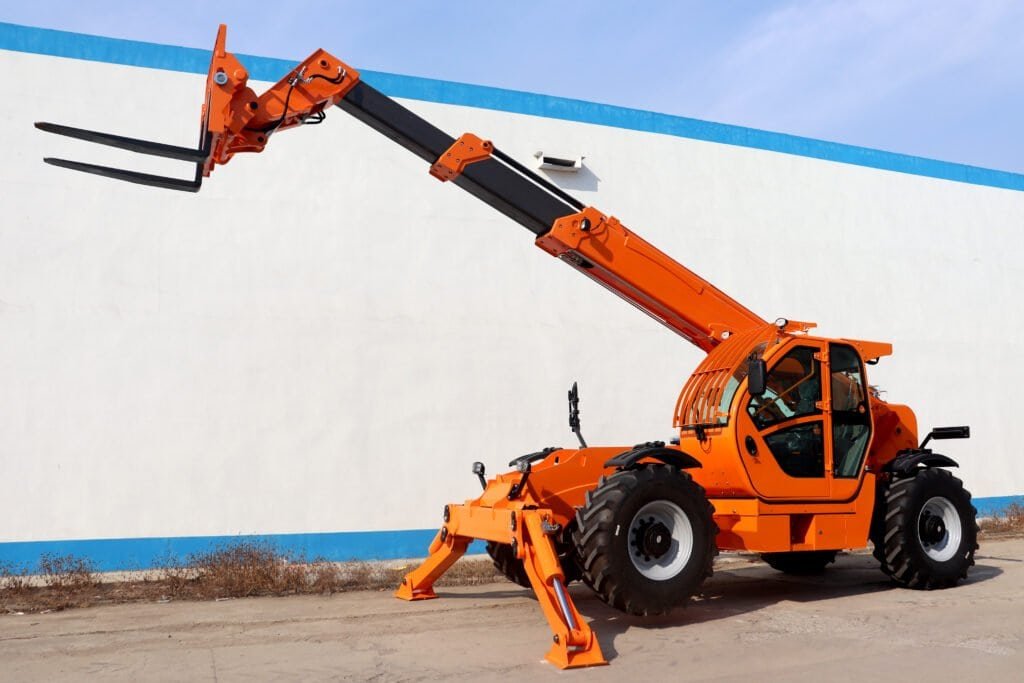
As a manufacturer, I stand behind the quality of every machine we build, whether it’s a 2.5-ton or an 8-ton model. Our factory is ISO9001 and CE certified, so you can be sure you’re getting a well-built machine. The choice isn’t about quality; it’s about picking the right tool for your specific needs.
2.5 Ton Telehandler: A Closer Look
| Prós | Contras |
|---|---|
| Excellent for tight spaces | Limited by load weight |
| Lower initial purchase price | Lower maximum lift height |
| Easier & cheaper to transport | May struggle on very rough terrain |
| Lower daily fuel consumption | Less suitable for high-intensity work |
4 Ton Telehandler: A Closer Look
| Prós | Contras |
|---|---|
| Handles heavy materials with ease | Higher initial purchase price |
| Greater lift height & forward reach | More expensive to run and maintain |
| Very stable on uneven ground | Requires more space to operate |
| Better for high-intensity, long jobs | More costly to transport between sites |
This direct comparison helps clarify which machine’s strengths align with your priorities and which weaknesses you can live with.
6,How to Decide Between Small and Medium Telehandler Models?
Feeling stuck between two great options? The fear of making the wrong choice can be paralyzing. Let’s create a simple framework to guide your decision and give you clarity.
To decide, first assess your most common load weight and required lift height. Then, measure your job site’s tightest spaces. Finally, consider your budget and future business growth. The right choice balances today’s needs with tomorrow’s potential.
I often walk my clients through a simple, three-step process to help them make the right choice. It removes the guesswork and focuses on the facts of their business.
Step 1: Assess Your Loads
Be realistic about your daily work. What is the average weight you lift? What is the absolute heaviest item you need to move regularly? Don’t buy a 4-ton machine for a single 3-ton lift you do twice a year. But if you’re lifting 2-ton pallets all day, a 2.5-ton machine will be overworked.
Step 2: Measure Your Space
Get out a tape measure. What is the narrowest doorway, gate, or aisle your telehandler must pass through? What is the turning space like in your yard? Also, consider transport. Is it easy to get a large, heavy 4-ton machine to your site, or do you need the flexibility of a smaller 2.5-ton model that can be moved more easily?
Step 3: Think About the Future
Where do you see your business in three years? Do you plan to bid on larger projects or handle heavier materials? Buying a slightly larger machine now might be a smart investment that saves you from needing to upgrade later. A 4-ton model might feel like an over-investment today, but if it allows you to win a bigger contract next year, it pays for itself.
7,Understanding Load Capacity and Lift Height Differences?
It’s not just about lifting straight up. A telehandler’s true capacity changes with its boom extension and angle. Misunderstanding this is a common and dangerous mistake. Let’s clarify it.
A telehandler’s load capacity decreases as the boom extends forward. A 4-ton model can lift 4 tons close to the machine, but significantly less at full reach. Always check the machine’s load chart. The 4-ton model will generally have a greater lift height and maintain more capacity at reach.
This is probably the single most important safety and performance concept I discuss with new buyers. The rated capacity only applies when the load is close to the machine. As you extend the boom up and out, the physics of leverage mean the safe lifting capacity drops significantly.
What is a Load Chart?
Every telehandler has a load chart in the cab. It’s a diagram that clearly shows you how much weight you can safely lift at different boom heights and forward extensions. It is not a suggestion; it is a critical safety rule. All our machines have clear, easy-to-read load charts because this is a CE certification requirement we take very seriously.
Comparing Load Charts: 2.5T vs 4T
Let’s imagine a real-world scenario. You need to lift a 1-ton pallet over a wall and place it 5 meters away.
- UM 2.5-ton telehandler might lift 2.5 tons close to its wheels, but at a 5-meter forward reach, its capacity might drop to just 700 kg. It cannot safely perform this task.
- UM 4-ton telehandler, on the other hand, can lift 4 tons close up, and at a 5-meter reach, it might still safely handle 1,200 kg. It can complete the job easily and safely. This difference in capacity at reach is often the deciding factor for construction and industrial applications.
8,Budget Considerations When Buying a Telehandler?
The sticker price is just the beginning. Hidden costs can turn a good deal into a financial burden. Let’s look at the total cost of ownership to protect your budget.
A 2.5-ton telehandler has a lower purchase price and running costs (fuel, maintenance). A 4-ton model costs more upfront and to operate, but its higher productivity can lead to a better return on investment (ROI) on larger jobs, making its unit cost of work lower.
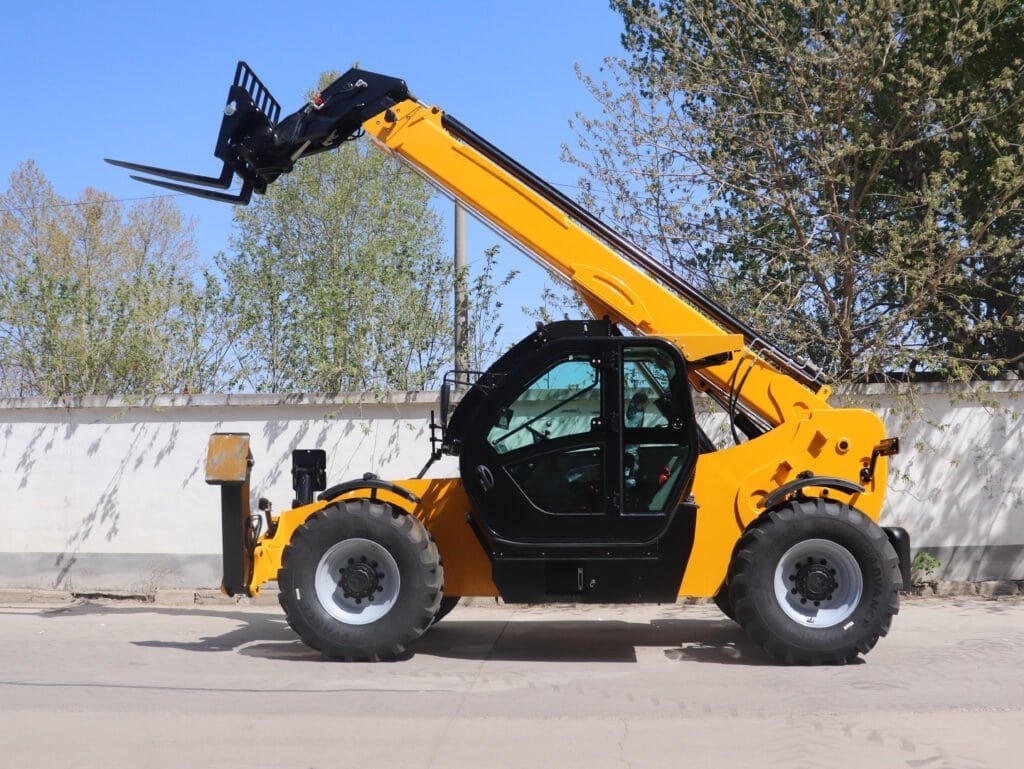
As a business owner, you need to think beyond the initial check you write. The most economical machine is the one that makes your business the most money over its entire lifespan.
Initial Investment vs. Lifetime Cost
The term I use with my customers is “cost per ton moved.” A 2.5-ton machine is cheaper to buy and cheaper to run per hour. However, if a 4-ton machine can do a job in one lift that takes the 2.5-ton machine two lifts, you are saving on operator wages, fuel, and machine hours. Over thousands of lifts, the more powerful 4-ton machine can actually become the cheaper option for heavy-duty work because its “cost per ton moved” is lower.
Resale Value and ROI
Your telehandler is a major asset for your business. Its value when you decide to sell it or trade it in is a big part of the overall cost calculation. In my experience exporting to rental and construction markets in Europe and the Americas, 4-ton models consistently hold their value better than smaller models. They are always in high demand. A 2.5-ton machine has a strong but more niche resale market, primarily in agriculture and small-scale building. A strong resale value lowers your total cost of ownership and improves your final return on investment.
9,Ideal Applications for 2.5 Ton and 4 Ton Telehandlers?
Are you using the right tool for the job? Using a telehandler in the wrong application wastes time and risks damage. Let’s pinpoint the perfect tasks for each model.
The 2.5-ton telehandler is ideal for agriculture, landscaping, small building sites, and warehouse logistics. The 4-ton model excels in medium-to-large construction projects, industrial material handling, recycling plants, and large-scale farming operations where heavy lifting is frequent.
I once sold a fleet of 2.5-ton telehandlers to a large landscaping company in France. They loved them because their reach and versatility allowed one machine to do the job of a forklift and a small crane. At the same time, one of my biggest clients in the US, who runs a large construction firm, wouldn’t even consider anything less than a 4-ton model for his projects. It’s all about matching the tool to the task.
Where the 2.5 Ton Model Shines
- Farms: Moving hay bales, stacking pallets of seed in a barn, mucking out stalls.
- Landscaping: Lifting rolls of turf, placing decorative rocks, moving pallets of paving stones.
- Small Construction: Handling materials for interior renovations, site cleanup, single-story house framing.
- Warehouses: Loading and unloading trucks, organizing pallet racking.
Prime Jobs for the 4 Ton Model
- Medium Construction: Lifting steel beams, placing trusses, moving pallets of concrete blocks to second floors.
- Industrial Yards: Handling heavy machinery parts, loading scrap metal bins, moving large components.
- Rental Fleets: A versatile workhorse that is in high demand for a variety of general construction jobs.
- Large Farms: Stacking large silage bales, handling bulk material bags, high-volume loading.
10,Making the Right Choice: 2.5 Ton vs 4 Ton Telehandler?
You’ve learned a lot, but now it’s time to decide. Don’t let indecision stop you. Let’s use a simple checklist to make your final choice with confidence.
To make the final choice, review your primary tasks, site constraints, and budget. If agility and lower cost are priorities, choose the 2.5-ton. If lifting power, reach, and future growth are key, the 4-ton model is your best investment.
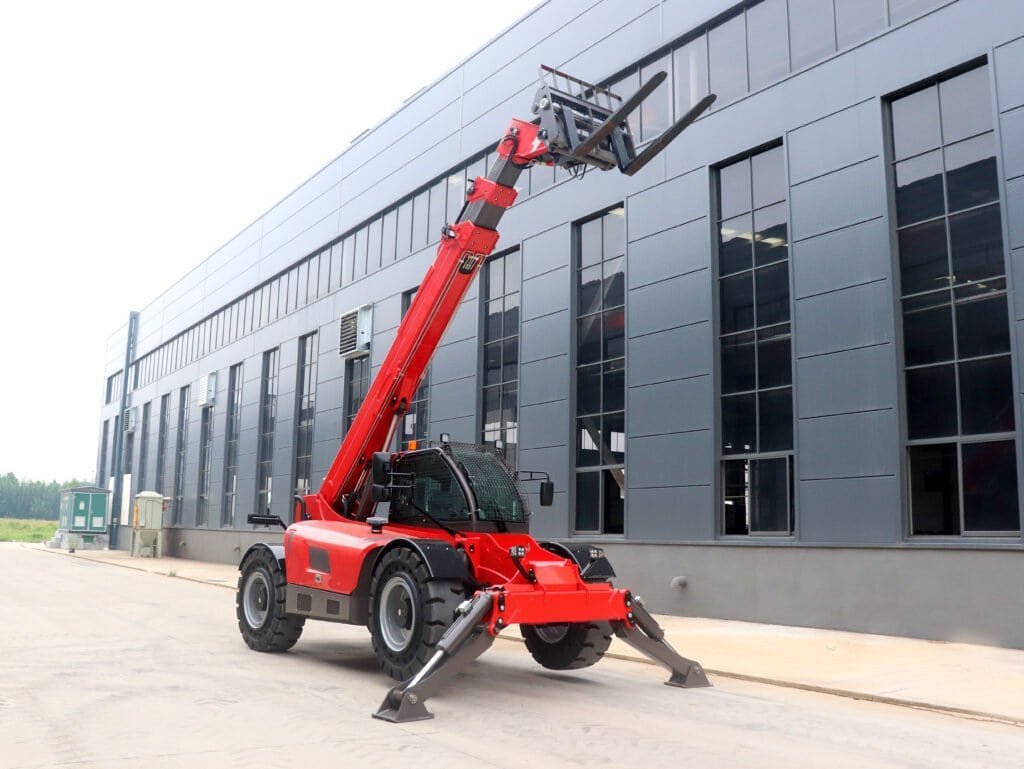
After helping countless customers through this process, I’ve found that a simple checklist is the best way to bring everything together. It gives you a clear, final answer based on your unique situation.
Your Final Decision Checklist
Use this table to see which column best describes your business needs.
| Factor to Consider | Choose the 2.5 Ton if… | Choose the 4 Ton if… |
|---|---|---|
| Primary Load | …your average load is under 2 tons. | …you frequently lift over 2.5 tons. |
| Job Site | …you work in tight spaces, indoors, or on small farms. | …you work on open construction sites or large yards. |
| Orçamento | …your initial budget is tight and operating costs are a priority. | …you prioritize long-term ROI and can afford the higher cost. |
| Future Growth | …your business is stable and your tasks are not changing. | …you plan to expand or take on bigger, heavier jobs. |
| Transport | …you need to move the machine frequently between small sites. | …the machine will stay on one large site for long periods. |
By going through this checklist, you can be sure that your final choice is based on a complete picture of your operational needs and financial goals.
Conclusão
Choosing between a 2.5-ton and 4ton telehandler depends on your specific needs. Assess your jobs, site, and budget carefully, and you will make the right investment for your business.Follow us on Linkedin now for more information including pictures and video!
