
Telehandler vs Crane? Choosing the right lifting equipment feels complicated. Making the wrong choice costs you valuable time and money on site. The key is to understand how each machine matches your workflow.
A telehandler is your best choice for dynamic, multi-task job sites that require mobility and versatility. A crane is built for static, single-point, heavy-lifting events. Your ideal machine depends more on your site’s workflow and rhythm than just the maximum weight you need to lift.
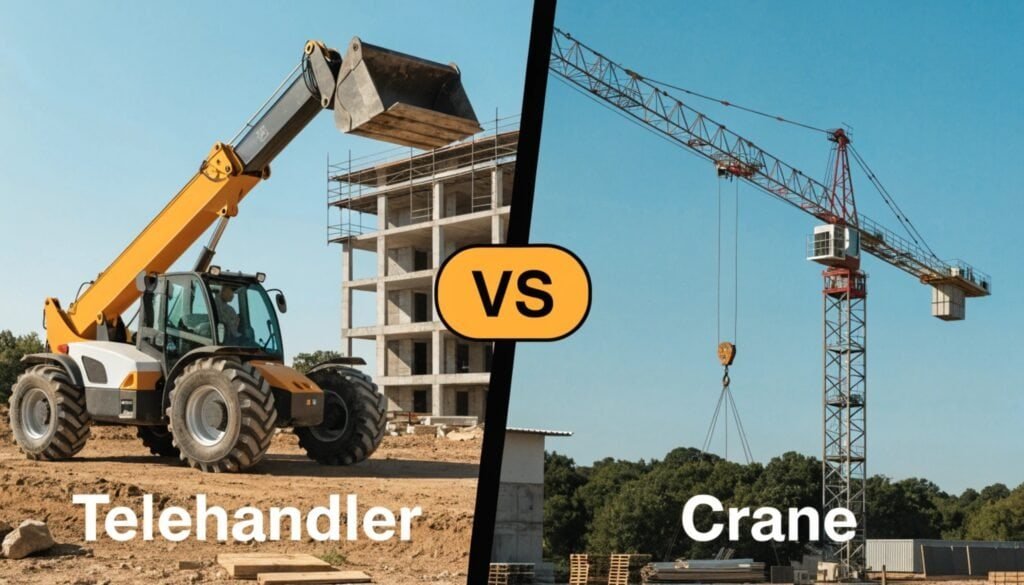
When people compare a telehandler to a crane, they usually start by asking, “Which one can lift higher or heavier?” From my 15 years in this business, I can tell you that’s often the wrong first question. A better question is, “Which machine can keep up with the real pace of my job site?” Cranes are specialists. They are brought in for the big, scheduled events, like lifting a massive HVAC unit onto a roof. They do one thing exceptionally well, but they require planning, setup, and a dedicated team. After that one big lift, the crane often sits idle or leaves the site. A telehandler, on the other hand, is a master of the everyday workflow.
It’s the versatile player that moves continuously around the site, handling one task after another. It unloads trucks, carries materials to the second floor, cleans up debris with a bucket, and then lifts a smaller load into place with a hook. It’s built for the constant motion of a productive site. This fundamental difference in purpose is what should guide your decision.
1, Telehandler vs Crane of Key Differences ?
Are you confused by these two machines that both lift things? Using the wrong one for the job means frustrating delays and wasted budget. Let’s break down their fundamental designs.
The main difference is mobility and versatility. Telehandlers are like a multi-tool for your job site, designed for all-terrain travel and multiple tasks with different attachments. Cranes are specialized, high-capacity instruments for heavy, static lifts that often require transport and careful setup.
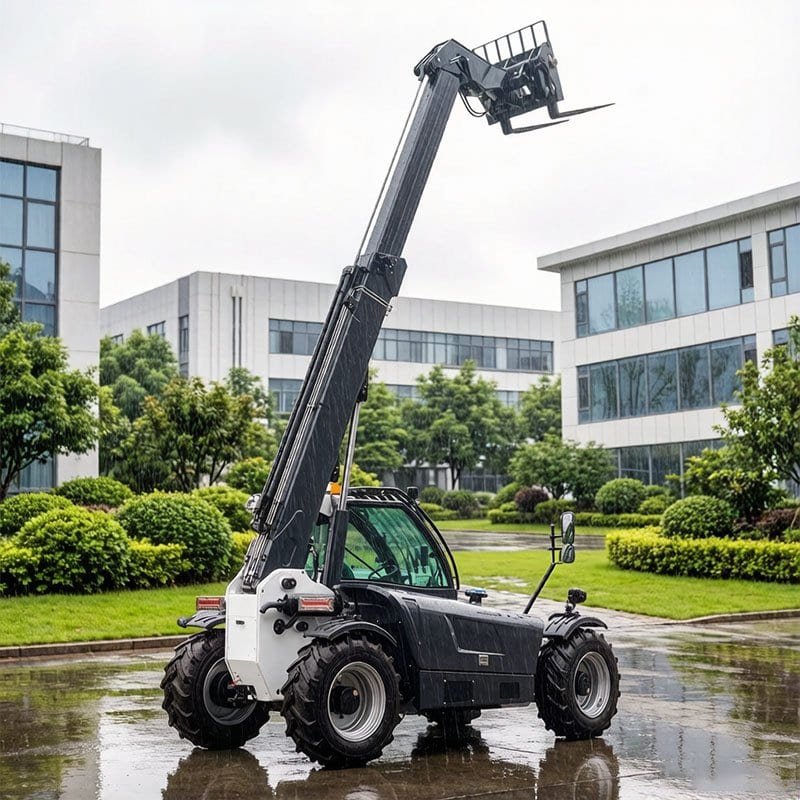
Let’s dive deeper into what makes these machines so different in practice. It helps to think of the telehandler as your site’s utility player and the crane as your special-teams powerhouse.
The Telehandler: Your All-Terrain Multi-Tool
The telehandler originally started in agriculture but quickly found its home on construction sites because it’s so adaptable. Its greatest strength is its ability to use a wide range of attachments. One minute it’s a forklift with its forks, the next it’s a small crane with a lifting jib, and then it can be a loader with a bucket. This ability to switch jobs means one machine does the work of three. They are also true off-road machines, built to handle the mud, slopes, and rough ground of a typical construction site.
This means they can get to places a truck-mounted crane simply can’t. From my experience exporting these machines, I know that operators can get comfortable with them relatively quickly, which reduces training costs.
The Crane: Your Specialized Heavy-Lifter
Cranes, whether they are tower cranes, mobile all-terrain cranes, or truck-mounted cranes, are designed for one primary purpose: lifting extremely heavy loads to great heights. They are essential for tasks like erecting steel building frames or placing heavy concrete sections. However, this power comes with requirements. Most cranes need a firm, level surface to set up their outriggers for stability. They are not designed to just drive across a muddy field. Operating a crane also requires a highly skilled, certified operator, often working with a team of riggers and signalers. Moving a crane, even across a large site, can be a major operation that requires partial disassembly or a separate transport vehicle.
| Comparison | Telehandler | Crane |
|---|---|---|
| Site-to-Site Mobility | ✅ Self-Propelled | ❌ Usually Needs Transport |
| Multiple Attachments | ✅ Yes | ❌ Single Function |
| Rough Terrain Ability | ✅ Excellent | ⚠️ Needs Level Ground |
| Max Lift Capacity | ⚠️ Medium-Low | ✅ Very High |
| Max Lift Height | ⚠️ Medium-Low | ✅ Very High |
2,When Is It Ideal To Use A Telehandler As A Hoisting Device Instead Of Other Types Of Equipment?
Facing a medium-sized lift of a few tons? Choosing a big crane might be overkill, wasting a whole day on a one-hour job. You need to know when the telehandler is the smarter choice.
A telehandler is the ideal hoisting tool when a job involves multiple lift points across a site, needs fast repositioning, or is on rough terrain. It excels in dynamic environments where a crane’s setup time would create major delays, especially for loads between 2 to 5 tons.
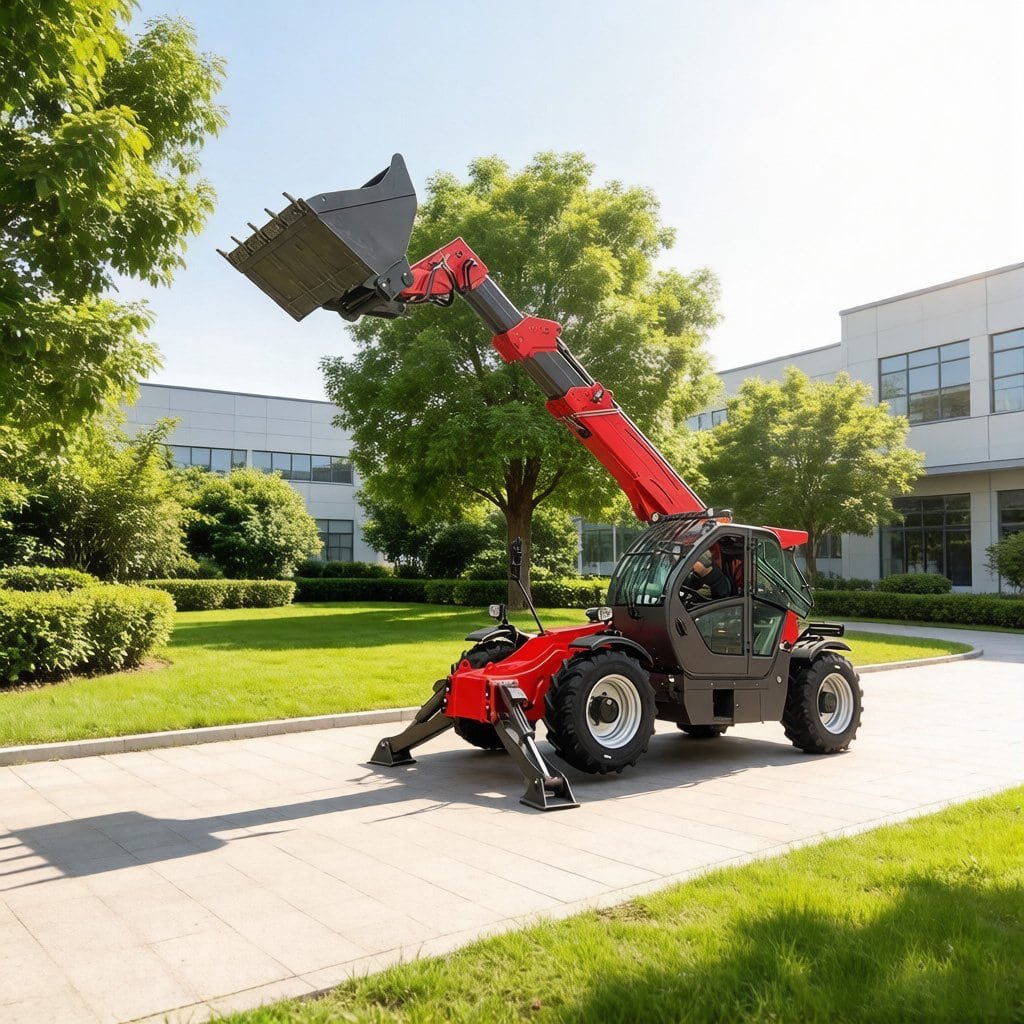
Many jobs fall into an “overlap zone.” These are lifts that are typically between 2 to 5 tons and need to go up to heights of 10 to 18 meters. Both a small crane and a medium-sized telehandler can technically do this job. This leads many to believe the choice doesn’t matter much. This is a critical mistake.
In my professional opinion, in this overlap zone, the only reason to choose a crane is if you already have one sitting idle on your site. For nearly every other scenario, the telehandler is the faster, more economical, and more efficient solution.
Let’s imagine a real-world scenario. Your task for the day is to lift four pallets of materials, each weighing 2.5 tons, to a height of 12 meters. But you have to do this at three different locations on your building site.
- With a Crane: You set up the crane at the first spot, which can take 30-60 minutes. You do the four lifts. Then, you spend another 30-60 minutes packing up the crane to move it to the next location. The cycle repeats. You spend more time setting up and tearing down than you do actually working.
- With a Telehandler: You drive the telehandler to the first spot. You’re set up and ready to lift in under 5 minutes. After the lifts are done, you simply drive it to the second spot and repeat. The entire job is completed in the time it would have taken just to set up the crane once.
In this common scenario, the telehandler isn’t just an alternative; it is the clear winner in dynamic efficiency. It’s built for a workflow that involves movement and repetition, which is the reality of most job sites.
3,Capacity and Lifting Performance?
Are you worried that a telehandler just isn’t strong enough? Focusing only on the maximum capacity number on a spec sheet can be very misleading. Let’s look at what capacity means for real performance.
Cranes have unbeatable maximum lifting capacity for singular, heavy objects. But a telehandler’s true performance is its versatile load chart across a full range of motion, combined with its ability to transport materials across the site before and after the lift.
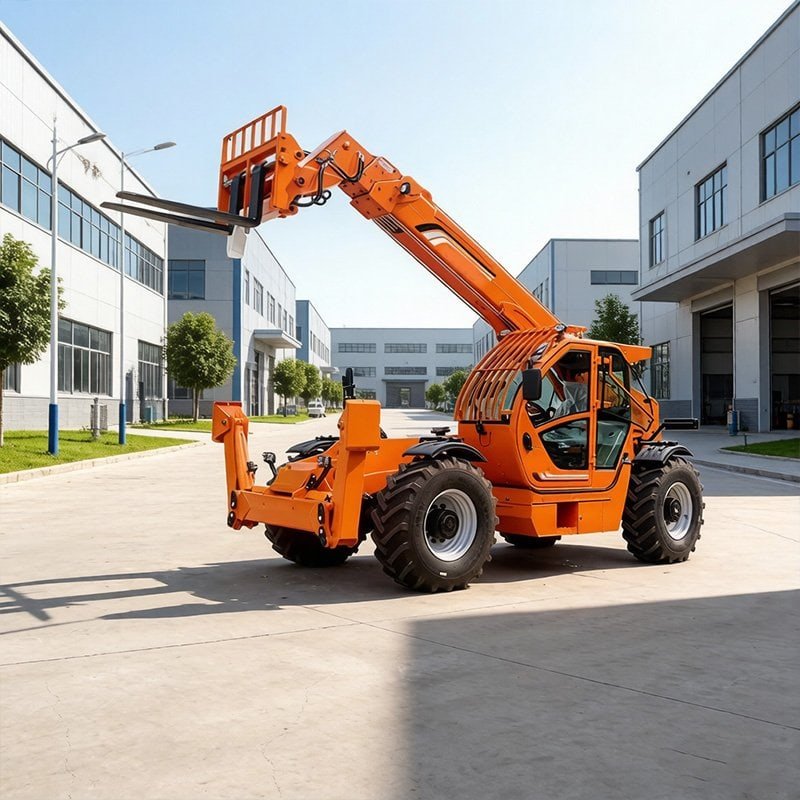
When we talk about lifting performance, it’s not just one number. It’s about how that capacity can be used in a three-dimensional space.
Understanding the Load Chart
Every telehandler has a load chart in the cab. This is the most important document for safe operation. It shows you exactly how much weight the machine can lift based on the boom’s extension and angle. For example, a telehandler might lift its maximum capacity of 4 tons when the load is close to the machine. But as you extend the boom forward and upward, that capacity will decrease. This isn’t a weakness; it’s physics. The great thing about a telehandler is the huge working envelope it provides. It can pick up a load from the ground and place it deep inside the second story of a building.
Performance in Context
A crane’s performance is often about a single point: lifting a very heavy load straight up. A telehandler’s performance is about the entire process. As a manufacturer producing models from 2.5 tons up to 8 tons, with lift heights from 7 to 18 meters, I can tell you that this range covers the vast majority of daily lifting needs on almost any site. The telehandler might not lift the 20-ton steel beam, but it will lift the 100 pallets of bricks, the bundles of lumber, the bags of cement, and the tools needed to install that beam. Its performance is measured in tasks completed per hour, not just maximum tonnage.
4,Which lifting solution is best for my site?
Still not sure which machine is the right fit for your project? Making the wrong choice can disrupt your workflow and slow everyone down. Let’s match the machine to your specific site type.
For dynamic sites like farms, warehouses, or residential projects with varied tasks, a telehandler is best. For large-scale construction focused on heavy structural lifts, a crane is necessary. The key is to match the equipment to the site’s primary activities.
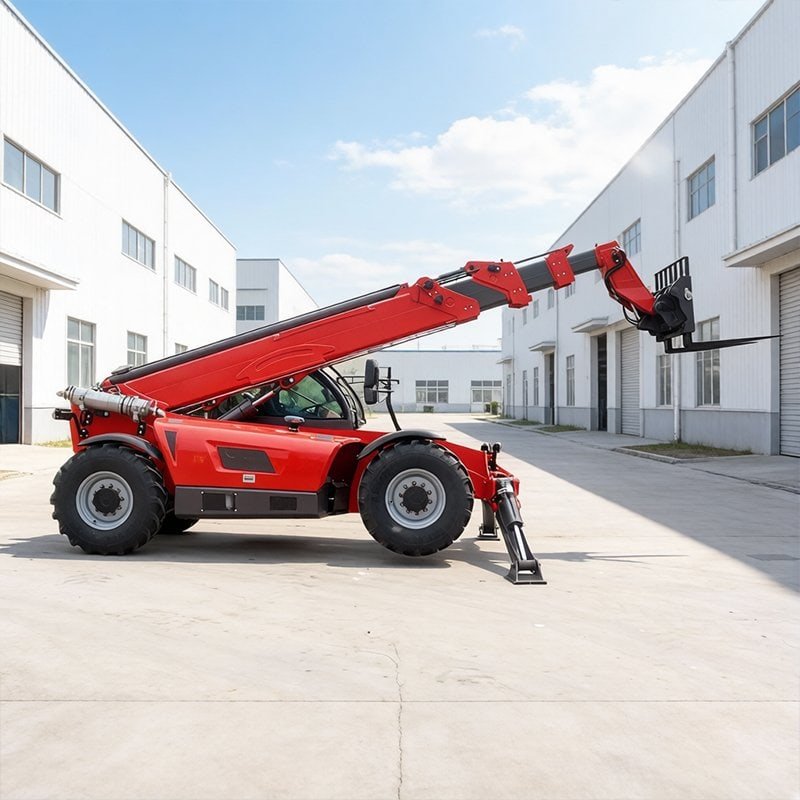
The best way to decide is to look at the type of work you do most often. Your primary business will point you directly to the right machine. We can break this down easily.
| Project Type | Telehandler | Crane |
|---|---|---|
| Farm / Warehouse | ✅ High Match | ❌ Low Match |
| Residential Remodel | ✅ High Match | ❌ Overkill |
| Steel Structure Install | ⚠️ Partial Use | ✅ Necessary |
| Multi-Site Rotation | ✅ Perfect Fit | ❌ Unsuitable |
Why This Match-Up Works
- Farms and Warehouses: These environments are all about moving a wide variety of materials constantly. A telehandler can move hay bales, load grain into a silo, stack pallets, and clear snow. A crane would be useless for 99% of these tasks.
- Residential Remodeling: Sites are often tight, with poor access and soft ground. A telehandler can navigate this terrain easily, lifting bundles of shingles to the roof or carrying framing materials. A crane is often too large and its setup cost is too high for the scale of the work. It’s simply overkill.
- Steel Structure Installation: This is the crane’s home turf. When you need to lift and precisely place massive, heavy steel beams high in the air, a crane is the only tool for the job. A telehandler can play a supporting role, bringing materials to the crane, but it can’t do the main lift.
- Multi-Site Work: If your business involves moving between several job sites in a single day or week (like a framing or roofing crew), the telehandler is the perfect fit. You can drive it onto a trailer or even drive it on the road (depending on local laws) without needing a specialized transport company. A crane is simply not designed for this kind of fast-paced, multi-location work.
5,Which option is the most cost-effective?
Do you think the daily rental price tells you the real cost? Hidden expenses like transport, extra crew, and downtime can completely destroy your budget. Let’s uncover the true cost-effectiveness of each machine.
A crane’s total operating cost is often much higher due to transport fees, long setup times, and the need for a specialized crew. A telehandler is more cost-effective because of its versatility, which reduces idle time, and its ability to transport itself on-site.
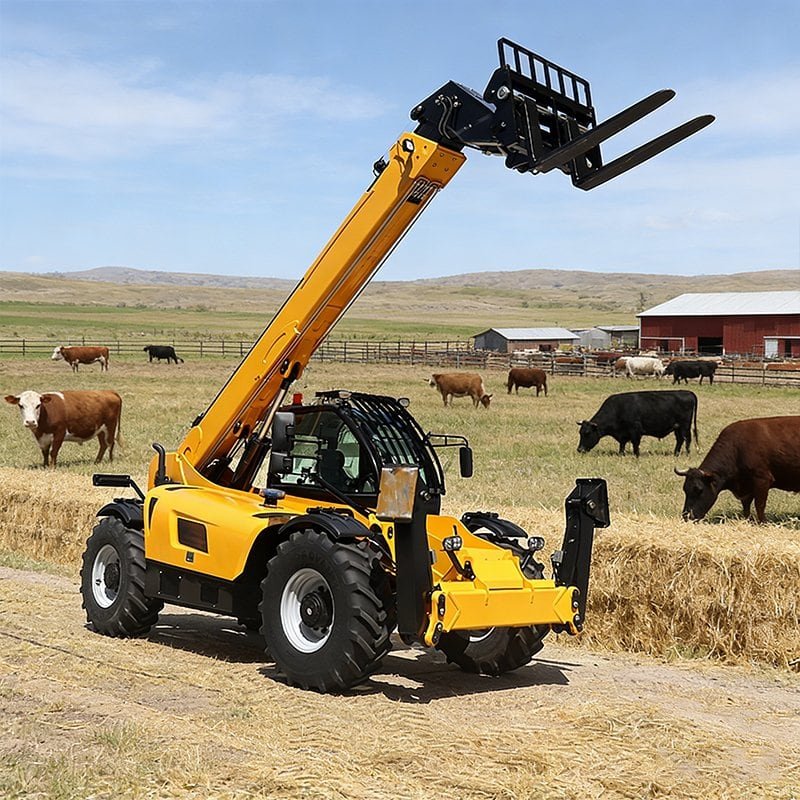
The price on the rental agreement is just the beginning of the story. To understand the true cost, you have to look at all the associated expenses required to get the job done. As a manufacturer focused on providing long-term value, this is a conversation I have with clients all the time. Our ISO9001 and CE certifications aren’t just for quality; they represent a commitment to reliability and a lower total cost of ownership over the machine’s life.
Let’s break down the hidden costs.
| Cost Factor | Telehandler | Crane |
|---|---|---|
| Daily Rental/Lease | Lower | Higher |
| Mobilization Cost | None (Self-propelled) | Trailer + Time + Permits |
| Personnel Required | Basic Training | Certified Operator + Rigger + Signaler |
| Idle Time Loss | Low (Can do other tasks) | High (Single purpose) |
The most significant hidden cost is “Idle Time Loss.” When a crane is waiting for its next lift, it is doing nothing. It’s a very expensive piece of equipment just sitting there, and you are paying for it. But when a telehandler has a break between lifts, it’s not idle. It can be used to unload the next truck, move pallets of materials, or clean up the site with a bucket attachment. This ability to always be productive is what makes the telehandler such a powerful financial asset for any project. It maximizes the return on your investment every single hour it’s on site.
Conclusion
Instead of asking “how heavy?”, ask “how often and where?”. This new way of thinking often makes the telehandler your first and best choice for a more productive site.If you want to achieve high efficiency, versatility, and lower operating costs on construction sites, warehouses, or farms, Hixen Telehandlers are the ideal solution. We offer a range of models from 2.5 to 8 tons, with customizable colors and configurations to suit your specific needs. With exceptional flexibility and cost-effectiveness, a Hixen Telehandler can handle the workload of multiple machines, making your operations smoother and more productive. Contattaci today to find the perfect model for your site and maximize efficiency while reducing costs.
