
Want Telehandler Checklist? Struggling to choose the right telehandler? Buying the wrong machine is a costly mistake. I’ve created a checklist to ensure you invest wisely and avoid post-purchase regret.
A telehandler selection checklist is your best defense against expensive purchasing errors. It forces you to systematically evaluate your specific needs for lift capacity, height, reach, job site conditions, and attachments, ensuring the machine you choose is a perfect fit for your work from day one.
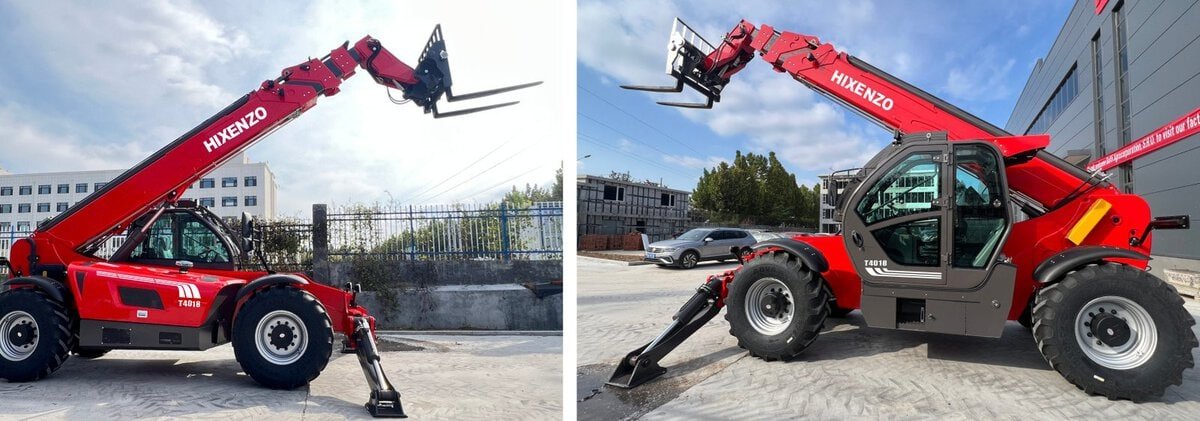
Choosing a telehandler is a big investment. I’ve been manufacturing and exporting these machines for 15 years, and I’ve heard too many stories of buyers who wished they’d done more homework. They get a machine on-site only to find it can’t lift heavy enough, reach high enough, or even turn around in their workspace. These aren’t small problems; they are massive, expensive headaches. This checklist is designed to walk you through every critical decision point, so you can buy with total confidence. Let’s make sure your new telehandler is an asset, not a liability.
1,Why Do You Need a Telehandler Selection Checklist?
Think you can just pick a telehandler and hope for the best? Many people do, and they often regret it. A simple checklist can prevent major buyer’s remorse.
A checklist is vital because it stops you from overlooking critical details. It prevents common, costly mistakes like choosing the wrong lift capacity or height, realizing attachments don’t fit, or discovering the machine is too big for your site. It’s your roadmap to a smart purchase.
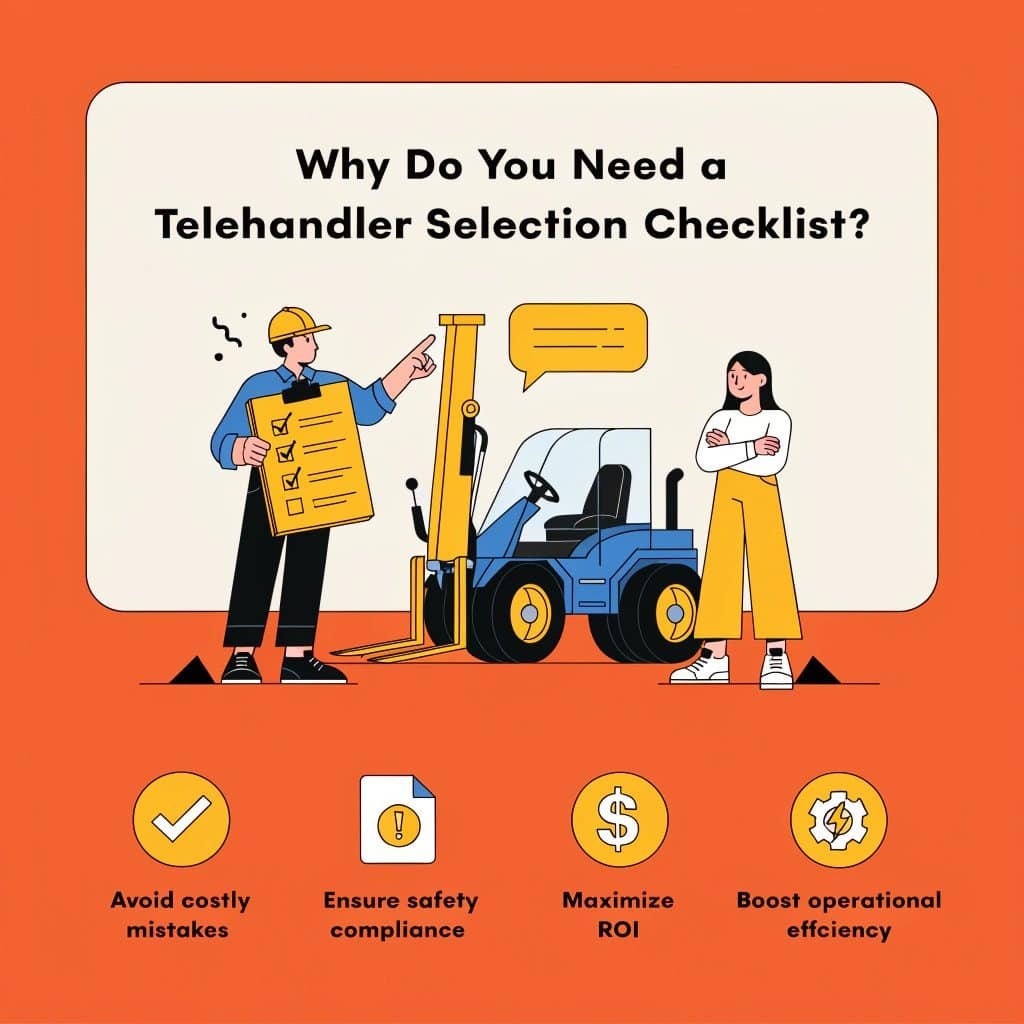
Over my 15 years in this business, I’ve seen it all. A construction manager in Europe bought a machine without checking its turning radius, only to find it couldn’t navigate the narrow city streets of his project. An American farmer bought a telehandler based on price, then found the maintenance costs were double what he expected because parts were hard to get. These aren’t isolated incidents. The most common problems I hear are:
- The lift capacity is just slightly too low for their main task.
- The lift height is perfect, but the forward reach is too short to clear an obstacle.
- Their brand-new grapple attachment won’t connect to the machine’s hydraulics.
- The machine gets stuck constantly because they didn’t opt for 4WD on a muddy site.
- The engine is an obscure brand, and finding a mechanic or a simple filter becomes a nightmare.
Each of these issues could have been easily avoided by asking the right questions before the purchase. This checklist is built from those exact questions. It’s your insurance policy against making a bad investment.
Checklist #1: Define Your Primary Application?
Choosing a machine without knowing its main job is a recipe for disaster. This leads to getting a model that’s either too much or not enough. Define your primary use first.
Defining your primary application is the most important first step. Whether for construction, agriculture, warehousing, or mining, your main use determines the required capacity, height, drivetrain (like 4WD), and rough-terrain capabilities, guiding all other decisions.

This is the foundation of your entire decision. A telehandler that excels on a paved warehouse floor will struggle on a muddy farm, and a massive machine for mining is overkill for a small construction site. Don’t just think about the machine; think about the work it will do every single day. I always ask my customers to pinpoint their number one job for the machine. Is it lifting pallets of bricks to a second story? Moving hay bales across a field? Or stocking shelves in a large distribution center? The answer changes everything.
Here’s how different applications influence the machine’s specifications:
| Application | Key Considerations | Typical Specs |
|---|---|---|
| Construction | High lift, forward reach, rough terrain | 4-8 ton capacity, 10-18m height, 4WD |
| Agriculture | Versatility, attachment use, speed | 2.5-5 ton capacity, 7-9m height, 4WD, good hydraulic flow |
| Warehousing | Compact size, maneuverability, emissions | 2.5-4 ton capacity, electric or low-emission engine, small turning radius |
| Material Handling | Repetitive lifting, durability, efficiency | 3-5 ton capacity, robust chassis, easy maintenance |
| Mining | Extreme durability, high capacity, safety | 5-8+ ton capacity, heavy-duty build, certified safety features |
By starting here, you immediately narrow your search from hundreds of models to a handful of suitable candidates.
Checklist #2: Determine the Right Lift Capacity?
Guessing the lift capacity you need is risky. It can lead to an unsafe work environment or an underutilized machine. You must ask a few key questions to get it right.
Don’t just pick a number. Ask: What’s my heaviest typical load? Should I add a 20-30% safety buffer for heavier lifts or future needs? Could my projects require lifting even heavier materials later? Answering these ensures you choose a capacity that is safe and future-proof.
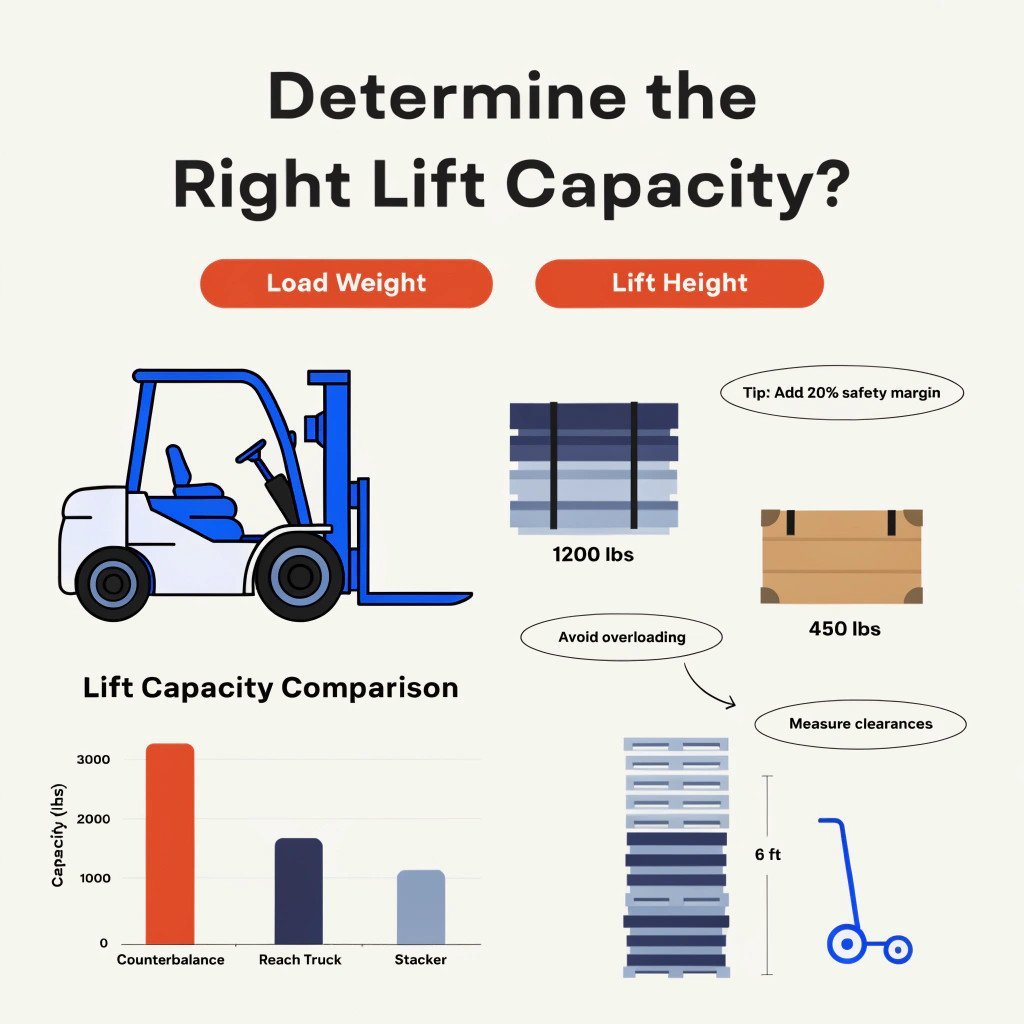
Most spec sheets you see will shout about a machine’s maximum lift capacity, for example, “4 Tons!” But that number can be misleading. That is the maximum weight it can lift when the boom is retracted, close to the machine. As soon as you extend the boom up or out, that capacity drops significantly. This is shown on the load chart, which is the most important safety document on any telehandler.
Instead of getting fixated on the marketing number, I advise my clients to follow this simple thought process:
- Identify Your Heaviest Load: What is the absolute heaviest item you will need to lift on a regular basis? Don’t guess. Find the actual weight of that pallet of cement, bundle of steel, or full bucket of gravel.
- Add a Safety Buffer: I always recommend adding a 20-30% buffer to that weight. If your heaviest load is 3 tons, you should be looking for a machine rated for at least 3.6-4 tons. This prevents you from constantly operating the machine at its absolute limit, which wears it out faster and leaves no room for error.
- Think About the Future: Will your business grow in the next 3-5 years? Might you take on bigger projects or handle larger materials? Buying a machine with slightly more capacity than you need today is much cheaper than having to sell and upgrade in two years.
Checklist #3: Calculate the Required Lift Height and Reach?
Many buyers focus only on the maximum lift height. But if you can’t clear obstacles or place loads precisely where they need to go, that height is useless. You need to consider reach, too.
Look beyond just the max lift height. Ask yourself: What is my highest working point? Do I need to lift loads over obstacles like walls or trenches? How much horizontal forward reach is essential? This ensures the telehandler can actually place materials where you need them.
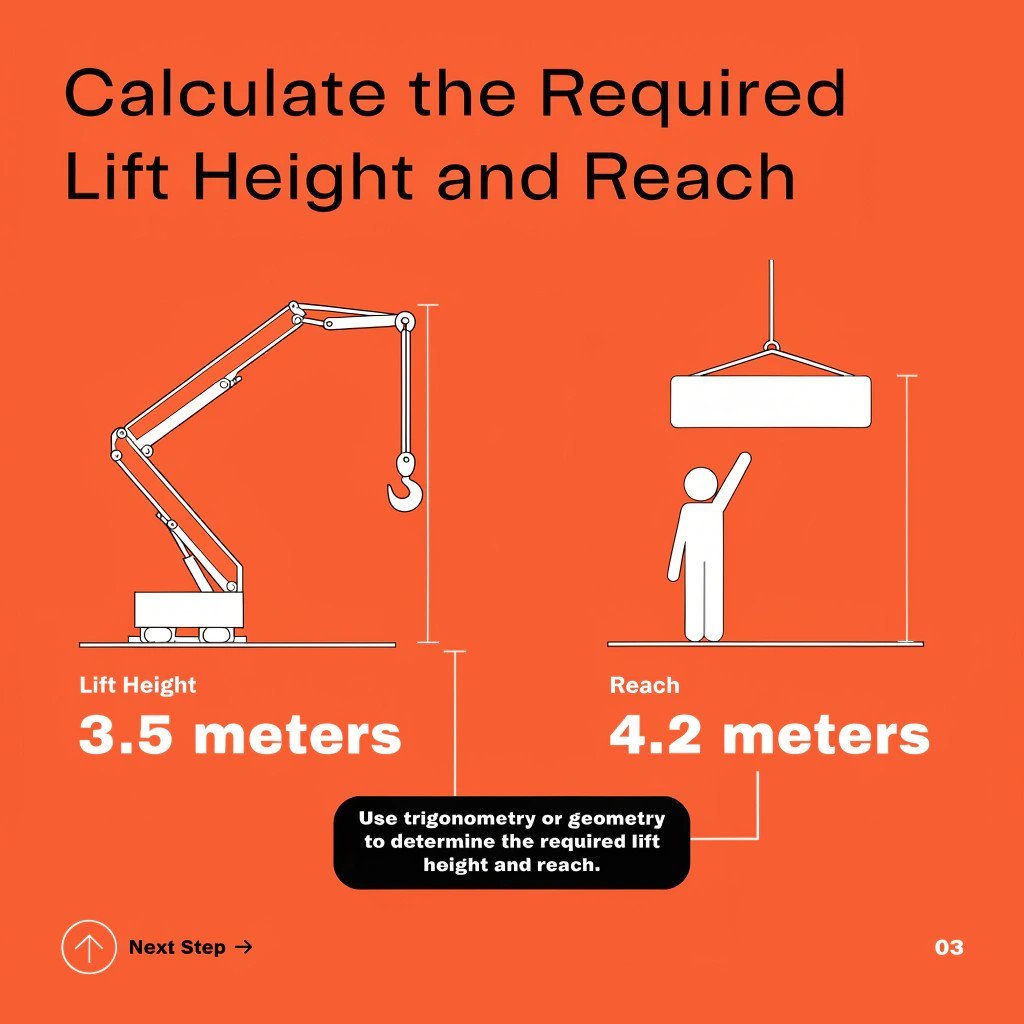
I once had a customer who was a roofer. He bought a 14-meter telehandler because the building’s roofline was 13 meters high. He thought he was safe. But when he tried to place a pallet of shingles in the center of the roof, the boom couldn’t reach. He had the height, but he didn’t have the forward reach. He had to place everything on the edge of the roof and move it by hand, wasting hours.
To avoid this, grab a tape measure and go to your job site. Answer these specific questions:
- What is the maximum vertical height? Measure the highest point you need to place materials. Is it the top of a wall? A second-story window? The peak of a roof?
- Are there any obstacles? Will you need to reach over anything? This could be a ditch, a foundation wall, scaffolding, or other equipment. The distance you need to reach over these obstacles is your required forward reach.
- Where is the load’s final destination? Don’t just measure to the edge of the structure. Measure to the exact spot the load needs to be. As in the roofer’s story, reaching the edge is different from reaching the center.
When you talk to a supplier, give them both numbers: “I need to lift to a height of 10 meters at a forward reach of 5 meters.” This gives a complete picture and ensures you get a machine that can actually do the job.
Checklist #4: Evaluate Your Job Site Conditions?
A powerful telehandler is worthless if it can’t operate effectively on your worksite. People often forget this, getting a machine that gets stuck, can’t maneuver, or is unsafe on slopes.
Your job site dictates key machine features. Is the ground muddy or uneven, requiring 4WD? Are you working in tight spaces where a small turning radius is vital? Will you operate on slopes? Answering these ensures your telehandler can work efficiently and safely on your site.
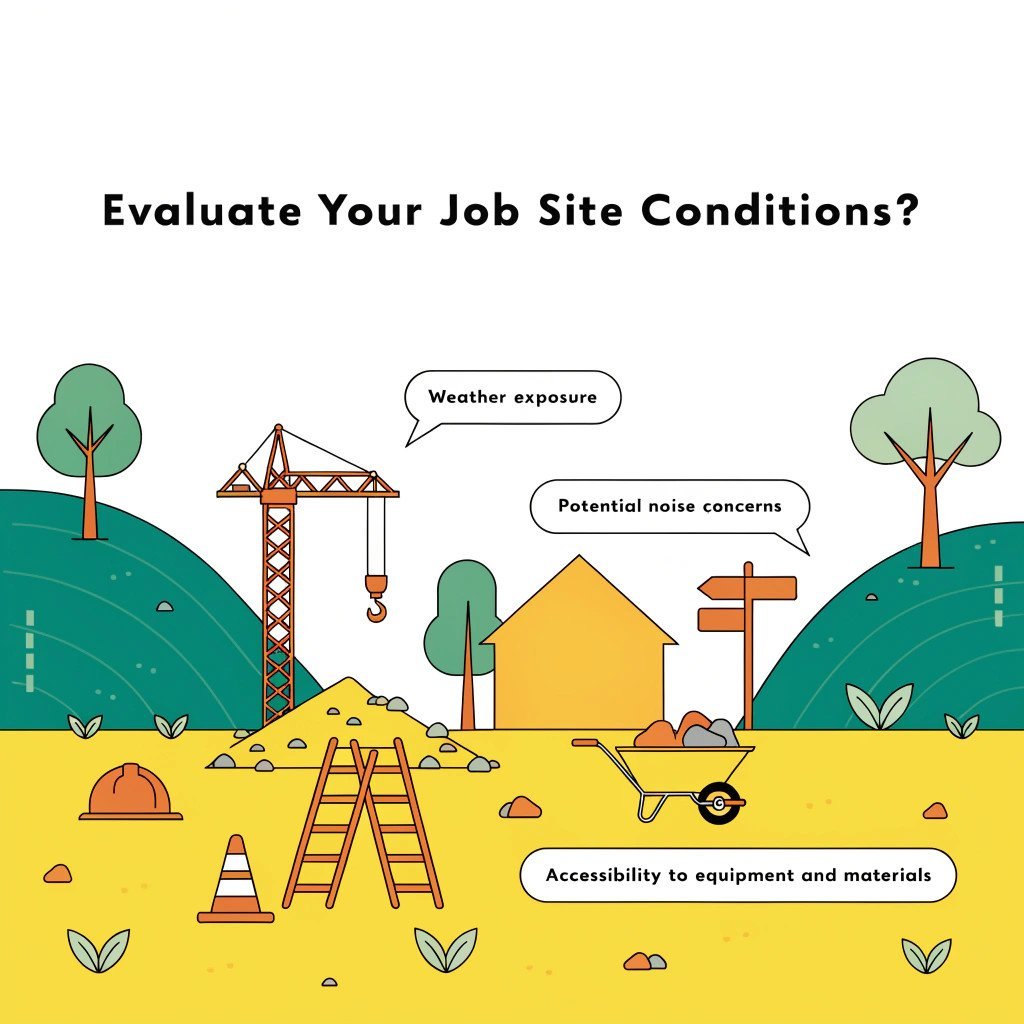
Before you even look at models, walk your job site with a critical eye. The environment itself will write your machine’s specifications for you. We export our telehandlers globally, from the tight streets of Europe to the wide-open farms of South America, and job site evaluation is the one thing we stress to every single buyer.
Ask yourself these questions about your primary workplace:
- What is the ground like? Is it smooth, paved concrete? Or is it soft dirt, mud, and gravel? For anything other than perfect pavement, a four-wheel-drive (4WD) machine is not a luxury, it’s a necessity for traction and safety.
- How much space do you have? Measure the narrowest gateways, aisles, or paths the machine must travel. This determines the maximum width of the machine you can consider. Also, pay close attention to the turning radius. In confined spaces, a machine with a tight turning circle is far more productive.
- Is the terrain flat or sloped? If you have hills, slopes, or ramps, you need a machine with good gradeability and a robust braking system. Some telehandlers also come with frame leveling, which is a critical safety feature for lifting loads on uneven ground.
Thinking about these factors will prevent you from buying a machine that is physically incompatible with your work environment.
Checklist #5: Choose the Right Tires and Steering Mode?
Tires and steering are often treated as minor details, but they are not. The wrong tires wear out quickly or provide poor traction, and the wrong steering mode severely limits your maneuverability.
Choose tires based on your terrain: pneumatic for rough ground, solid for puncture-proof needs. Also, consider steering modes. Two-wheel steer is for road travel, four-wheel steer is for tight turns, and crab steer is for moving sideways in confined spaces.
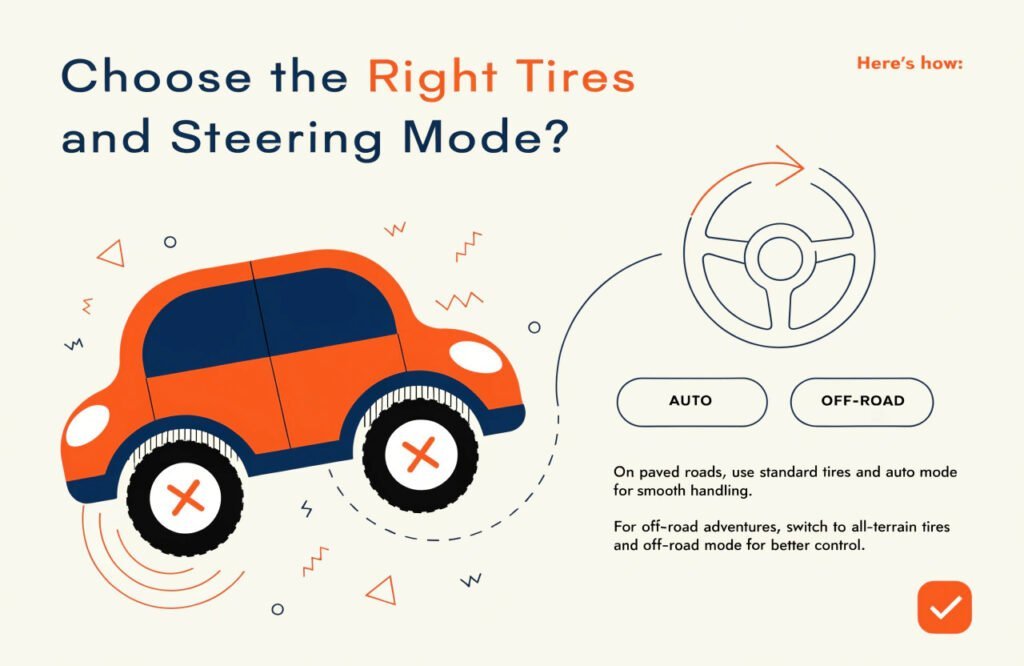
Let’s break this down because getting it right makes a huge difference in daily operation.
Tire Selection
Your tires are the machine’s only point of contact with the ground. Choosing the right ones affects performance, safety, and operating costs.
| Tire Type | Idéal pour | Avantages | Inconvénients |
|---|---|---|---|
| Pneumatic (Air-filled) | Rough, uneven terrain (farms, construction) | Best traction, smoother ride | Prone to punctures |
| Solid | Paved surfaces, scrap yards, recycling | Puncture-proof, long lifespan | Hard ride, less traction on loose ground |
| Foam-filled | Mixed-use, high-puncture risk areas | Puncture-proof like solid, better ride than solid | Heavy, expensive |
Steering Modes
Modern telehandlers offer incredible agility thanks to multiple steering modes. Understanding them helps you navigate your site efficiently.
- Two-Wheel Steer: This is just like your car, where only the front wheels turn. It’s best for traveling longer distances or on public roads, as it’s the most stable at higher speeds.
- Four-Wheel Steer (Circle Steer): The front and rear wheels turn in opposite directions. This drastically reduces the turning radius, allowing you to make sharp turns in very tight quarters. It’s a must-have for cluttered construction sites or narrow farmyards.
- Crab Steer: The front and rear wheels turn in the same direction. This allows the entire machine to move sideways at an angle, like a crab. It’s perfect for positioning the machine parallel to a wall or navigating tight alleyways.
Checklist #6: Plan the Attachments You Need?
So many buyers assume attachments are universal, like “plug and play.” They buy the machine, then the attachment, only to find the hydraulic connectors don’t match or the machine can’t power it.
To avoid compatibility issues, list every attachment you currently need or might need in the future—like forks, buckets, augers, or bale clamps—before you buy the machine. This allows you to confirm the telehandler has the correct hydraulic flow and quick-coupler.
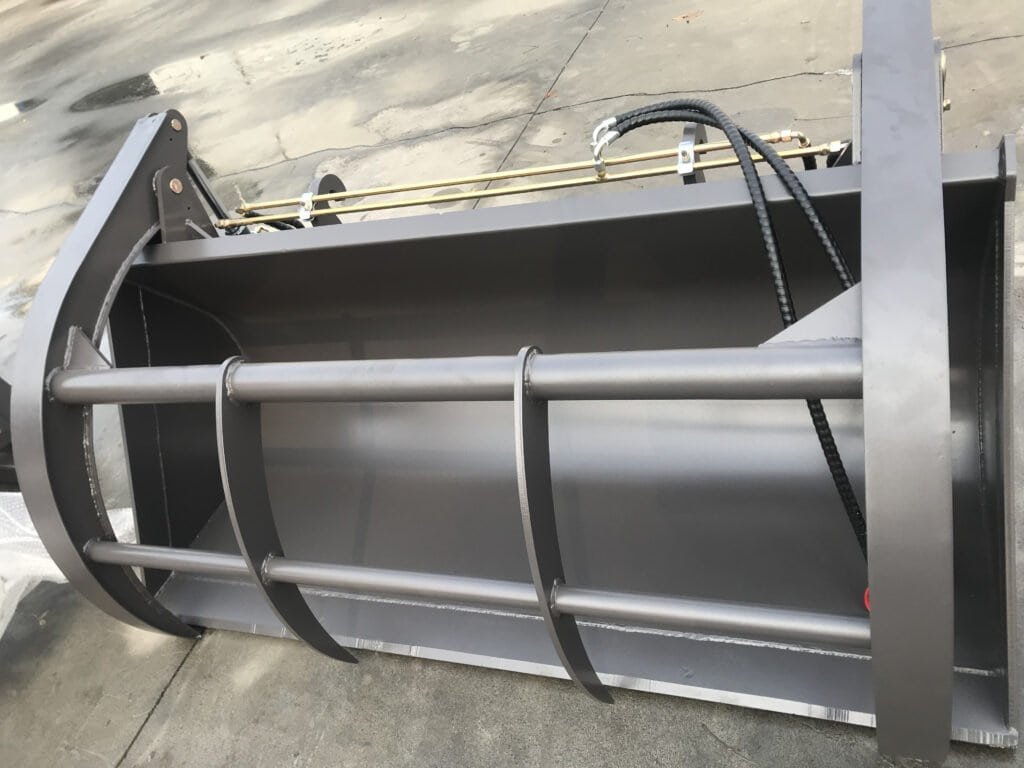
A telehandler’s true value lies in its versatility, which comes from its ability to use different attachments. But this versatility only works if you plan for it. I received a call once from a frustrated customer in Brazil. He had bought one of our telehandlers for his farm, and it worked great with the standard forks. A few months later, he bought a new hydraulic grapple to handle logs, but it was incredibly slow and weak. The problem wasn’t the grapple; it was his machine. He had chosen a model with standard hydraulic flow, but the grapple required high flow to operate effectively. It was a costly mismatch.
To prevent this, make a list of every attachment you plan to use, both now and in the future:
- Pallet Forks (usually standard)
- General Purpose Bucket
- Grapple Bucket
- Auger (for digging holes)
- Bale Clamp
- Lifting Jib or Hook
Once you have your list, discuss it with the supplier. You need to confirm two things:
- Hydraulic System: Does the machine have the required hydraulic flow (measured in liters or gallons per minute) and pressure to power your most demanding attachment?
- Coupler/Carriage: Does the machine use a universal quick-coupler system (like a Skid Steer style) or a proprietary one? A universal coupler gives you more options for sourcing attachments from different manufacturers.
Checklist #7: Check Engine, Hydraulics, and Maintenance Requirements?
Buyers get excited about lift specs and forget to look under the hood. This can lead to a machine that’s a nightmare to service with high running costs and long downtimes.
Look under the hood. Confirm the engine brand, its emission standards, and the hydraulic system’s flow rate. Most importantly, check how easy the machine is to service and if spare parts for the engine and hydraulics are readily available in your region.
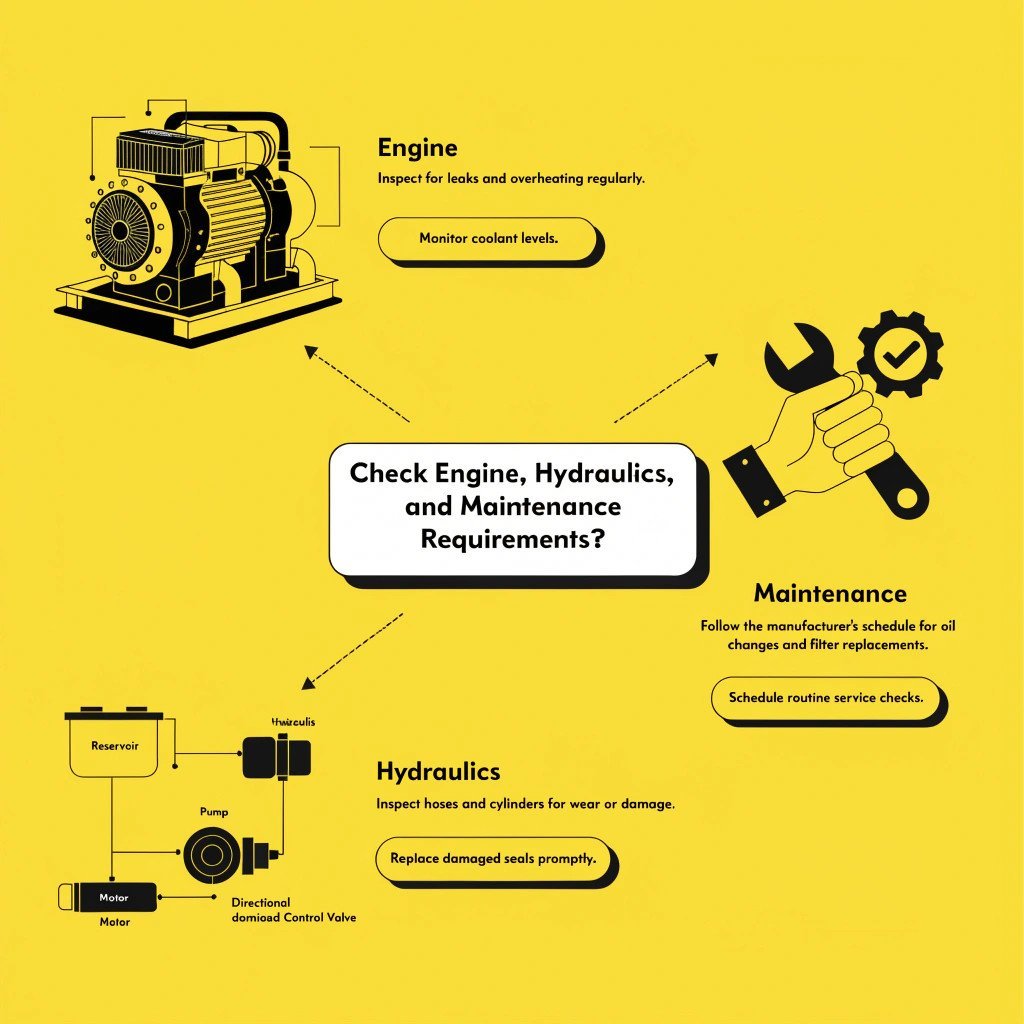
As a manufacturer who builds about 100 machines a month, I can tell you that the quality of the core components determines the machine’s lifespan and your ownership experience. A machine that is constantly down for repairs isn’t making you any money. When you’re evaluating a telehandler, put on your mechanic’s hat and check these points:
- Engine Brand: Is it a globally recognized brand like Perkins, Cummins, or Yanmar? A well-known engine means that service and parts are likely available no matter where you are in the world. An obscure engine brand can be a huge liability.
- Emission Standards: Does the engine meet your country’s local emission regulations (e.g., Tier 4 Final, Euro Stage V)? Importing a non-compliant machine can result in huge fines or prevent it from being used at all.
- Hydraulic System: We already discussed flow for attachments, but also look at the brand of the pumps and valves. Reputable brands indicate a quality build.
- Ease of Maintenance: Open the engine bay. Are the daily checkpoints (oil, coolant) easy to reach? How hard is it to access the filters (oil, fuel, air, hydraulic)? A machine that is easy to service is more likely to be serviced properly.
- Parts Availability: Ask the supplier directly: “How quickly can you get me a replacement starter motor or a set of hydraulic hoses?” A good supplier will have a plan for spare parts.
Checklist #8: Compare Supplier Support, Warranty, and Spare Parts?
Focusing only on the machine’s price is a rookie mistake. A cheap machine with no support becomes the most expensive piece of equipment you own when it breaks down.
A reliable supplier is as important as a good machine. Check if they have export experience, offer a solid warranty, and can provide spare parts quickly. Do they offer technical support and pre-shipment video inspections? Good service determines your long-term ownership experience.
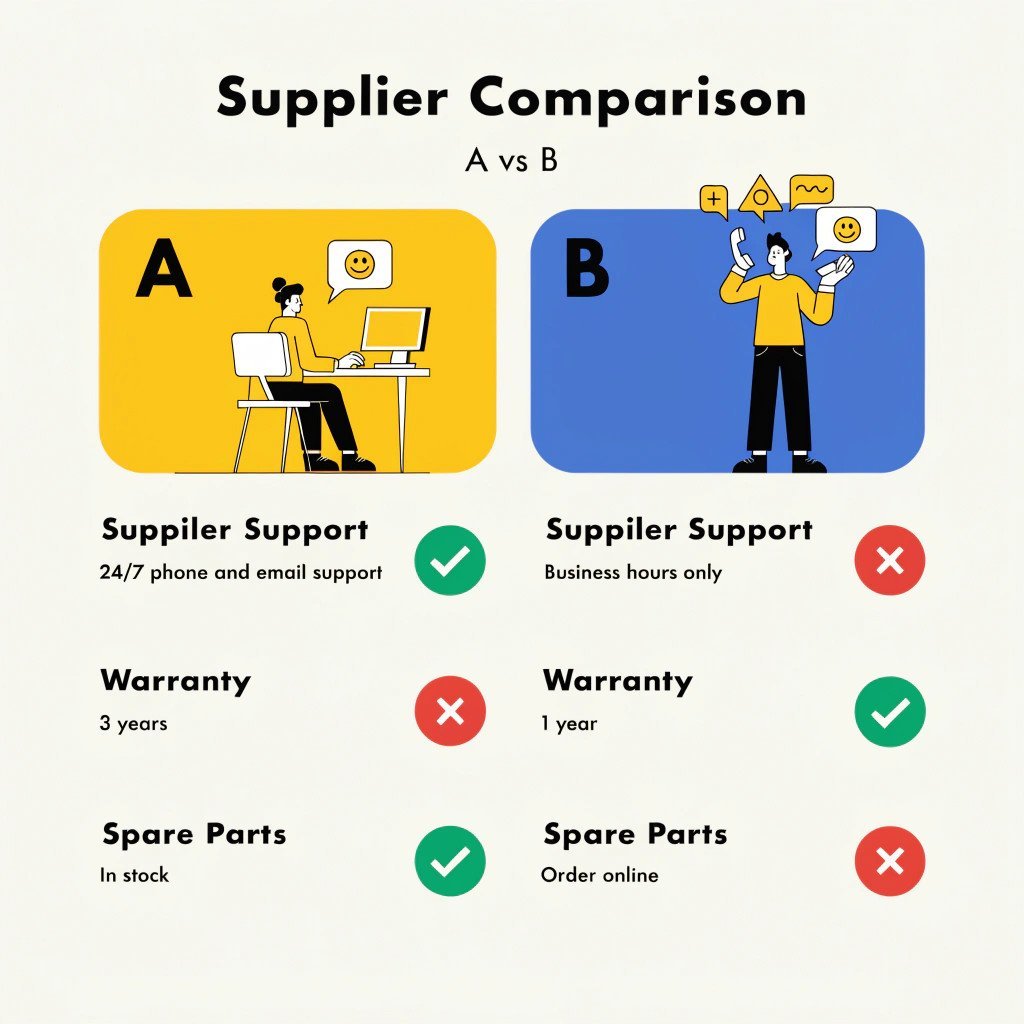
You aren’t just buying a machine; you are entering into a long-term relationship with the company that sold it to you. A great machine from a terrible supplier is a bad deal. Over our 15 years of exporting to Europe, the Americas, and Africa, we’ve learned that trust and support are what customers value most.
Here’s what to look for in a supplier of telehandler:
- Experience & Certification: Do they have a track record of exporting to your region? Are they ISO9001 certified for quality management and CE certified for safety standards? This shows they are a professional and legitimate operation.
- Garantie: What does the warranty cover, and for how long? A 1-year or 2000-hour warranty is standard. Understand what is covered (parts, labor?) and what the claim process is like.
- Spare Parts Support: This is non-negotiable. Ask them how they handle spare parts. Do they stock them? How fast can they ship them? A machine is useless if it’s waiting months for a part.
- Technical Support: If you have a problem, can you call or email someone who can help you troubleshoot? Do they provide manuals, wiring diagrams, and technical videos?
- Transparency: Do they offer a pre-shipment video inspection? This allows you to see your exact machine being tested before it leaves the factory, confirming everything is as you ordered. It’s a huge sign of a trustworthy partner.
2,Common Mistakes Buyers Make Before Purchasing a Telehandler?
Many eager buyers rush the process and make predictable, expensive errors when buy telehandler. Reviewing these common pitfalls one last time can help you avoid them. A simple check can save you a fortune.
The biggest mistakes are ignoring forward reach, underestimating future capacity needs, forgetting job site constraints like turning radius, and failing to plan for attachments of telehandler. The most costly error, however, is choosing a supplier on price alone, without verifying their long-term support and parts availability.
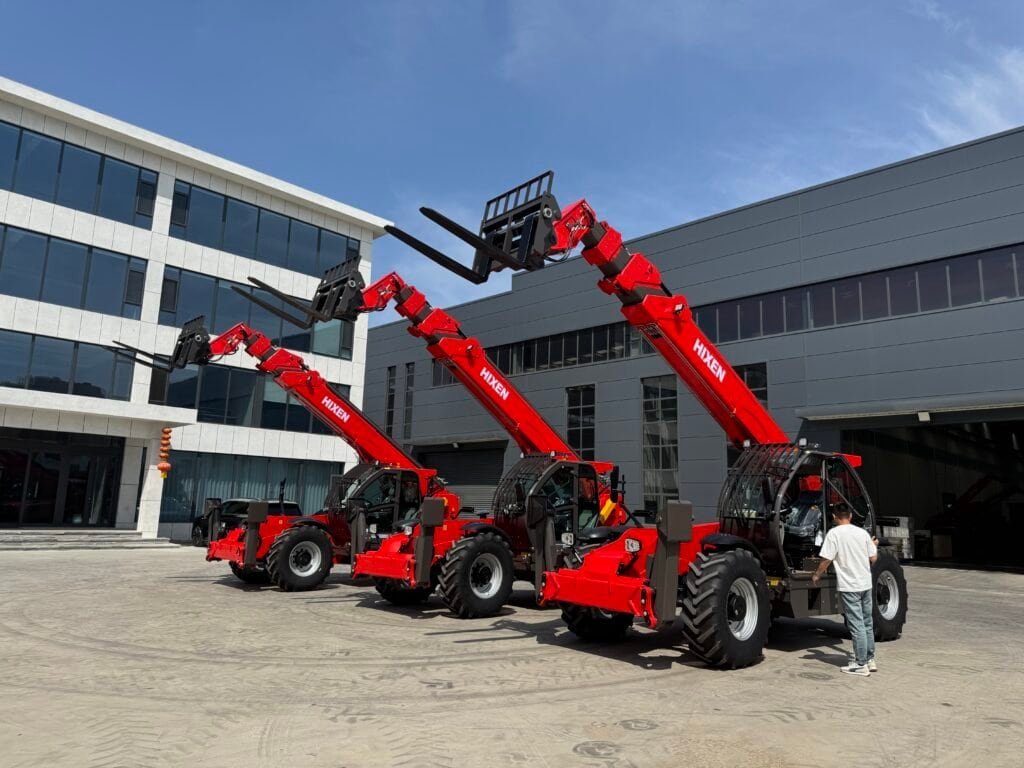
I’ve seen these mistakes happen time and time again. They are easy to make in the excitement of buying a new telehandler, but they have serious consequences. Before you sign any telehandler contract, do a final check to ensure you haven’t fallen into one of these traps.
Here is a summary of the most common blunders of telehandler:
- Focusing Only on Max Lift Height: Buyers forget that lift capacity drops dramatically as the boom extends. They don’t check the load chart for the height AND reach they actually need.
- Buying for Today, Not Tomorrow: They buy a machine that perfectly fits their current biggest load, with no safety buffer. When a slightly bigger project comes along, the machine is suddenly too small.
- Forgetting the Job Site: They fall in love with a machine’s specs but never measure their gates or check the ground conditions. The machine arrives and either can’t fit or gets stuck.
- Treating Attachments as an Afterthought: They assume any bucket or grapple will work, only to discover their machine lacks the hydraulic flow or has an incompatible coupler.
- Choosing Price Over Partnership: They are lured by a rock-bottom price from an unknown supplier. The first time the machine needs a part or technical support, they find they are completely on their own. A reliable partner is worth more than the initial discount.
Conclusion
Using a detailed telehandler checklist transforms your purchase from a guess into a calculated investment. It ensures you get the right telehandler for your needs, saving you time, money, and frustration.
Still not sure which telehandler is right for your project?
Contactez-nous today. As a factory with 15 years of export experience, our engineers can recommend the right telehandler model based on your lifting capacity, working height, and application—saving you time, money, and costly purchasing mistakes.You could follow us on Youtube and Contact with us for more information of Telehandler.
