
Struggling to navigate the complex market for construction machinery? The sheer number of types of telehandler can be overwhelming, and making the wrong choice can lead to project delays and budget overruns. You need a machine that perfectly matches your job’s demands, but it’s hard to know where to start. This guide provides the clarity you need to choose with confidence.
The main types of telehandler are classified by their working structure (fixed vs. rotating), size and capacity (compact vs. heavy-duty), mobility (wheeled vs. tracked), and power source (diesel vs. electric). Each category is designed for specific applications, from small farms to large-scale construction sites.
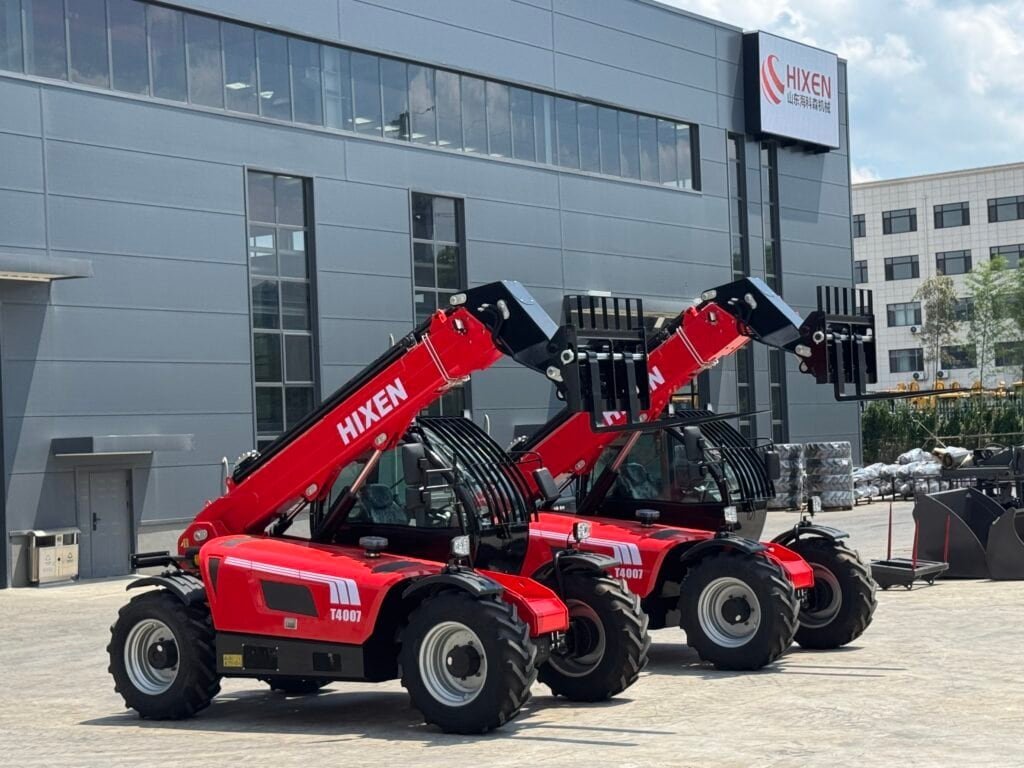
Now that you have a basic overview, let’s explore what makes each of these telehandler types unique. Understanding these differences is the key to selecting a machine that will boost your productivity and deliver a strong return on your investment.
1,What Are the Different Types of Telehandler?
Do you think a telehandler is just a single type of machine? This common oversimplification can lead to purchasing equipment that is ill-suited for your work, causing inefficiency. To make the best choice, it’s crucial to understand the main categories available.
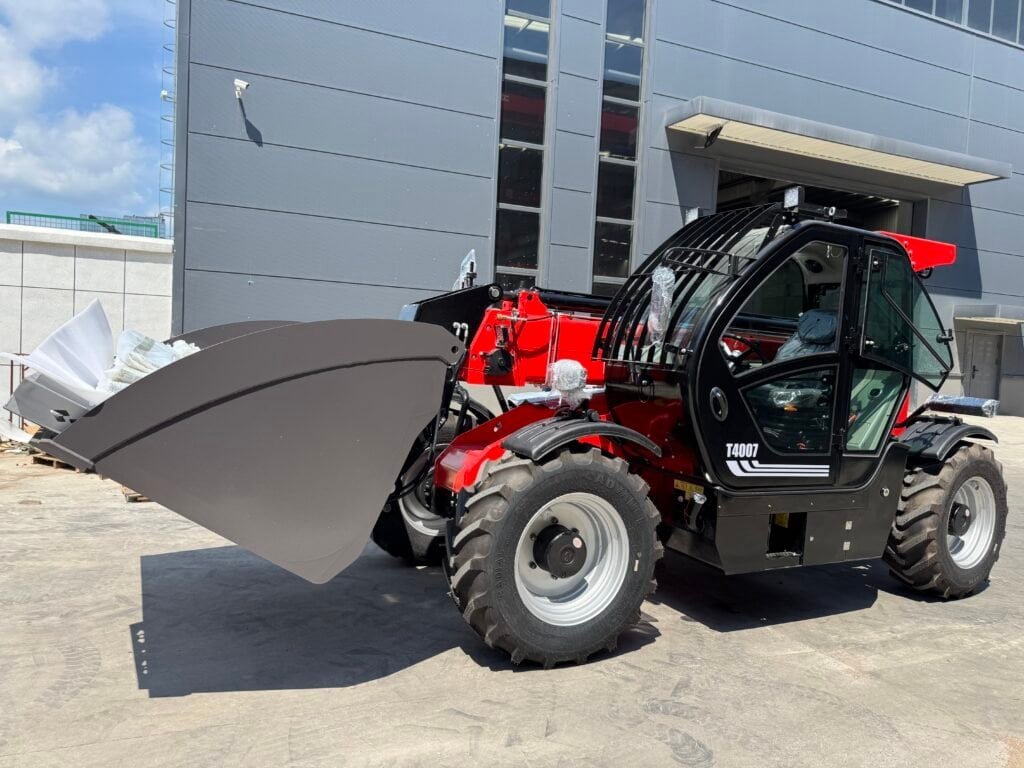
A telehandler, or telescopic handler, is a versatile piece of equipment that combines the functionality of a forklift, a crane, and a wheel loader. They are classified based on design, capability, and intended use to meet diverse operational demands across various industries.
Dive Deeper: A Foundational Overview
Before we get into the specifics, let’s establish a clear framework. When I talk with buyers, from procurement managers at large construction firms to owners of rental businesses, I find it helpful to break down the types of telehandler into a few primary groups. This approach simplifies the decision-making process.
A telehandler is defined by its telescopic boom, which can extend forward and upward from the vehicle. This allows it to reach places a standard forklift cannot. However, the design of the chassis, the rotation capability of the boom, and the machine’s overall size create distinct categories.
The main classifications we will explore in detail are:
- Fixed Telehandlers: The cab and chassis are stationary.
- Rotating Telehandlers: The upper frame, including the cab and boom, can rotate 360 degrees.
- Compact Telehandlers: Smaller models designed for tight spaces and lower-capacity jobs.
- Heavy-Duty Telehandlers: High-capacity models built for demanding industrial and construction tasks.
- Wheeled Telehandlers: The most common type, offering speed and mobility on firm surfaces.
- Tracked Telehandlers: Designed for superior traction on soft, muddy, or uneven terrain.
- Diesel Telehandlers: The industry standard, known for power and long operating hours.
- Electric Telehandlers: A growing category valued for zero emissions and quiet operation indoors.
Understanding these fundamental differences is the first step toward selecting a machine that isn’t just a purchase, but a strategic asset for your business.
2,Types of Telehandler Based on Working Structure?
Choosing between a fixed or rotating telehandler is one of the most fundamental decisions you’ll make. Getting it wrong can mean wasting hours repositioning your machine on a crowded job site. Let’s break down which structure is right for your workflow.
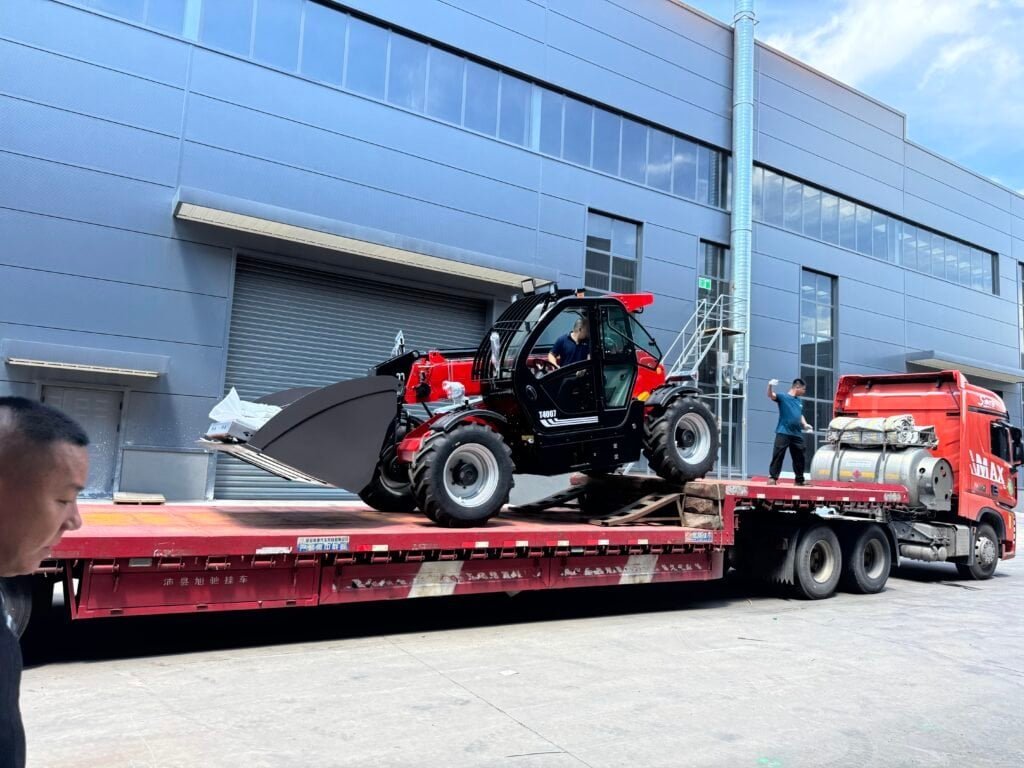
The primary structural difference separates telehandlers into two main groups: fixed-boom (or rigid-frame) models, where the cab is stationary, and rotating models, which allow the entire upper structure to spin 360 degrees on the chassis, much like a crane.
Dive Deeper: Stability vs. Flexibility
This choice often comes down to a trade-off between raw lifting power and operational flexibility. In my experience, most general construction and agricultural tasks are perfectly served by one type, while complex, multi-story projects benefit greatly from the other.
H3: Fixed Telehandlers: The Workhorse
Fixed telehandlers are the most widely used types of telehandler on the market, and for good reason. Their design is straightforward: the boom extends and lifts from a rigid, non-rotating frame.
- Key Characteristics:
- High structural stability.
- Generally higher maximum lifting capacity compared to rotating models of similar size.
- Simpler mechanics, often leading to lower maintenance costs and easier operation.
- To change the position of the load, the entire machine must be moved.
- Advantages:
- ✔ Higher Load Capacity: The rigid frame provides a stable base, allowing for heavier lifts.
- ✔ Cost-Effective: They are typically less expensive to purchase and maintain than rotating models.
- ✔ Durability: Their simpler design makes them robust and reliable for high-intensity, long-term work.
- Common Applications:
- Loading and unloading materials on construction sites.
- Moving hay bales and feed on farms.
- General logistics and material handling in industrial yards and warehouses.
At our company, HIXEN, our fixed telehandler models, ranging from 2.5 tons to 8 tons, are popular solutions for customers in construction, agriculture, and industrial sectors who need reliable lifting power.
H3: Rotating Telehandlers: The Problem Solver
Rotating types of telehandler, sometimes called “roto-telehandlers,” are the ultimate solution for complex and congested job sites. Their defining feature is an upper structure (turret) that can rotate continuously, typically 360 degrees.
- Key Characteristics:
- The cab and boom rotate together on the chassis.
- Equipped with outriggers (stabilizers) that must be deployed for safe lifting.
- Allows the operator to lift and place loads across a wide arc without repositioning the vehicle.
- Advantages:
- ✔ Enhanced Efficiency: Drastically reduces the need to move the machine, saving time and fuel.
- ✔ Superior Access: Ideal for tight spaces where maneuvering a fixed machine is difficult or impossible.
- ✔ Increased Versatility: Can function like a crane, forklift, and aerial work platform all in one.
- Common Applications:
- High-rise building construction.
- Urban development and municipal projects with limited space.
- Bridge and infrastructure work over complex terrain.
3,Types of Telehandler Based on Lifting Capacity and Working Height?
Is a 6-ton machine automatically better than a 4-ton one? Not at all. Over-investing in capacity you don’t need is a common mistake that wastes capital and increases operating costs. Let’s focus on matching the machine’s size to your specific job requirements.
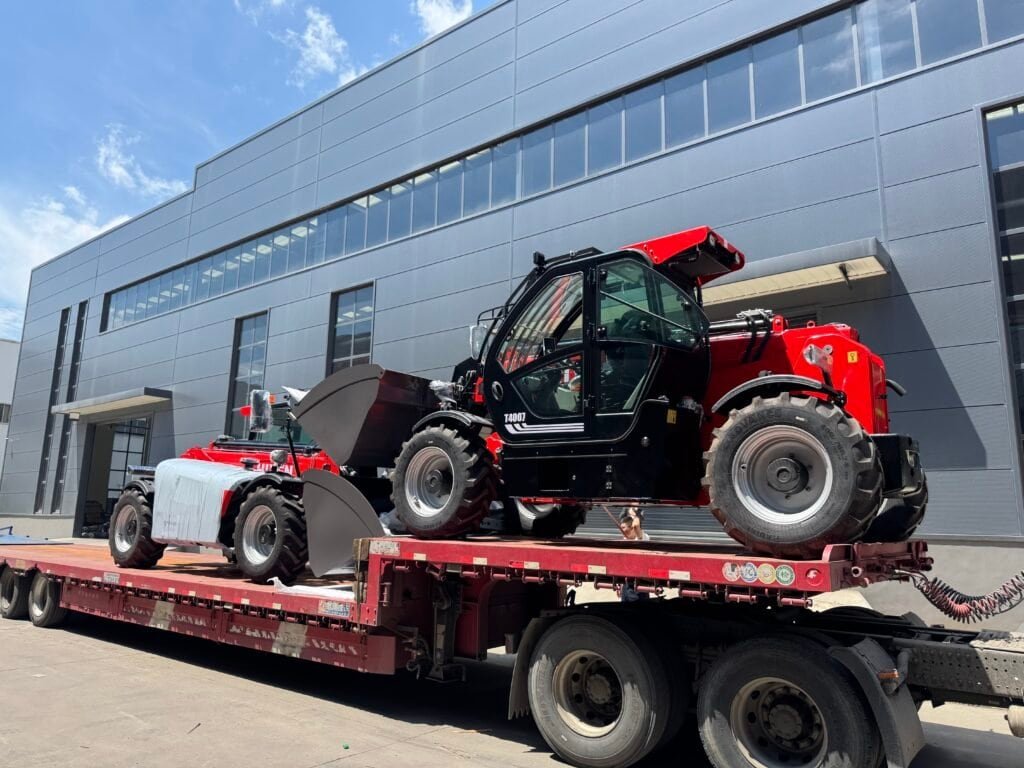
Telehandlers are commonly categorized by their maximum lifting capacity and maximum reach height. These range from small, compact models lifting around 2.5 tons to heavy-duty giants capable of lifting 8 tons or more, with reach heights varying from a few meters to over 17 meters.
Dive Deeper: Sizing Up Your Needs
The key is to analyze your most common tasks. What is the heaviest object you need to lift regularly? What is the highest point you need to reach? Answering these questions will guide you to the right size category. Remember, a telehandler’s capacity decreases as the boom extends, so always consult the machine’s load chart.
Bigger isn’t always better. A large, heavy-duty machine might be overkill for a small farm, leading to higher fuel consumption and difficulty navigating tight spaces. Conversely, an undersized machine on a construction site can cause dangerous situations and project delays.
Here is a general guide of types of telehandler to help you understand the common categories:
| Taper | Lifting Height (Approx.) | Capacity (Approx.) | Best Applications |
|---|---|---|---|
| Mini chariot télescopique | 3–6 m | Around 2.5 ton | Small farms, landscaping, indoor warehouses |
| Compact Telehandler | Around 10 m | Around 4 ton | Residential construction, small commercial sites |
| Standard Telehandler | 6–11 m | 2 à 4 tonnes | General construction, agriculture, rental fleets |
| High Reach Telehandler | Up to 17 m+ | 3.5–4 ton | Multi-story construction, masonry, steel erection |
| Heavy Duty Telehandler | Around 10 m | 5–8 ton+ | Industrial projects, mining, heavy infrastructure |
- For Agriculture: UN 2.5-ton to 4-ton types of telehandler is often the sweet spot. It has enough power to move bales, load grain, and handle pallets without being too cumbersome in barns or fields.
- For General Construction: UN 4-ton to 5-ton model is the most common choice. It offers a great balance of capacity and maneuverability for handling bricks, lumber, and other materials.
- For Heavy Industry: When you’re moving large pipes, precast concrete sections, or heavy machinery components, you’ll need a model with 5 tons or more of lifting capacity.
4,Types of Telehandler Based on Mobility and Terrain Conditions?
Will your types of telehandler be working on smooth concrete or a muddy, uneven field? Choosing the wrong mobility type can literally get your project stuck in the mud. Let’s look at the options to ensure your machine can handle the ground beneath it.
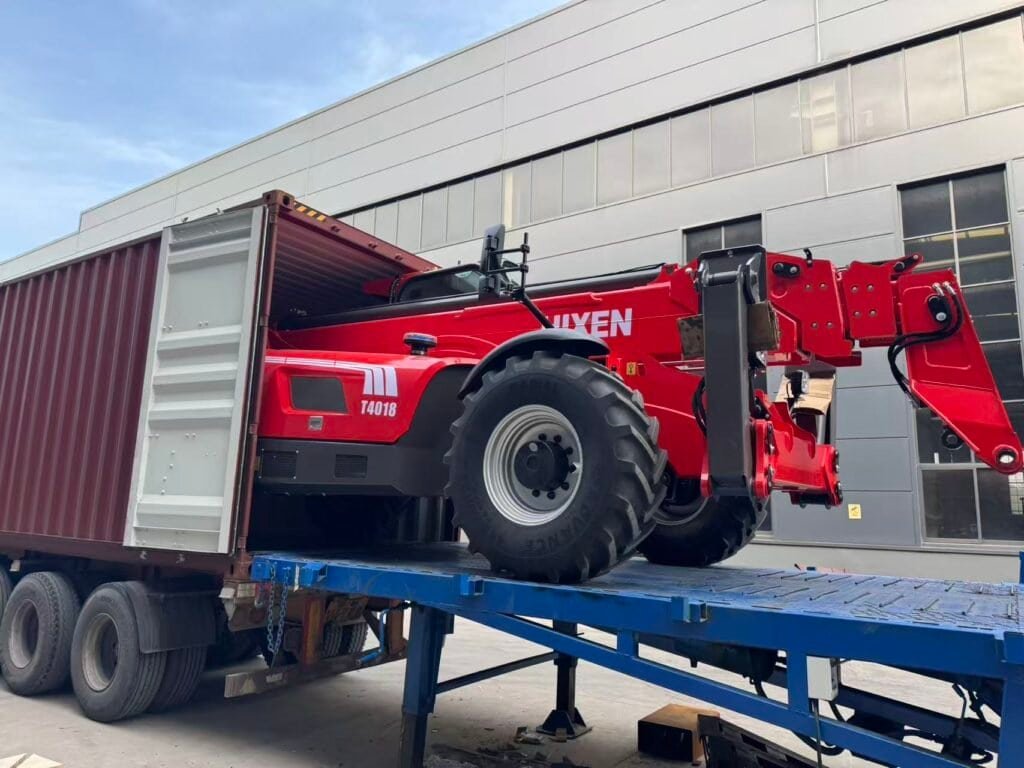
Le plus courant types of telehandler are wheeled models, which offer excellent speed and are perfect for most job sites. For exceptionally soft, swampy, or challenging terrain, tracked telehandlers provide superior traction and stability at the cost of speed.
Dive Deeper: Wheels vs. Tracks
The choice here is almost entirely dictated by your primary work environment. While 95% of applications are suited for wheeled machines, that remaining 5% absolutely requires the specialized capabilities of a tracked undercarriage.
H3: Wheeled Telehandlers: The Standard for Speed and Versatility
Wheeled types of telehandlers are the industry standard. Their rubber tires allow for much faster travel speeds than tracked machines, making them ideal for large sites where the telehandler needs to move between different work areas frequently.
- Advantages:
- ✔ High Travel Speed: Quickly moves across job sites or even on roads (where permitted).
- ✔ Maneuverability: Excellent handling on hard, stable surfaces.
- ✔ Lower Initial Cost: Generally less expensive to purchase than tracked equivalents.
Within wheeled types of telehandlers, you can find further distinctions:
- Two-Wheel Drive (2WD): Best suited for completely flat, paved surfaces like those found in warehouses or distribution centers.
- Four-Wheel Drive (4WD): The most common configuration. It provides the necessary traction for typical construction sites, farms, and moderately uneven ground. Most 4WD models also offer different steering modes (two-wheel, four-wheel, and crab steer) for enhanced maneuverability.
H3: Tracked types of Telehandler: The Off-Road Specialist
Tracked types of telehandlers are a niche but critical types of telehandler for extreme conditions. Instead of wheels, they move on a set of continuous tracks, similar to a bulldozer or an excavator.
- Advantages:
- ✔ Superior Traction: The large surface area of the tracks provides exceptional grip on mud, sand, snow, and steep slopes.
- ✔ Low Ground Pressure: The machine’s weight is distributed over a wider area, preventing it from sinking into soft ground and minimizing surface damage.
- ✔ Unmatched Stability: The wide, stable base is excellent for lifting on uneven terrain.
- Common Applications:
- Pipeline projects in remote areas.
- Environmental restoration in swamps or on beaches.
- Disaster relief and recovery operations.
- Utility work in mountainous regions.
While highly capable, tracked models are slower, more expensive, and can cause more wear on paved surfaces, making them a specialized tool for when wheels just won’t cut it.
5,Types of Telehandler Based on Power Source?
Diesel power has long been king in the world of heavy machinery, but is an electric telehandler a smarter long-term investment? The answer depends entirely on your work environment and business priorities, from raw power to environmental compliance.
Most types of telehandlers today are powered by diesel engines, prized for their immense torque and ability to work long hours in remote locations. However, electric telehandlers are a rapidly growing category, offering zero emissions and quiet operation ideal for indoor and urban applications.
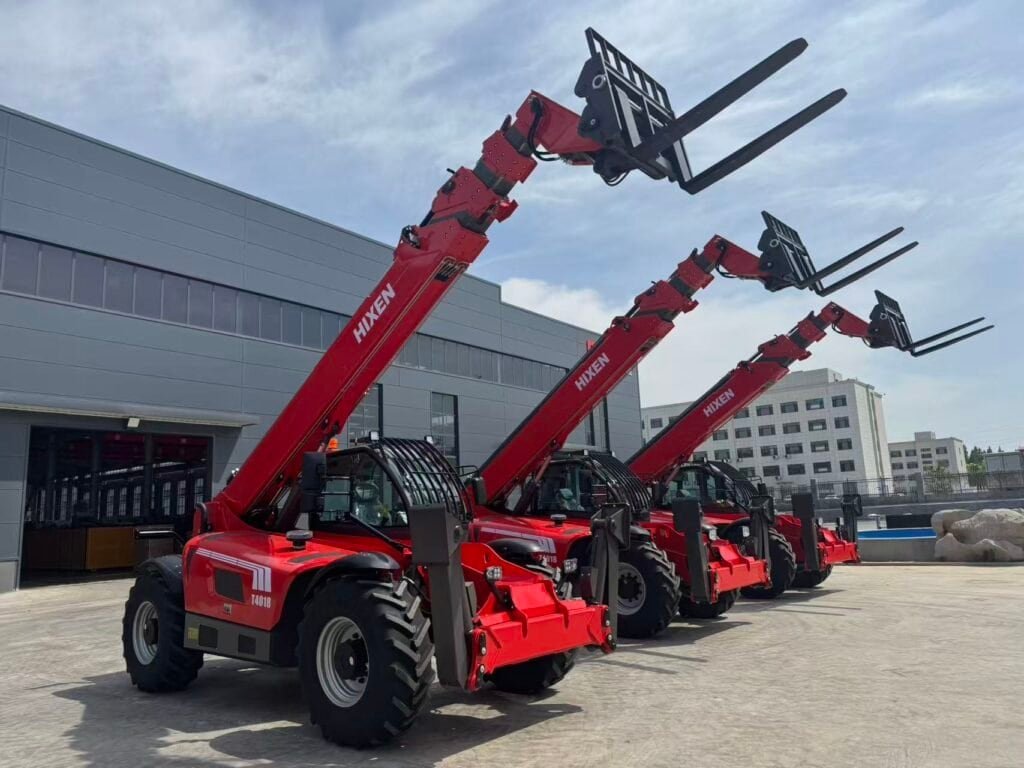
Dive Deeper: The Trade-Off Between Power and Sustainability
I often advise clients to think of this not as an “either/or” choice, but as a strategic decision. The rugged power of diesel is irreplaceable for some, while the clean, quiet performance of electric opens up new opportunities for others.
H3: Diesel Telehandlers: The Unstoppable Powerhouse
The diesel engine is the heart of the traditional telehandler. It provides the raw power and torque necessary to lift heavy loads and traverse difficult terrain without being tethered to a power source.
- Advantages:
- ✔ Maximum Power: Delivers the high torque needed for the most demanding lifting and pushing tasks.
- ✔ Long Runtime: Can operate for a full shift or more on a single tank of fuel, and refueling takes just minutes.
- ✔ All-Weather Operation: Perfectly suited for outdoor work on large-scale construction, agricultural, and mining sites.
This remains the go-to power source for the vast majority of telehandler applications worldwide due to its proven reliability and robust performance.
H3: Electric types of Telehandlers: The Future-Proof Choice
Electric telehandlers are at the forefront of industry innovation. Powered by high-capacity lithium-ion or lead-acid batteries, they are transforming what’s possible in sensitive environments.
- Advantages:
- ✔ Zero Emissions: They produce no exhaust fumes, making them the only choice for indoor use, particularly in food processing, warehousing, and enclosed spaces.
- ✔ Low Noise: Their near-silent operation is a massive benefit for work in residential areas, hospitals, or at night.
- ✔ Lower Operating Costs: Electricity is generally cheaper than diesel, and with fewer moving parts (no engine oil, filters, or belts), maintenance costs are significantly reduced.
While their initial purchase price can be higher and runtime is limited by battery life, the total cost of ownership and ability to work in restricted zones make electric types of telehandler an increasingly smart investment.
6,How to Choose the Right Types of Telehandler for Your Application?
With all these options, how do you finally make the right call? Choosing based on a single factor, like price or capacity alone, is often a recipe for buyer’s remorse. Let’s tie it all together by looking at common work scenarios.
To choose the right types of telehandler, you must first analyze your primary application. Whether you’re in construction, agriculture, or industrial handling, matching the machine’s specifications—structure, capacity, mobility, and power—to your daily tasks is the key to a successful investment.
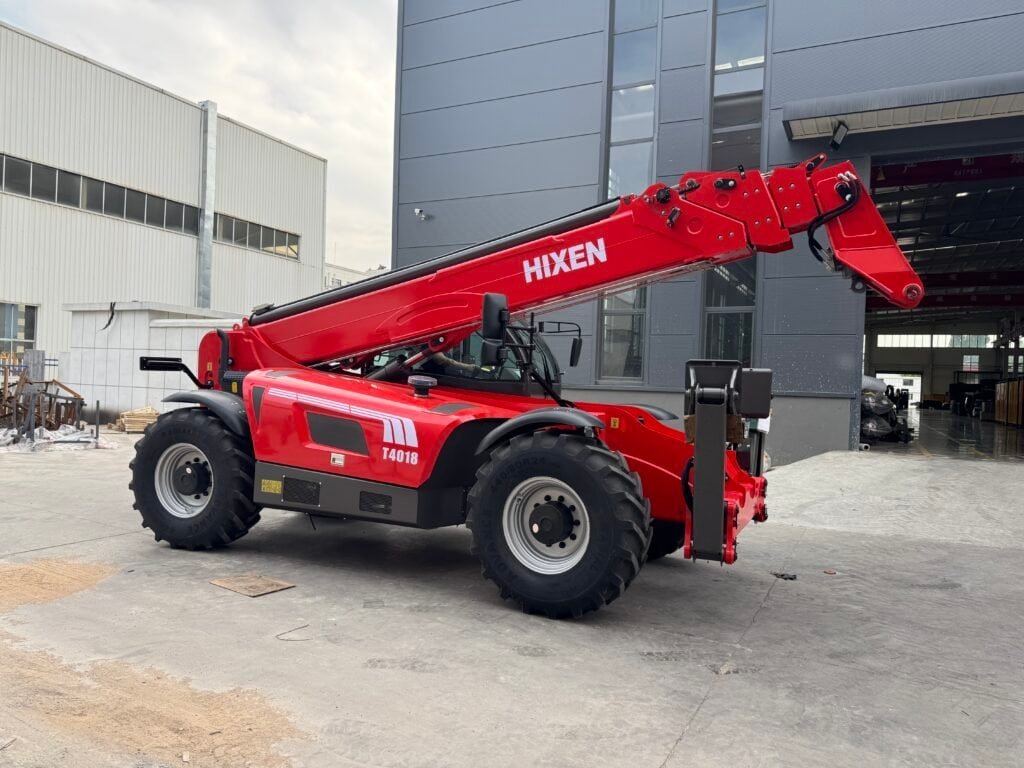
Dive Deeper: A Scenario-Based Selection Guide
I always recommend that my clients walk me through their typical workday. By understanding the environment, the loads, and the workflow, we can quickly narrow down the options to find the perfect fit.
H3: For Construction Projects
Construction sites are dynamic environments that demand robust and versatile equipment.
- Recommendation: UN Fixed Telehandler with 4-6 ton capacity and a lifting height of 10 meters or more.
- Reasoning: You need high stability for lifting heavy materials like pallets of brick, steel beams, and precast concrete. A fixed machine provides that solid base. A 4-ton or 5-ton model is the industry sweet spot, offering a great blend of power and maneuverability for most commercial and residential sites. A high-reach model becomes essential for multi-story buildings.
H3: For Agriculture Applications
Farms require a machine that can do a little bit of everything, from lifting hay bales to loading grain and cleaning out barns.
- Recommendation: UN Compact or Standard types of Telehandler with a 2.5-4 ton capacity.
- Reasoning: Versatility is paramount. A smaller machine is more nimble for navigating between buildings and through gates. The key here is pairing the machine with the right attachments. A telehandler equipped with a bale clamp, a general-purpose bucket, and a fork attachment can replace several other pieces of farm equipment, dramatically improving efficiency.
H3: For Warehouse & Industrial Handling
Indoor environments prioritize maneuverability, safety, and low operating costs.
- Recommendation: UN Mini chariot télescopique or an Electric Telehandler.
- Reasoning: Tight turning circles are critical for navigating narrow warehouse aisles. An electric model is often the best choice due to its zero emissions, which is a requirement for indoor air quality and food-grade facilities. Its quiet operation also makes for a safer and more pleasant work environment for all employees.
H3: For Difficult Terrain
When the ground is your biggest enemy, you need a specialized machine.
- Recommendation: UN Rotating Telehandler or a Tracked Telehandler.
- Reasoning: For work on steep slopes or in confined spaces where you can’t easily reposition the machine, a rotating telehandler is invaluable. For extremely soft, muddy, or unstable ground like that found in new developments after heavy rain or in environmental projects, a tracked telehandler is the only tool that can get the job done without getting stuck.
7,Telehandler Types Comparison: Which Model Fits Your Needs Best?
Need a quick, at-a-glance summary to compare your options side-by-side? This chart simplifies the key differences between the major types of telehandler to help you visualize where each one excels.
A comparison chart helps clarify the trade-offs between different telehandler models. By looking at factors like flexibility, capacity, and ideal application, you can quickly identify which type aligns best with your operational priorities.
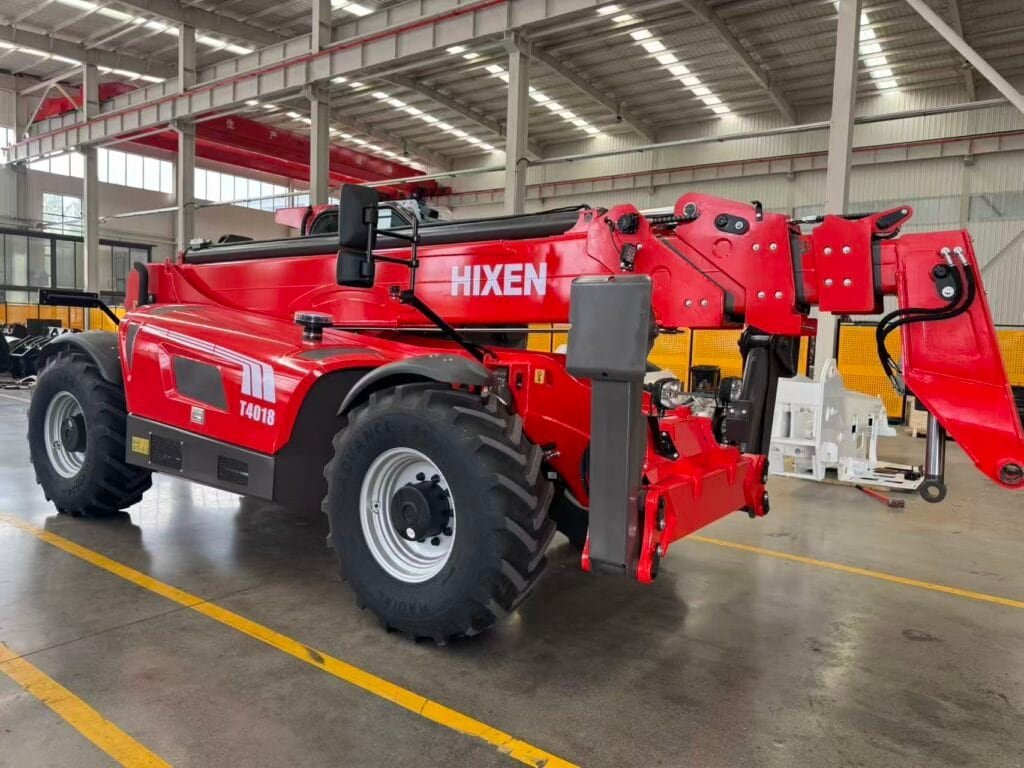
Dive Deeper: Making an Informed Comparison
This table is designed to be a starting point for your evaluation. Use it to narrow down your choices before diving into the detailed specifications of individual models.
| Taper | Primary Strength | Lifting Capacity | Idéal pour |
|---|---|---|---|
| Fixed Telehandler | Stability & Power | Haut | General construction, agriculture, heavy lifting |
| Rotating Telehandler | Flexibility | Medium to High | Complex, congested, or multi-story job sites |
| Compact Telehandler | Maneuverability | Low to Medium | Tight spaces, landscaping, small farms |
| Heavy-Duty Telehandler | Raw Power | Very High | Industrial projects, mining, infrastructure |
| Electric Telehandler | Clean & Quiet | Low to Medium | Indoor use, warehouses, urban environments |
| Tracked Telehandler | All-Terrain | Medium | Soft ground, mud, swamps, steep slopes |
Choosing the right types of telehandler is not about selecting the biggest or most expensive machine. In my years of exporting machinery, I’ve seen firsthand that the most successful customers are those who meticulously match the machine’s capabilities to their specific lifting height, load requirements, working environment, and attachment needs. The best choice is the one that integrates seamlessly into your workflow and solves your unique challenges.
8,Why Choosing the Right Types of Telehandler Matters?
Does it really make a difference if you use a 4-ton machine instead of a 5-ton one, or a fixed model instead of a rotating one? Absolutely. The wrong choice impacts far more than just your initial purchase price; it affects your daily operations and long-term profitability.
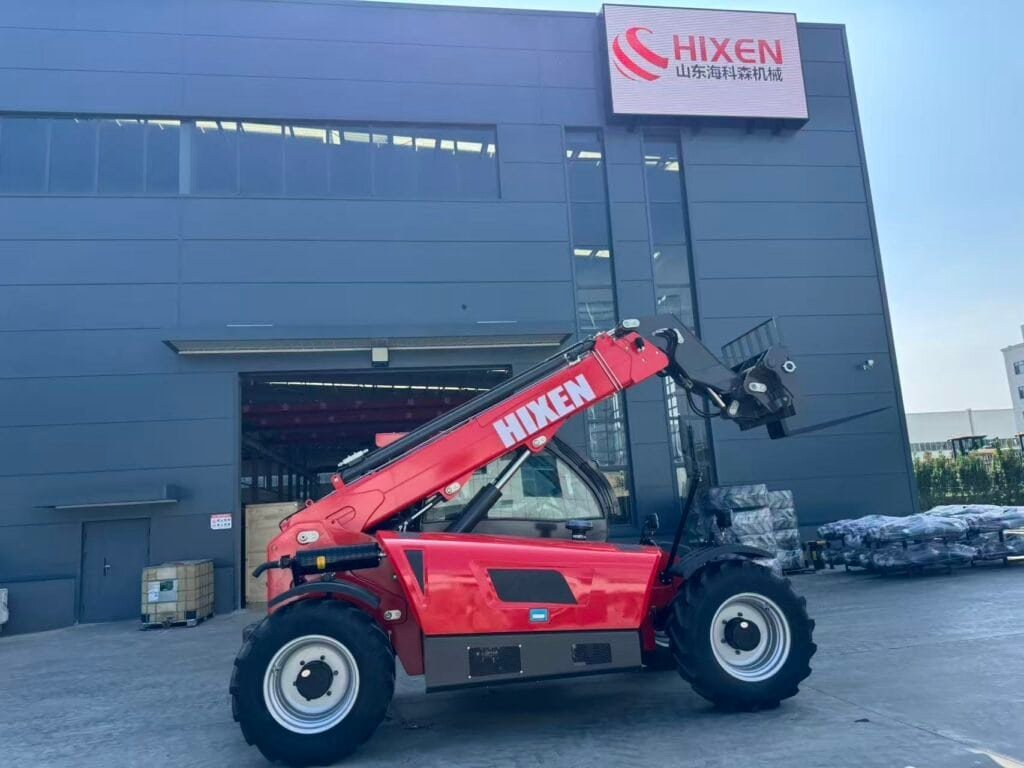
Selecting the correct types of telehandler is critical for maximizing worksite efficiency, ensuring operator safety, and minimizing your long-term operational costs. It’s a strategic decision that pays dividends throughout the machine’s entire lifecycle.
Dive Deeper: The Ripple Effect of a Smart Choice
A telehandler is a significant investment, and making an informed choice ensures you get the maximum value from it. Here’s why getting it right is so important:
- Operational Efficiency: The right machine performs tasks faster. A rotating telehandler on a tight site can save hours of repositioning time each week. A compact model in a warehouse navigates aisles swiftly, speeding up loading and unloading cycles. This saved time translates directly into higher productivity and profitability.
- Cost Control: A types of telehandler that is too large for the job consumes more fuel and has higher maintenance costs. One that is too small may require you to rent a second machine to handle heavier loads, doubling your expense. Matching the capacity and size to your typical workload is the most effective way to control operational costs.
- Enhanced Safety: Using a machine within its designed limits is the cornerstone of worksite safety. A telehandler struggling with a load that is too heavy or too far extended is a recipe for disaster. Choosing a model with the appropriate load chart for your tasks ensures that your operators can work with confidence and within safe parameters.
- Increased Versatility and ROI: The right telehandler, when paired with the correct attachments, can do the work of three or four other machines. This consolidation reduces your fleet size, lowers overall maintenance burdens, and provides a much faster return on your initial investment.
9,HIXEN Telehandler: Reliable Solutions from Compact to Heavy-Duty Models?
Finding a reliable supplier who not only offers the right model but also understands your business can be a challenge. You need more than just a machine; you need a partner who delivers a strong value proposition and supports you long after the sale.
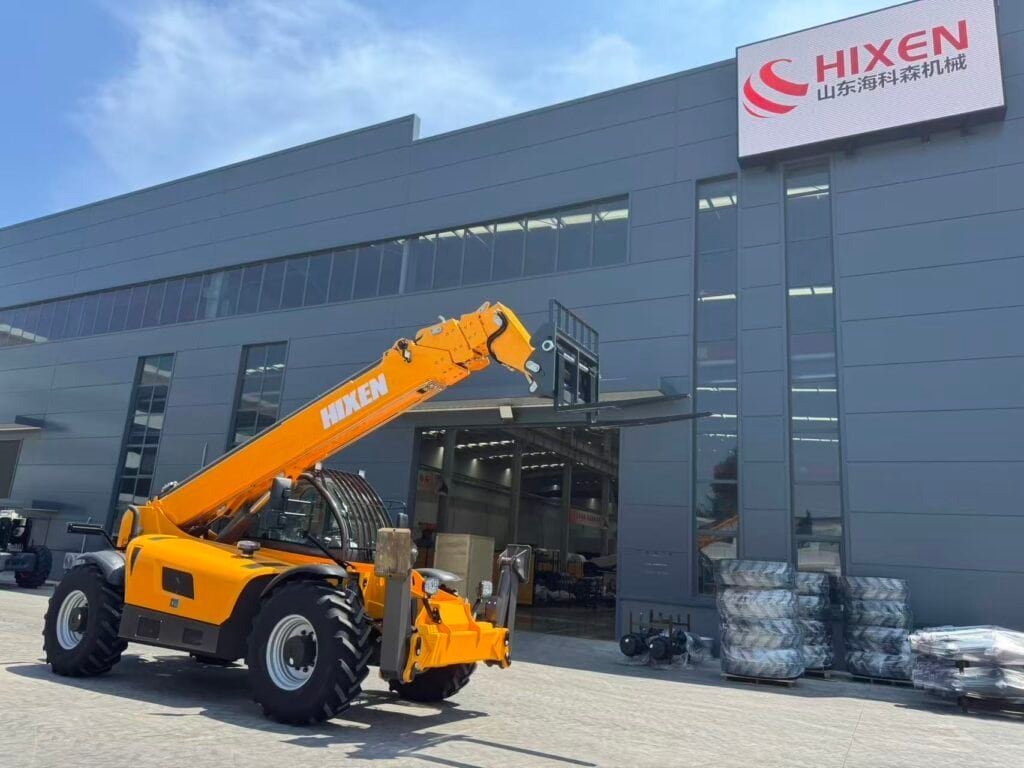
As a factory-direct manufacturer, we at HIXEN provide a wide range of reliable types of telehandler, from nimble 2.5-ton models to powerful 8-ton units. We offer customization, professional guidance, and global export services to ensure you get the perfect solution for your business.
Dive Deeper: The HIXEN Advantage
When clients choose to work with us, they aren’t just buying a piece of equipment. They are gaining a partner committed to their success. Here’s what sets our approach apart:
- Factory Direct Manufacturer: By eliminating the middleman, we maintain strict quality control over the entire production process. This also means we can pass significant cost savings directly on to you, ensuring you get the best possible price-performance ratio.
- Wide Range of Models (2.5 to 8 Ton): Whether you need a compact machine for your rental fleet or a heavy-duty workhorse for an industrial project, we have a model in our lineup that fits your needs. This range allows us to provide an unbiased recommendation based on your application, not on limited inventory.
- Customization Options: We understand that your business has unique needs. We offer options like customized colors to match your company branding, which is particularly important for rental companies and large contractors looking to maintain a professional and consistent fleet appearance.
- Multiple Attachment Support: Our telehandlers are designed to be true multi-purpose tools. We ensure compatibility with a wide array of attachments, including forks, buckets, bale clamps, and work platforms, maximizing the versatility and return on your investment.
- Global Export Experience: We have successfully shipped machinery to clients all over the world, from construction companies and machinery dealers to importers and farmers. Our professional team handles all the logistics, ensuring a smooth and reliable export process from our factory to your location.
Frequently Asked Questions
What is the most common types of telehandler?
The most common types of telehandler is the fixed-boom (or rigid-frame) model with four-wheel drive. A machine with a lifting capacity of around 4 to 5 tons and a reach of 7 to 11 meters is the versatile workhorse found on most construction and agricultural sites worldwide.
Can a telehandler be used as a crane?
Yes, the types of telehandler can perform crane-like lifts using attachments like a lifting hook or jib. However, it is not a dedicated crane. You must always operate within the machine’s specific load chart, as capacity decreases significantly with boom angle and extension. For dedicated, heavy overhead lifting, a crane is required.
How do I know what lifting capacity I need for my telehandler?
To determine the right capacity, identify the heaviest load you will lift regularly (e.g., a pallet of bricks, a precast concrete slab). Then, add a safety margin of at least 20-25%. Also, consider the reach required, as the lifting capacity drops the further the boom is extended. Always consult the machine’s load chart.
Are electric telehandlers as powerful as diesel models?
For many common lifting and carrying tasks, modern electric types of telehandlers offer performance that is comparable to their diesel counterparts. However, for continuous, heavy-duty work in demanding outdoor conditions or applications requiring maximum torque, diesel models still hold an advantage in raw power and unlimited runtime.
Conclusion
Choosing the right types of telehandler is one of the most critical decisions for any project’s success. As we’ve seen, the world of telehandlers is diverse, and selecting the best fit goes far beyond just looking at price. The key is to thoroughly analyze your specific job requirements—from lift height and load capacity to terrain conditions and work environment. By understanding the different types of telehandler, you can confidently select a machine that enhances safety, boosts efficiency, and delivers a powerful return on investment for your business.
Need help choosing the right types of telehandler for your project? Contact our HIXEN experts to get professional recommendations for types of telehandler and a customized solution tailored to your exact needs.
