
Struggling to manage all the different material handling jobs on your farm? You might use a tractor for some tasks, a forklift for others, and maybe even rent a lift for maintenance, which gets expensive and complicated. The right telehandler for agriculture offers a powerful solution, consolidating the work of multiple machines into one versatile piece of equipment.
A telehandler for agriculture is a multi-purpose machine that combines the reach of a crane, the lifting power of a forklift, and the off-road capability of a loader. It is designed to handle a wide variety of farm tasks—from stacking hay bales and loading feed to maintaining buildings—by using a single base unit with interchangeable attachments, dramatically increasing efficiency and reducing the need for multiple single-purpose vehicles.
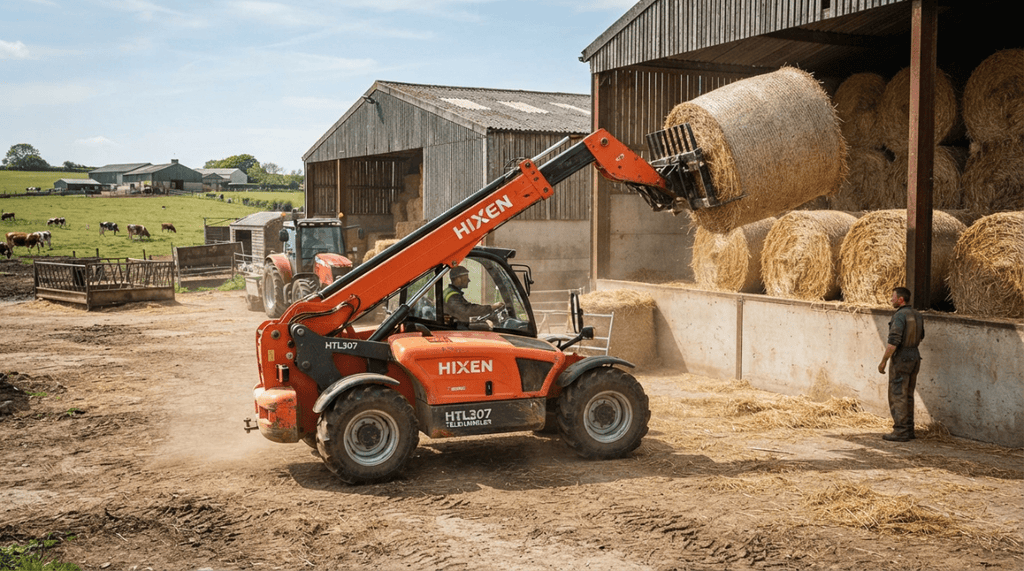
This ability to adapt makes the agricultural telehandler one of the most valuable assets on a modern farm. Instead of owning and maintaining a fleet of specialized equipment, you can invest in one machine that works hard all year round. Let’s dive deeper into how this single machine can transform your farm’s operations.
1,Why Do Modern Farms Need a Telehandler?
Think about a typical day on the farm. You might need to move hay bales from the field, load feed sacks onto a truck, stack pallets in the barn, and maybe even lift materials to repair a roof. Each task has its own unique challenges.
Traditionally, this would require a tractor with a front loader, a separate forklift, and perhaps a man lift. This means more machines to buy, store, fuel, and maintain. Modern farms need a telehandler for agriculture to consolidate these tasks, improve efficiency, and get a better return on their equipment investment.
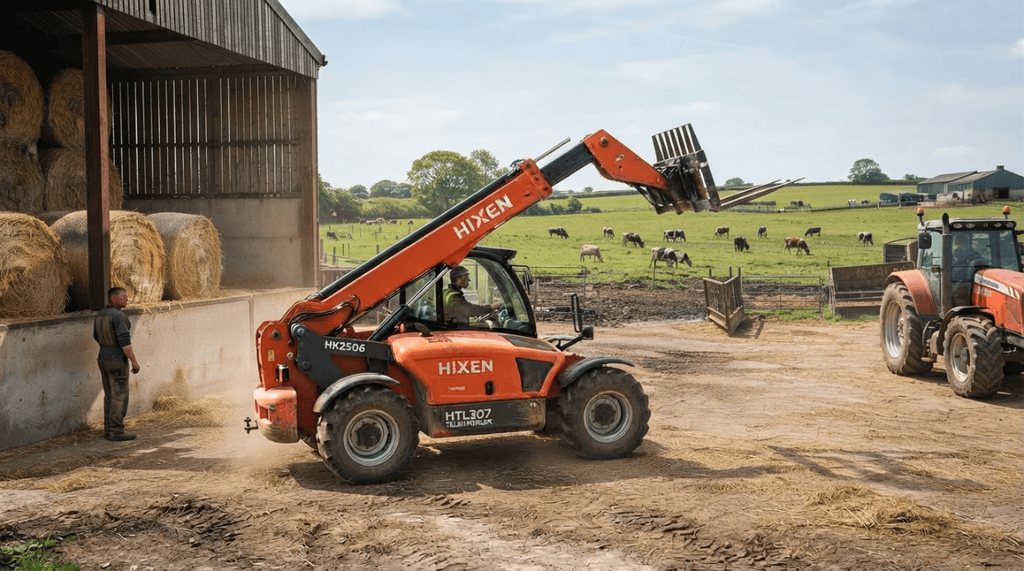
For many farms, the right telehandler becomes a multi-purpose material-handling machine rather than a single-purpose piece of equipment. Instead of having several machines sitting idle for parts of the year, you have one that can be adapted for jobs in every season. This is where the concept of equipment utilization really comes into play.
As a manufacturer, I’ve worked with countless agricultural clients, from large distributors to family farms. A common story I hear is the “aha” moment when they realize one machine could replace two or three others. For instance, a client in Europe was using a tractor for bale handling and a small forklift for pallets. After switching to a telehandler, they not only handled those jobs faster but also gained the ability to maintain their high-roofed barns without renting extra equipment. This is the core value proposition. At HIXEN, we provide telehandlers with different tonnage ratings, lifting heights, and attachment configurations, allowing agricultural clients to select a machine based on their actual work requirements.
2,What Is a Telehandler for Agriculture?
Are you wondering what separates a standard telehandler from one specifically suited for farm work? It’s a great question, as the differences are critical for performance and longevity in an agricultural setting.
UN telehandler for agriculture is, in essence, a telescopic handler that has been optimized for the unique material handling and lifting needs of a farm. It’s built to handle the rough and varied environments that farms present every single day.
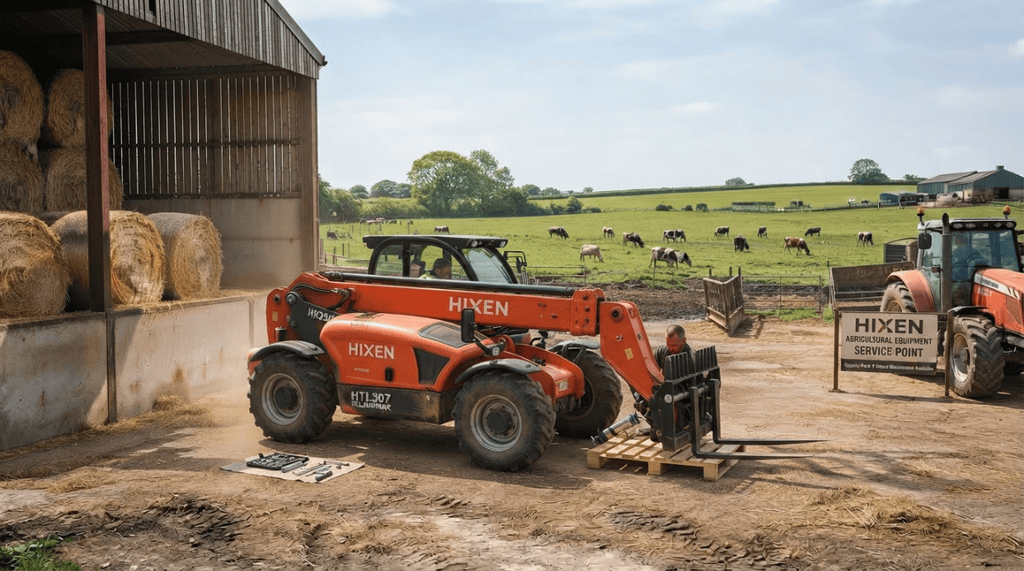
While a standard industrial telehandler might be designed for paved surfaces, an agricultural model is engineered to perform on mud, gravel, uneven ground, and slopes. Its core features typically include a powerful telescopic boom for reach and height, a high lifting capacity for heavy farm materials, robust 4-wheel drive for traction, high ground clearance to navigate rough terrain, and excellent maneuverability. Most importantly, it is designed to work with a wide range of attachments.
A standard forklift, for example, is perfect for a warehouse with a flat, concrete floor. On a farm, however, you’re constantly dealing with dirt roads, grassy fields, and muddy patches. A forklift would get stuck or become unstable. The telehandler for agriculture, with its off-road capabilities, can go where forklifts can’t. Its combination of a telescopic boom and rugged design allows it to safely and efficiently handle materials in virtually any part of the farm, from the barnyard to the back forty.
3, 7 Reasons a Telehandler Is Useful on the Farm?
So, what are the specific advantages that make a telehandler for agriculture such a game-changer? It’s more than just a machine that lifts things; it’s a strategic tool that boosts productivity and flexibility.
A telehandler is exceptionally useful on a farm because it offers unparalleled versatility through attachments, superior reach and lifting capacity for common agricultural loads, excellent mobility on rough terrain, and the ability to work year-round, making it a highly efficient investment.
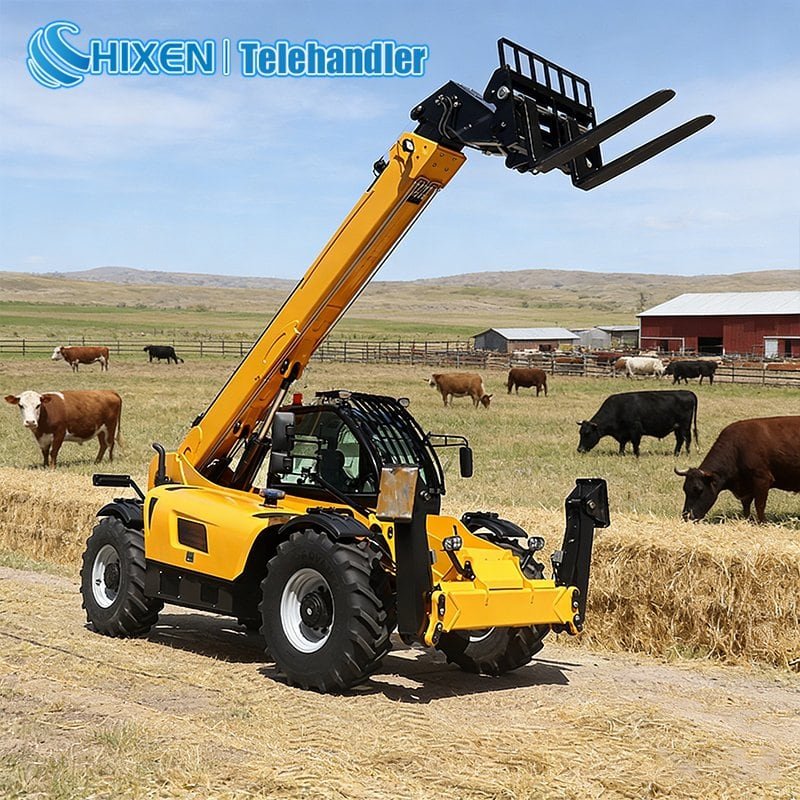
Let’s break down the seven key reasons why this machine has become indispensable for modern agriculture.
One Machine for Multiple Farm Tasks
A farm is a dynamic environment. One day you’re handling large round bales, the next you’re moving pallets of seed, and the day after you’re clearing loose material. A telehandler for agriculture shines in this environment because it isn’t just one machine; it’s a platform for many. By simply swapping out attachments, you can transform it from a high-capacity forklift to a loader, a small crane, or even a work platform. This eliminates the need for multiple specialized machines, saving you capital, maintenance costs, and storage space. As a manufacturer, we see this firsthand. HIXEN telehandlers can be configured with different attachments according to the customer’s application, ensuring they get the most out of their investment.
Reach Higher and Farther
This is the “tele” in “telehandler.” The telescopic boom is a defining feature that sets it apart from tractors and forklifts. It doesn’t just lift vertically; it extends forward and upward. This unique ability is incredibly valuable on a farm. You can:
- Stack hay bales higher and more densely in a barn, maximizing storage space.
- Load a high-sided truck or trailer from one side, saving time and repositioning.
- Place materials over fences or other obstacles without needing to find a path around them.
- Deposit feed into tall mixers or troughs with precision.
The combination of height and reach is a powerful one that a tractor with a loader simply cannot match.
Handle Heavy Agricultural Loads
Farming involves heavy lifting. Hay bales can weigh over 1,500 lbs (700 kg), a pallet of fertilizer can top 2,200 lbs (1,000 kg), and bulk bags of seed are similarly heavy. An agricultural telehandler is built for this. Models are available with lifting capacities ranging from 2.5 tons to over 5 tons. The key is to match the machine to your needs. I always advise customers that the right lifting capacity depends on your typical load and working height. You need a machine that can safely handle your heaviest load at the maximum height and reach you require, a detail you can always find on the machine’s load chart.
Built for Uneven Farm Terrain
Unlike a warehouse, a farm is not a flat, smooth surface. You have dirt roads, muddy fields, grassy slopes, and gravel paths. A standard forklift would be useless in these conditions. A telehandler for agriculture is designed from the ground up for this environment. Key features include:
- 4-Wheel Drive (4WD): Provides superior traction in mud and on loose surfaces.
- High Ground Clearance: Allows the machine to pass over obstacles without getting stuck.
- Rugged Tires: Agricultural or construction-grade tires are designed for grip and durability.
- Excellent Stability: A low center of gravity and a wide stance help keep the machine stable on uneven ground, especially when carrying a load.
This off-road capability means your material handling isn’t limited to the paved areas of the farm.
Speed Up Loading and Unloading
Time is money, especially during planting and harvest seasons. A telehandler can significantly speed up your loading and unloading operations. Its combination of speed, maneuverability, and reach allows you to load or unload trucks and trailers much faster than you could with a tractor and loader. A single operator can quickly pick up pallets, bales, or bulk bags and place them precisely where they need to go, reducing truck turnaround time and keeping your entire operation moving smoothly.
A Telehandler Can Work Beyond Harvest Season
One of the strongest arguments for investing in a telehandler for agriculture is its year-round utility. This is not a machine that sits in the shed for nine months of the year.
- Spring: Use it for moving pallets of seed, bags of fertilizer, and preparing fields.
- Summer: Handle hay bales, move irrigation equipment, and perform general maintenance.
- Autumn: The powerhouse of harvest season, moving crops, stacking bales, and loading trucks.
- Winter: Clear snow (with a bucket or blade), move feed for livestock, and perform high-reach maintenance on buildings.
This high utilization rate ensures a much faster return on investment compared to specialized, seasonal equipment.
More Than a Forklift
It’s crucial to understand the fundamental difference. A forklift’s job is to lift and move. A telehandler for agriculture does that and so much more. The simple equation is:
- Forklift = Lift + Move
- Telehandler = Lift + Move + Reach + Work at Height
That “Reach” capability, enabled by the telescopic boom, opens up a new dimension of possibilities, turning it from a simple material mover into a versatile problem-solver for the entire farm.
4, 10 Common Uses of a Telehandler on a Farm
Curious about what a telehandler for agriculture can actually do day-to-day? Its versatility is best understood by looking at the specific jobs it can tackle.
The most common uses for a telehandler on a farm include handling and stacking hay bales, loading feed and fertilizer, managing pallets of materials, loading and unloading trucks, and performing high-reach maintenance on farm buildings and equipment.
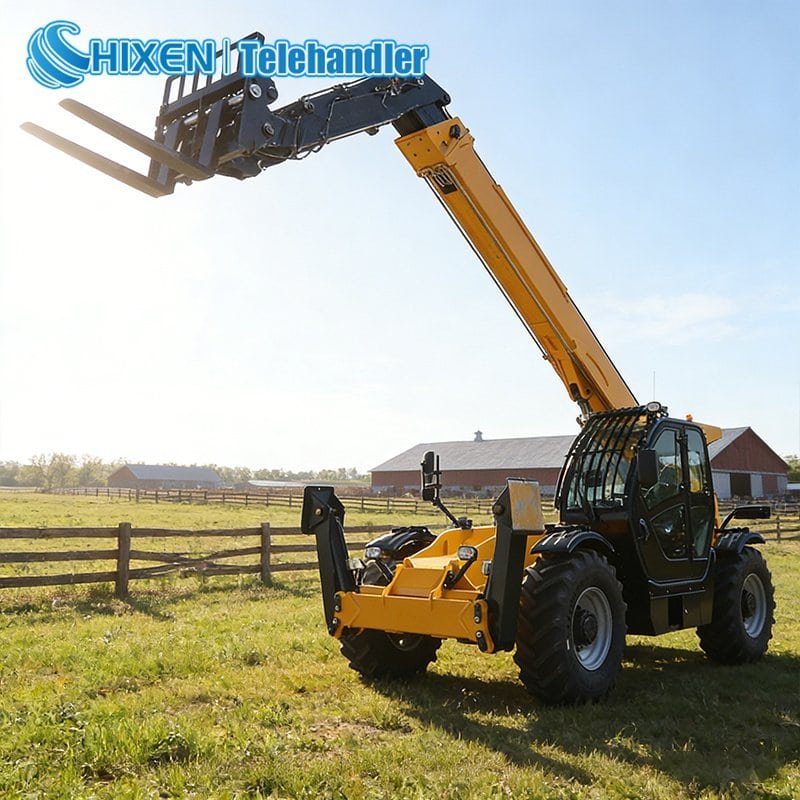
Here are 10 of the most frequent applications I see among our agricultural customers.
- Hay Bale Handling: Whether they are large round bales or smaller square ones, a telehandler with a bale clamp or spike attachment can move, transport, and stack them with ease and precision.
- Straw Bale Stacking: The long reach of the telescopic boom is perfect for stacking straw bales high and tight in barns, maximizing your storage capacity and protecting them from the elements.
- Feed Handling: Using a bucket attachment, you can easily scoop and transport loose feed, grain, or silage. A telehandler can then lift and dump the feed into tall mixers, feeders, or storage bins.
- Loading and Unloading Trucks: The combination of lifting capacity and forward reach makes telehandlers ideal for quickly loading or unloading pallets, bulk bags, and other materials from flatbed trucks and trailers, often from just one side.
- Pallet Handling: With a standard fork attachment, a telehandler acts as a rugged, all-terrain forklift, moving pallets of seed, chemicals, spare parts, and other supplies anywhere on the farm.
- Fertilizer Handling: It can safely lift and transport heavy bulk bags or pallets of fertilizer, placing them exactly where they are needed for spreading, saving manual labor and time.
- Farm Equipment Handling: Using a jib crane attachment with a hook, you can lift and move small engines, pumps, or other heavy components for maintenance or installation.
- Warehouse Material Handling: For farms with large storage barns, a telehandler can manage inventory, stacking pallets on high racks and retrieving them as needed, functioning like a high-capacity warehouse forklift.
- High-Level Storage: The excellent lifting height allows you to utilize vertical space in your barns and sheds that would otherwise be wasted, storing items on high shelves or mezzanines.
- Farm Maintenance: When fitted with a work platform (or “man basket”), a telehandler becomes a safe and stable aerial platform for tasks like repairing roofs, cleaning gutters, painting, or servicing high-level lighting in barns.
5,Agricultural Telehandler Attachments: One Machine, More Possibilities
If the telehandler is the body, then the attachments are the hands that do the work. The true versatility of a telehandler for agriculture is unlocked by the wide array of attachments available.
The effectiveness and flexibility of an agricultural telehandler depend heavily on having the right attachments. The most essential ones include forks for pallets, bale clamps for hay, buckets for loose materials, and jibs for lifting heavy objects.
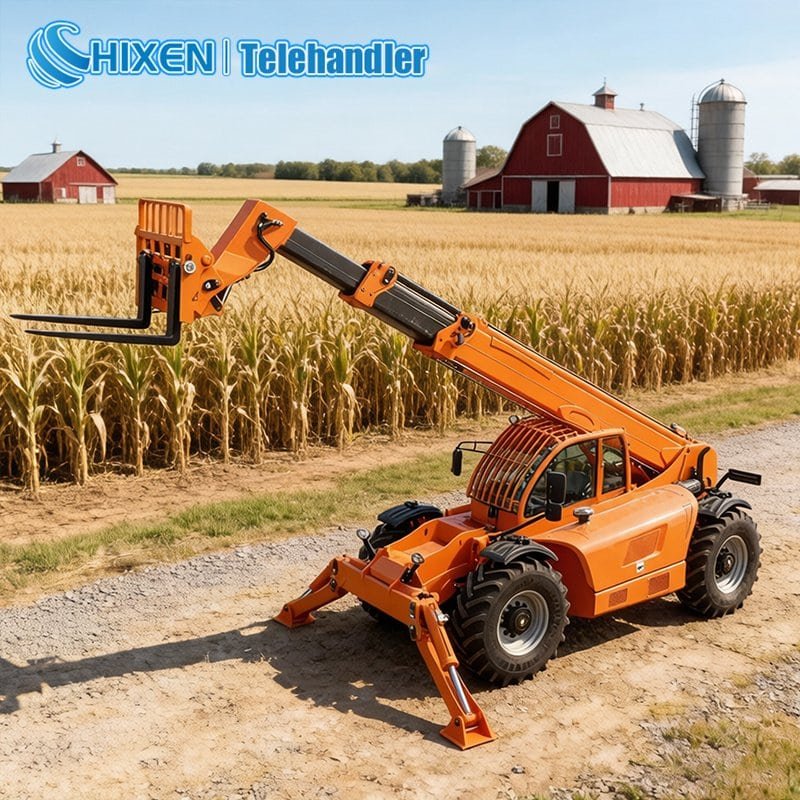
Choosing the right attachments transforms a single machine into a specialized tool for dozens of different jobs. Let’s look at some of the most common and useful attachments for farm work.
Forks
This is the most basic and essential attachment. Standard pallet forks allow the telehandler to function as a powerful, all-terrain forklift. They are perfect for lifting and moving:
- Pallets of seed, feed, and fertilizer
- Wooden crates
- Large square bales
Bale Clamp / Grab
Designed specifically for handling round or square bales without damaging them, especially wrapped silage bales. A bale clamp gently grips the bale from the sides, preserving the wrapping and preventing spoilage. Spikes or spears are another option, best suited for unwrapped hay or straw.
Seau
A bucket attachment turns the telehandler into a capable wheel loader. There are different types of buckets:
- General-Purpose Bucket: Ideal for moving loose materials like soil, gravel, grain, and animal feed.
- Grapple Bucket: Includes a hydraulic clamp on top, perfect for handling loose straw, manure, or clearing brush.
Jib / Hook
A jib crane attachment with a lifting hook converts your telehandler into a mobile crane. This is incredibly useful for:
- Lifting and placing heavy equipment components, like engines or transmissions.
- Moving large stones or concrete blocks.
- Precisely placing roof trusses or building materials.
Work Platform
Also known as a man basket or aerial work platform, this attachment provides a safe and secure way to lift personnel to perform work at height. It’s a must-have for:
- Building and barn maintenance
- Roof and gutter repairs
- Servicing high-level lighting or ventilation systems
It is often a much safer and more efficient alternative to using ladders or scaffolding.
As a manufacturer, we understand that the application dictates the attachment. HIXEN can provide different attachment configurations based on our customer’s specific working conditions, ensuring the machine is perfectly tooled for their farm’s needs from day one.
6,Telehandler vs. Tractor vs. Forklift vs. Loader: What Does Your Farm Really Need?
With so many types of equipment available, it’s easy to get confused. Does a telehandler replace a tractor? Is it just a big forklift? Let’s clarify where each machine excels.
While tractors are for pulling, forklifts for lifting on flat ground, and loaders for bulk scooping, a telehandler for agriculture excels when you need a combination of high lifting, long reach, and multi-tasking flexibility from a single, off-road capable machine.
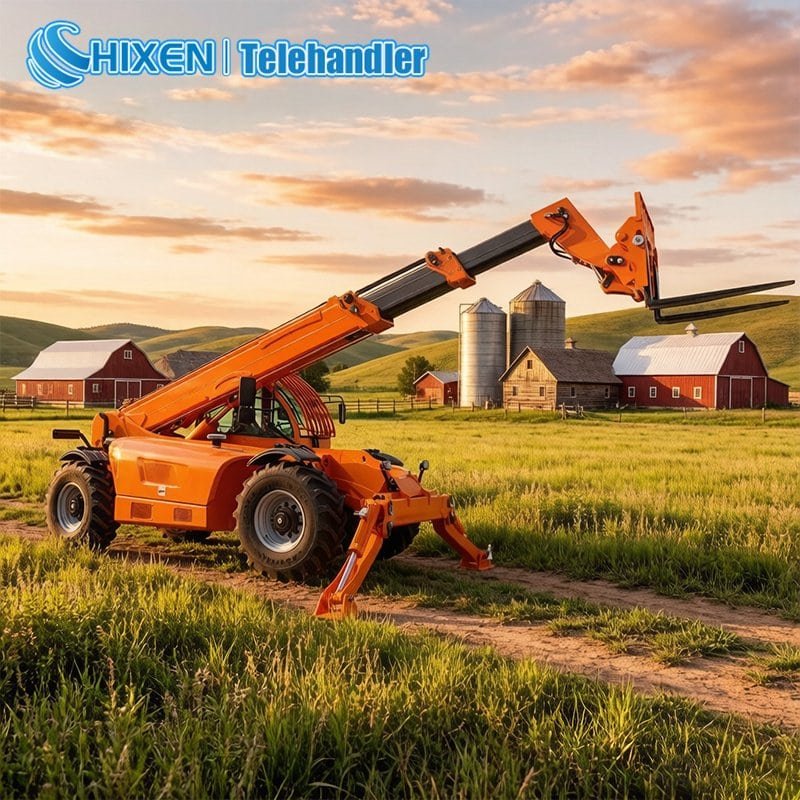
Each machine has its primary purpose, and the best choice depends on the job. A telehandler for agriculture isn’t meant to “beat” a tractor at plowing a field, but its value comes from its ability to consolidate the work of several other machines.
Here’s a simple comparison:
| Equipment | Main Strength | Reach | Lifting Height | Farm Flexibility |
|---|---|---|---|---|
| Tractor | Pulling implements, fieldwork | Faible | Faible | High (with PTO) |
| Chariot élévateur | Material handling on hard surfaces | Limited | Medium | Medium |
| Wheel Loader | Loading bulk material, scooping | Limited | Medium | Haut |
| Chariot télescopique | Lifting + Reaching + Handling | Haut | Haut | Very High |
The real value of a telehandler for agriculture emerges when your farm requires lifting, reaching, and handling with multiple attachments. Instead of needing a loader for feed, a forklift for pallets, and renting a lift for maintenance, a telehandler can cover all those bases. It may not pull a plow as well as a dedicated tractor, but it can dramatically reduce your need for other material handling equipment, simplifying your fleet and your operations. I often tell potential buyers: don’t think of it as replacing your tractor, think of it as replacing everything else.
7,How Much Lifting Capacity Does Your Farm Need?
This is one of the first questions I get from farm owners and equipment dealers. Choosing the right lifting capacity is a critical decision that impacts the machine’s utility and safety.
The lifting capacity you need depends on the heaviest materials you handle regularly. Small to medium farms often find 2.5–3 ton models sufficient, while larger operations handling bigger bales or bulk bags may require a 3–4 ton or even a 5+ ton telehandler for agriculture.
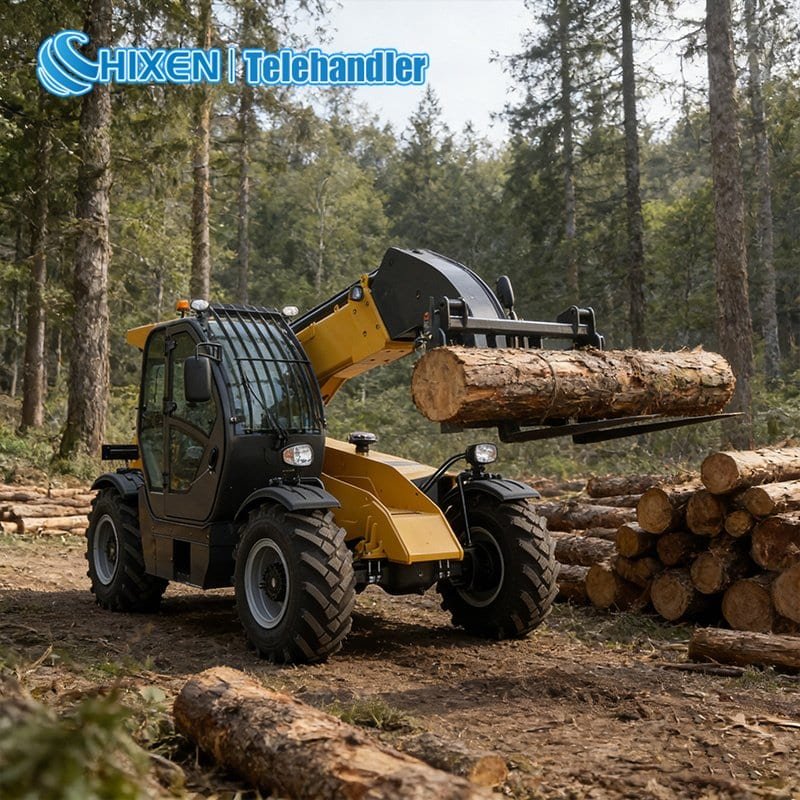
Let’s break it down by common capacity classes:
- 2.5–3 Ton Models: These are excellent all-rounders. They are perfect for general material handling on small and medium-sized farms. They can easily manage standard pallets, most square hay bales, and smaller round bales. Their typically smaller size also makes them more maneuverable in tight spaces.
- 3–4 Ton Models: This range is a popular choice for larger farms with higher workloads. These machines can handle larger, denser hay bales, bulk bags of feed and fertilizer, and more demanding loading tasks. If you consistently handle loads approaching the 2-ton mark, stepping up to this class provides a valuable safety and performance margin.
- 5 Ton+ Models: These are the heavy-duty workhorses for industrial-scale agriculture, large commercial farms, and operations that handle extremely heavy materials. If your work involves moving very large silage bales, multiple pallets at once, or other demanding applications, a higher capacity model is necessary.
However, it’s crucial to remember that capacity alone does not tell the whole story. The number advertised is usually the maximum capacity lifted close to the machine with the boom retracted. As you extend the boom up or out, the safe lifting capacity decreases significantly. Always consult the machine’s load chart to understand its real-world capabilities at the specific height and reach your jobs require.
8,Lifting Height vs. Reach: What Matters More on a Farm?
When evaluating a telehandler for agriculture, buyers often focus on the maximum lifting capacity. However, the dimensions of lifting height and forward reach are just as important, and sometimes, even more so.
What matters more—lifting height or reach—depends entirely on your primary jobs. Lifting height is critical for stacking bales high in a barn, while forward reach is essential for loading wide trailers or placing materials over obstacles.
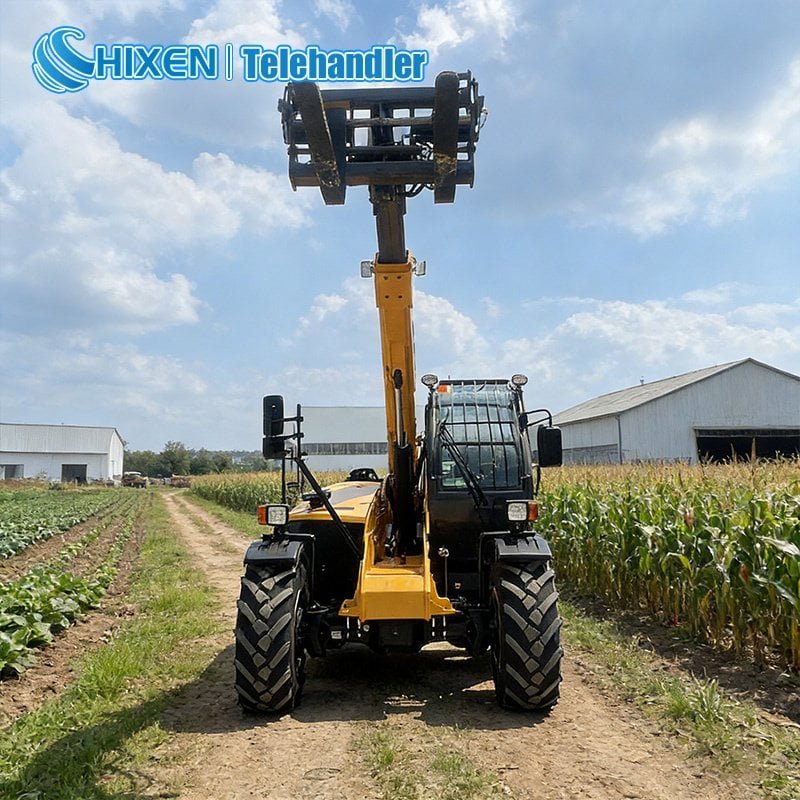
Let’s look at some common farm scenarios:
- If your main job is stacking hay bales in a barn: Lifting height is your primary concern. You need a machine that can reach the top of your stack safely and efficiently to maximize your storage space. A machine with a 9-meter lift height will allow you to create much denser stacks than one with a 6-meter lift height.
- If your main job is loading trailers or feed wagons: Forward reach becomes more critical. The ability to extend the boom forward allows you to place pallets or bales in the center of a wide trailer from just one side. This saves an immense amount of time and effort compared to having to reposition the truck or drive around to the other side.
- If you need to place materials over obstacles: Both reach and lifting height are crucial, and you must pay close attention to the load chart. For example, lifting a bag of fertilizer over a fence and into a spreader requires you to lift up and extend out. The machine must be able to handle the weight of the bag at that specific boom angle and extension.
Ultimately, the best telehandler for agriculture for your operation will have the right balance of height and reach to accomplish your most frequent and challenging tasks. Analyzing your workflow is the key to making the right choice.
9,How to Choose the Right Telehandler for Agriculture
Choosing the right machine can feel overwhelming. By following a structured process, you can ensure you select a telehandler for agriculture that is a perfect fit for your needs and budget.
To choose the right telehandler, first identify your primary jobs. Then, determine your required maximum load, lifting height, and forward reach. After that, select the necessary attachments, consider your farm’s terrain, and finally, check local engine and safety regulations.
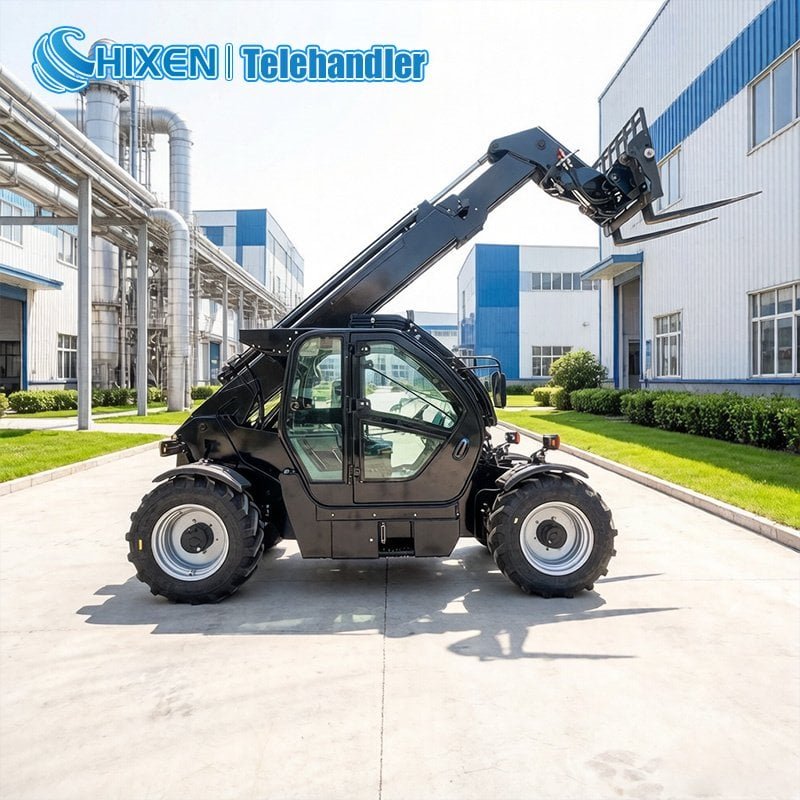
Here is a 7-step process I recommend to all my clients, from independent farmers to large equipment distributors.
- Step 1 — Identify Your Main Jobs: Make a list of every task you want the telehandler to do. Be specific. Is it bale handling, feed loading, pallet moving, stacking, or building maintenance? Your primary jobs will dictate everything else.
- Step 2 — Determine Your Maximum Load: What is the absolute heaviest single item you plan to lift? Is it a dense silage bale, a full pallet of seed, or a bulk bag of fertilizer? This determines your minimum required lifting capacity.
- Step 3 — Determine Your Maximum Lifting Height: How high do you need to stack bales in your barn? What is the highest point you need to reach for maintenance? Measure it. This will define the required boom height.
- Step 4 — Determine Your Required Reach: How far do you need to reach forward to load a truck or place materials over a fence? This is your forward reach requirement. Remember to check this against the load chart for the load you’ll be handling.
- Step 5 — Choose Your Attachments: Based on your list of jobs from Step 1, list the attachments you’ll need. Forks are a given, but will you need a bale clamp, a bucket, or a work platform?
- Step 6 — Consider Your Terrain: How are the ground conditions on your farm? If you have a lot of mud, steep slopes, or very rough ground, features like 4WD, high ground clearance, and specific tire types become non-negotiable.
- Step 7 — Check Engine and Local Requirements: Different countries and regions have different regulations for engine emissions (e.g., Euro V, Tier 4), safety certifications, and import rules. As a global supplier, HIXEN can work with clients to discuss engine options, configurations, and attachment solutions that meet their market’s specific requirements.
10,New vs. Used Telehandler for Agriculture: Which Should You Choose?
This is a classic dilemma for any major equipment purchase. Should you invest in a brand-new machine or save money upfront with a used one?
A new telehandler for agriculture offers the latest technology, a full factory warranty, and custom configuration options. A used telehandler has a lower initial purchase price but comes with potential risks regarding its maintenance history and condition, requiring a thorough inspection.
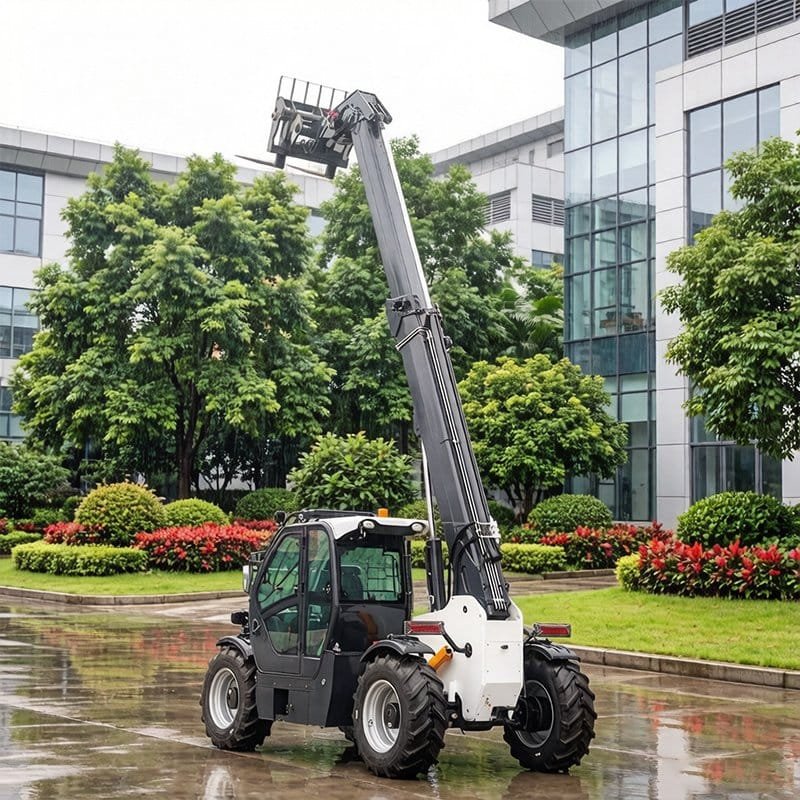
There’s no single right answer; it depends on your budget, risk tolerance, and mechanical expertise. Here’s a comparison to help you decide:
| Factor | New Telehandler | Used Telehandler |
|---|---|---|
| Initial Cost | Plus haut | Inférieur |
| Condition | Brand new, pristine | Varies greatly |
| Warranty | Full manufacturer warranty | Limited or none |
| Customization | High (choose engine, attachments) | Limited to what’s available |
| Maintenance History | Clear, none | Must be verified; can be unknown |
| Inspection | Factory inspected | Pre-purchase inspection is critical |
If you decide to explore the used market for a telehandler for agriculture, a detailed inspection is absolutely essential. I always recommend having a qualified mechanic check the following:
- Engine and Transmission: Check for leaks, strange noises, and smooth operation.
- Boom: Look for cracks, welds, or signs of stress. Extend and retract it fully.
- Hydraulic System: Inspect hoses for cracks and leaks. Test all hydraulic functions.
- Axles and Drivetrain: Check for leaks and excessive wear.
- Pins and Bushings: Worn pins and bushings can be expensive to replace.
- Machine Hours: Verify the hour meter reading seems consistent with the machine’s overall wear.
- Maintenance Records: If available, these are invaluable.
A low-cost used machine can quickly become a very expensive problem if it has hidden issues.
11,Is a Telehandler Worth the Investment for Your Farm?
After considering all the features and capabilities, the final question is always about the bottom line: Is a telehandler for agriculture a worthwhile investment?
A telehandler is worth the investment if its versatility allows you to increase operational efficiency, improve safety, and consolidate the work of multiple other machines, leading to higher year-round equipment utilization and a strong return on investment.
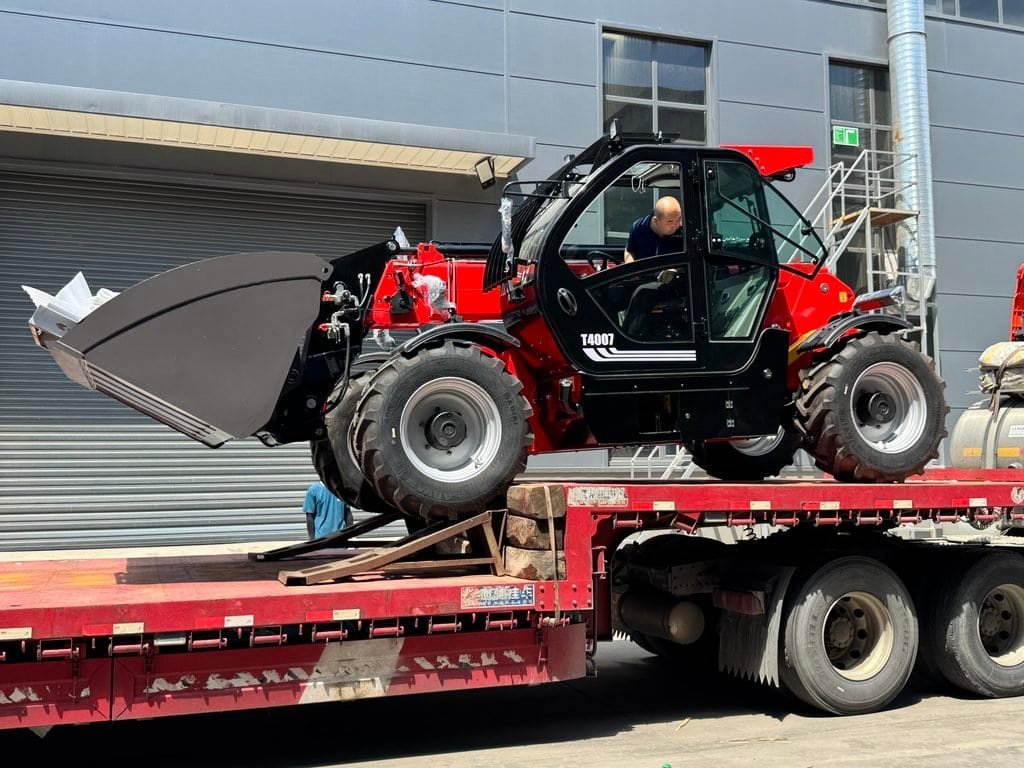
Don’t think about the investment by comparing its price to a single machine, like a forklift. Instead, calculate its value based on the machines it can potentially replace or the rentals it can eliminate.
Consider this: if your farm currently uses or needs:
- A tractor with a front-loader attachment
- A rough-terrain forklift
- A wheel loader for loose materials
- Occasional rentals of an aerial work platform
A single telehandler for agriculture with the right attachments can perform a significant portion of the work done by all of these. The investment logic is not “a telehandler is cheaper.” The logic is, “Can one machine help me complete more jobs throughout the year, reduce my total maintenance burden, and simplify my operations?”
For most modern, growing farms, the answer is a resounding yes. The ability to do more with less—less equipment, less maintenance, less downtime—is what makes the telehandler such a powerful tool for improving profitability.
12,Telehandler for Agriculture: Built Around Your Farm’s Needs
Finding a supplier who not only builds a quality machine but also understands the specific needs of agriculture is key to making a successful investment.
HIXEN telehandlers for agriculture are designed to be highly configurable. We offer a range of models with different lifting capacities, heights, and engine options that can be paired with the precise attachments required for the operational demands of modern farms and global equipment distributors.
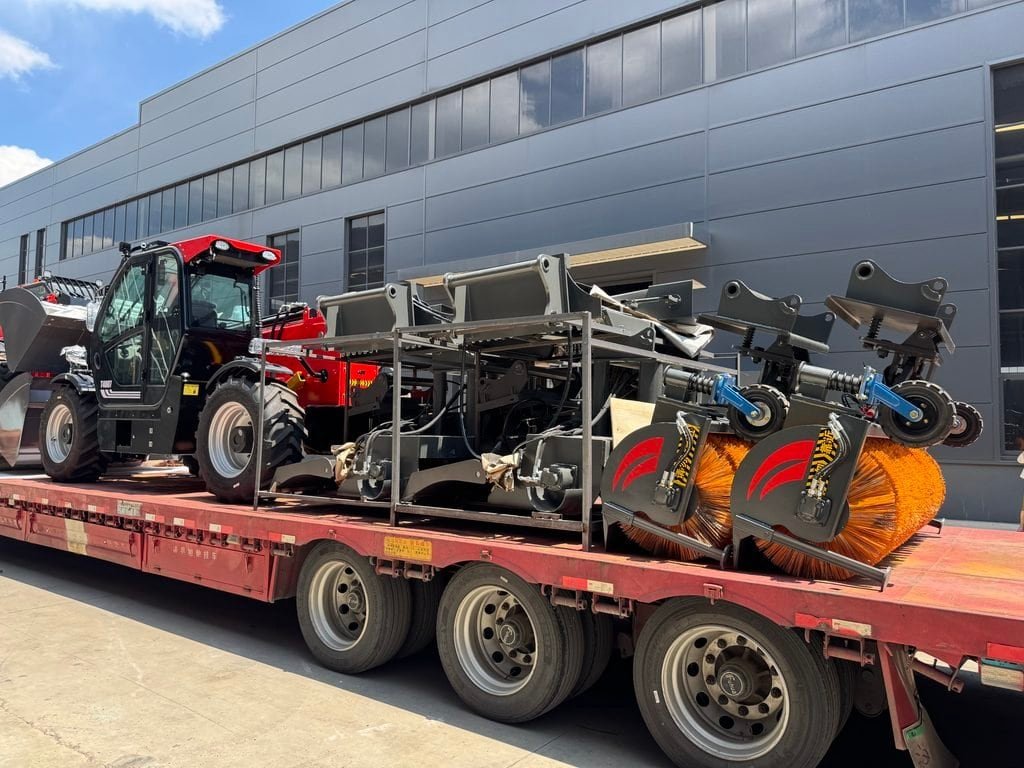
As a manufacturer focused on the global market, we know that a farm in Southeast Asia has different needs than a farm in Europe or South America. That’s why our approach is consultative. We don’t just sell a machine; we work with our partners—be they dealers, rental companies, or large agricultural enterprises—to build a solution. This means discussing engine choices to meet local emission standards, selecting the right tire and drivetrain package for the terrain, and equipping the machine with the attachments that will deliver the most value. Our goal is to provide a reliable, hard-working telehandler for agriculture that becomes an integral and profitable part of your operation.
13,Looking for the Right Telehandler for Your Farm? Start With Your Application
After exploring all the features, specifications, and options, it’s easy to get lost in the details. So, what is the single most important thing to remember?
The most critical first step in selecting a telehandler for agriculture is to step away from the brochures and thoroughly analyze your own specific applications. From bale handling and feed loading to facility maintenance, your jobs should define the machine, not the other way around.
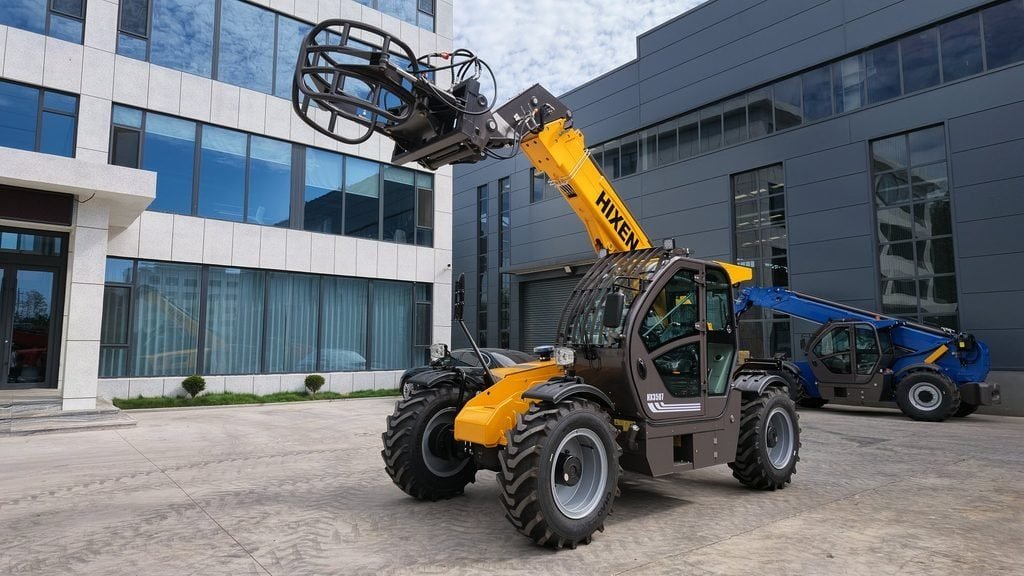
Before you ever look at a spec sheet, you should know the answers to these questions: What is the heaviest thing I need to lift? How high do I need to stack it? How far do I need to reach? What kind of terrain will I be on? By defining your needs first, you move from being a passive buyer to an informed investor. You’ll be able to evaluate different models not based on which has the “best” numbers, but on which has the right numbers for your farm. This application-first approach ensures you get a tool that solves your problems and delivers real value from day one.
Frequently Asked Questions About Telehandlers for Agriculture
What is a telehandler used for in agriculture?
In agriculture, a telehandler is used for a wide variety of tasks, including lifting and stacking hay bales, loading feed and grain with a bucket, moving pallets like a forklift, and performing high-reach maintenance on buildings with a work platform.
Is a telehandler better than a tractor for farm work?
A telehandler is not better, but different. A tractor excels at pulling implements for fieldwork. A telehandler excels at lifting and reaching. While a tractor can be fitted with a loader, it cannot match the lifting height, forward reach, and specialized material handling capabilities of a dedicated telehandler.
Can a telehandler handle hay bales?
Yes, handling hay bales is one of the most common and effective uses for a telehandler. With a bale clamp or spike attachment, it can quickly and safely move, transport, and stack both round and square bales to significant heights.
What size telehandler do I need for my farm?
The size depends on your heaviest loads and highest reach requirements. A 2.5-3 ton model is often sufficient for smaller farms, while larger operations handling bigger bales or bulk bags may need a 3-4 ton machine or larger. Always check the load chart.
How do I choose the right telehandler for my farm?
Start by identifying your main tasks. Then, determine the maximum weight, height, and reach you need. Choose the right attachments for those tasks, consider your farm’s terrain, and ensure the machine meets local regulations.
Conclusion
Investing in a telehandler for agriculture is an investment in efficiency, versatility, and productivity. As we’ve seen, this single machine can take on the roles of a forklift, a loader, and a lift, making it an invaluable asset for the modern farm. Its ability to work across different tasks—from handling heavy bales and loading feed to performing high-reach maintenance—ensures it works hard for you all year round, not just during a single season. The key to success is a careful evaluation of your own needs. By choosing the right lifting capacity, height, reach, and attachments for your specific jobs, you can ensure your telehandler for agriculture delivers an outstanding return on investment for years to come.
If you are an equipment dealer, rental company, or part of a large agricultural enterprise evaluating your fleet’s needs, our team is ready to help. Contactez-nous to discuss how a configurable HIXEN telehandler can be tailored to fit your specific applications and market requirements.
