
Are you tired of juggling multiple machines on your job site? The constant shuffle between a forklift, a small crane, and a loader costs time, fuel, and money. This inefficiency is a major problem for growing businesses. The real issue is that each machine represents a separate cost for purchase, maintenance, and a trained operator. The solution lies in finding a smarter, more versatile piece of equipment. Understanding the right telehandler application can consolidate your fleet, streamline your workflow, and dramatically reduce your operational overhead.
A telehandler, or telescopic handler, replaces multiple machines by combining a forklift’s lifting capability with a crane’s forward and vertical reach. It uses a telescopic boom and a wide range of interchangeable attachments to perform diverse tasks. This unique versatility allows one machine to do the work of a forklift, a wheel loader, a small crane, and even an aerial work platform, making it an invaluable asset in construction, farming, and logistics.

Now that you see the core advantage, you’re probably wondering exactly how this one machine can fit into your specific industry. It’s not just about having a single tool; it’s about having the right tool for many different jobs. Let’s dive deeper into the specific applications and features that make a telehandler a true game-changer.
1,What Makes a Telehandler Different from Traditional Equipment?
Do you find your traditional forklift can’t quite reach a high shelf, or your wheel loader lacks the finesse for delicate placement? These limitations create daily frustrations and slow down your entire operation. A telehandler is engineered specifically to overcome these common challenges, but what exactly sets it apart?
A telehandler is fundamentally different due to its telescopic boom, which provides significant forward (horizontal) and vertical reach, unlike a forklift’s mast that only moves up and down. Combined with its typical four-wheel drive and all-terrain tires, it can operate on rough ground where other machines can’t. This adaptability is then multiplied by its ability to use various attachments.

The Power of the Telescopic Boom
The defining feature of a telehandler is its boom. Unlike a standard forklift mast, a telescopic boom can extend forwards and upwards simultaneously. This allows an operator to perform unique tasks, such as:
- Placing a pallet of materials on the far side of a truck bed from a single loading position.
- Lifting construction supplies over obstacles like walls or ditches to the center of a building’s slab.
- Positioning roof trusses accurately without needing a separate crane.
At HIXEN, our models offer lift heights ranging from 7 to 18 meters. This kind of reach completely changes what’s possible for a single ground-based machine, giving you the functionality of a crane in a more compact and mobile package.
All-Terrain Superiority
Most conventional forklifts are designed for smooth, paved surfaces like a warehouse floor. Take them onto a muddy construction site or an uneven farm field, and they quickly become stuck and useless. Telehandlers, on the other hand, are built for these environments.
- Four-wheel drive provides superior traction in mud, snow, and sand.
- Large, rugged tires easily navigate rocks, ruts, and debris.
- Multiple steering modes (front-wheel, all-wheel, and crab steer) give them incredible maneuverability in tight spaces.
I remember a conversation with a building contractor who told me his team used to spend hours laying down temporary plywood paths just to get a forklift to the back of a site. After switching to a telehandler, they could simply drive straight to where they were needed, saving an incredible amount of setup time.
The Attachment Advantage: A True Multi-Tool
The “one machine, many jobs” concept truly comes to life with attachments. A quick-coupler system allows an operator to switch from one tool to another in just a few minutes, transforming the machine’s function.
| Attachment | Replaces | Primary Use Case |
|---|---|---|
| Forks | Standard Forklift | Lifting and moving pallets, lumber, and materials. |
| Seau | Wheel Loader | Scooping and moving loose materials like gravel, dirt, or grain. |
| Work Platform | Aerial Work Platform | Safely lifting personnel and tools for installation or repair tasks. |
| Bale Clamp | Tractor with Front Loader | Grabbing and stacking round or square hay bales in agriculture. |
| Lifting Jib | Small Crane | Hoisting suspended loads like engine blocks or structural beams. |
This ability to adapt means you are no longer paying for five different machines that sit idle for half the day. Instead, you have one machine that is always working.
2,What is the Telehandler Application in the Construction Industry?
Is your construction site a complex ballet of different machines trying to work around each other? Coordinating a forklift for materials, a crane for lifts, and an aerial platform for workers creates logistical headaches and safety risks. A proper telehandler application can simplify this entire process.
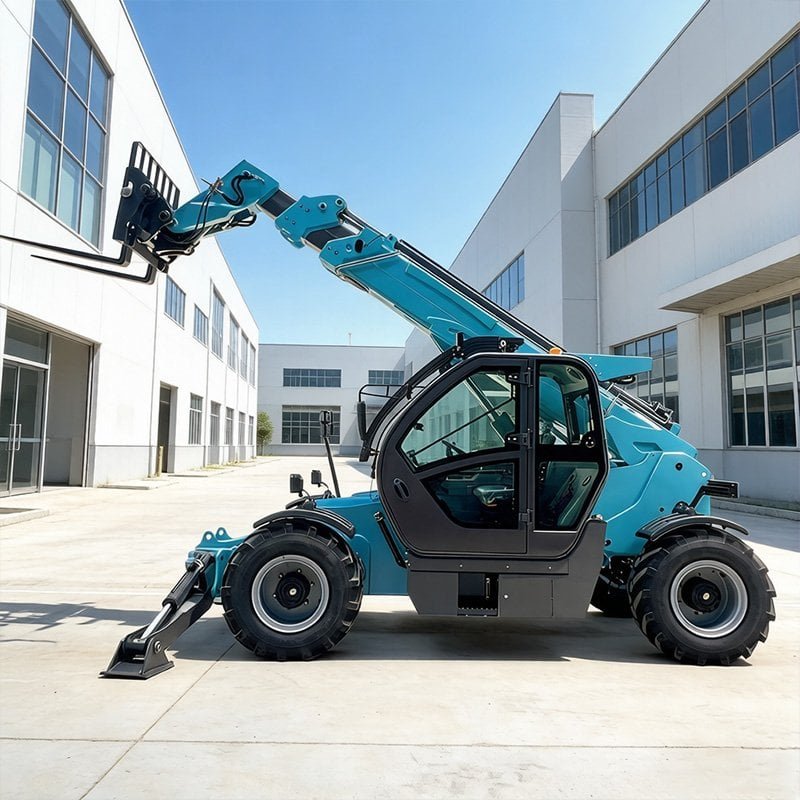
In construction, the key telehandler application is its role as a centralized material handling hub. It can unload trucks, transport materials across rough terrain, lift supplies to multiple stories, and assist with installation. This consolidation drastically improves site efficiency and safety by reducing vehicle traffic.
Lifting and Placing Materials with Precision
The most common use is moving materials from the delivery truck to the point of use. With its impressive reach, a telehandler can accomplish tasks that are impossible for a forklift.
- Multi-story placement: Our HIXEN telehandlers can lift pallets of bricks, bags of cement, or drywall sheets directly to the second, third, or even fifth floor of a building. This eliminates the need for manual labor or cumbersome material hoists.
- Reach over obstacles: It can place materials deep inside a foundation or over a retaining wall, saving immense time.
- Framing and roofing: Telehandlers are perfect for lifting and holding heavy roof trusses or structural insulated panels (SIPs) in place while they are secured by the crew. One of our customers, a custom home builder, reported that they cut their framing time by nearly 30% by using a telehandler to position beams instead of relying on a larger, more expensive crane rental.
Site Support and Cleanup
Beyond just lifting, a telehandler is the ultimate support vehicle on a construction site.
- With a bucket attachment, it functions as a wheel loader, perfect for moving piles of dirt, gravel, or sand. It’s also ideal for site cleanup, quickly loading debris into a dumpster.
- With a work platform attachment, it becomes a secure mobile scaffolding solution. This is perfect for exterior finishing, window installation, or electrical work, providing a much safer and more flexible alternative to ladders.
By handling these varied tasks, the telehandler ensures that other specialized trades can work without interruption, keeping the entire project on schedule.
3,How Does a Telehandler Improve Farming Efficiency?
Are you a farmer who feels like you spend half your day just switching between your tractor, loader, and old forklift? This constant back-and-forth burns fuel, wastes time, and wears out your equipment faster. A telehandler streamlines farm operations by combining the strengths of all these machines into one powerful unit.
A telehandler dramatically boosts farming efficiency by consolidating material handling tasks. It can stack hay bales higher and more safely than a tractor, load feed or grain into tall mixers and silos with a bucket, and transport heavy equipment with pallet forks. This multi-functionality reduces equipment clutter and saves countless hours during critical seasons.

Handling Hay, Silage, and Feed
This is where the telehandler’s reach is a massive advantage over a traditional tractor with a front-end loader.
- Stacking Bales: A telehandler can stack large round or square bales much higher and with greater stability. This allows you to store more hay in a smaller footprint, protecting it from the elements. A customer of ours in the dairy industry uses a HIXEN 4-ton model to create neat, towering stacks in his barn, maximizing his storage space.
- Loading Mixers and Bins: With its vertical reach, a telehandler can easily dump feed into tall TMR (Total Mixed Ration) wagons or fill grain bins, a task that is often difficult or impossible for standard loaders.
- Silage Pits: The power and bucket capacity make it ideal for pushing up and packing silage, then loading it out for feeding.
General Farm Utility and Maintenance
A farm always has a long list of odd jobs, and a telehandler is the perfect tool to tackle them.
- Moving Equipment: Use the forks to lift and move heavy implements, seed pallets, fertilizer totes, and other bulky items around the farmstead.
- Cleaning Barns: A bucket or grapple attachment makes quick work of cleaning out livestock pens or moving manure.
- Construction Projects: Whether you’re building a new fence, putting up a shed, or repairing a roof, the telehandler can lift posts, hold trusses, and transport materials, acting as your personal construction crew.
For a modern farm, investing in a telehandler isn’t about adding another machine; it’s about replacing three or four less efficient ones.
4,What is the Telehandler Application for Warehouse and Logistics Operations?
Are your warehouse operations bottlenecked by the limitations of standard forklifts? When you need to load a flatbed truck from one side or move goods across an unpaved yard, a traditional forklift just doesn’t cut it. This is where a telehandler application bridges the crucial gap between indoor efficiency and outdoor capability.
For warehousing and logistics, a telehandler excels in environments where reach and terrain-handling are paramount. It is ideal for loading and unloading flatbed trucks, moving bulk materials in outdoor storage yards, and handling containers in ports or rail yards—scenarios where a conventional forklift’s limited reach and pavement-only design would fail.

Outdoor Warehousing and Yard Management
Many logistics operations involve large outdoor storage areas.
- Rough Terrain Handling: A telehandler can easily move pallets of goods across gravel, dirt, or uneven asphalt where a warehouse forklift would get stuck. This is essential for businesses like lumber yards, pipe distributors, and agricultural co-ops.
- Efficient Stacking: Its reach allows for higher and deeper stacking of goods outdoors, maximizing the use of your available space without needing to constantly re-shuffle inventory.
Loading and Unloading Efficiency
The telehandler’s boom is a game-changer at the loading dock, especially with non-standard trailers.
- Single-Side Loading: A key benefit is the ability to load or unload a flatbed trailer entirely from one side. The telehandler can reach across the entire width of the bed, placing or retrieving pallets from the opposite side. This saves a huge amount of time, as the driver doesn’t need to reposition the truck. It also improves safety by keeping the loading operation contained to one lane.
- Awkward Loads: For long or bulky items like steel pipes, lumber packs, or pre-cast concrete, the stability and reach of a telehandler provide far greater control and safety than a standard forklift.
Port and Intermodal Operations
In the fast-paced world of ports and rail yards, speed and versatility are everything. While larger container handlers do the heavy lifting, telehandlers are invaluable support machines. They are used to stuff and strip containers with palletized goods, move maintenance equipment, and handle break-bulk cargo that arrives on flat-racks or as loose freight.
5,Why Can One Telehandler Replace Multiple Machines?
Is your capital budget being consumed by the need to purchase a forklift, a loader, and an aerial lift? The upfront cost is only the beginning. Each machine brings its own maintenance schedule, insurance policy, and training requirements. This asset-heavy approach is inefficient. The solution is to consolidate with a single, more capable machine.
A telehandler can replace multiple machines because its design is a versatile platform, not a single-purpose tool. By combining a powerful engine, a rough-terrain chassis, and a telescopic boom with a quick-hitch system for attachments, it seamlessly transforms to do the specific job of a forklift, wheel loader, crane, or work platform.

Let’s break down the direct comparison:
| Traditional Solution | Telehandler Solution |
|---|---|
| Buy a Forklift: For moving pallets. | One Telehandler with Forks: Handles pallets with superior reach. |
| Rent a Small Crane: For high lifts. | One Telehandler with Jib: Lifts suspended loads to height. |
| Buy a Wheel Loader: For moving loose material. | One Telehandler with Bucket: Scoops, moves, and loads materials. |
| Rent an Aerial Lift: For personnel work. | One Telehandler with Platform: Safely elevates workers and tools. |
Calculating the True Value
The most important question isn’t, “How much does a telehandler cost?” The right question is, “How much money does a telehandler save me?”
- Reduced Capital Outlay: The cost of one telehandler is significantly less than the combined cost of three or four separate machines.
- Lower Operating Costs: You only need to fuel, maintain, and insure one machine.
- Simplified Labor: You only need one skilled operator who can perform multiple tasks, rather than several operators for different machines. This reduces payroll and simplifies scheduling.
- Increased Utilization: A single telehandler can be kept busy all day, performing a variety of tasks. Specialized machines often sit idle, depreciating without generating revenue.
I have seen businesses cut their total equipment investment by over 50% by strategically replacing older, single-purpose units with one or two versatile telehandlers. The return on investment is not just financial; it’s also a massive gain in operational efficiency.
6,How Do I Choose the Right Telehandler for My Business?
Now that you’re convinced of the benefits, you face a new challenge: choosing the right one. With different lift capacities, heights, and features, picking the wrong model can be a costly mistake that leaves you with a machine that’s either underpowered or oversized for your needs.
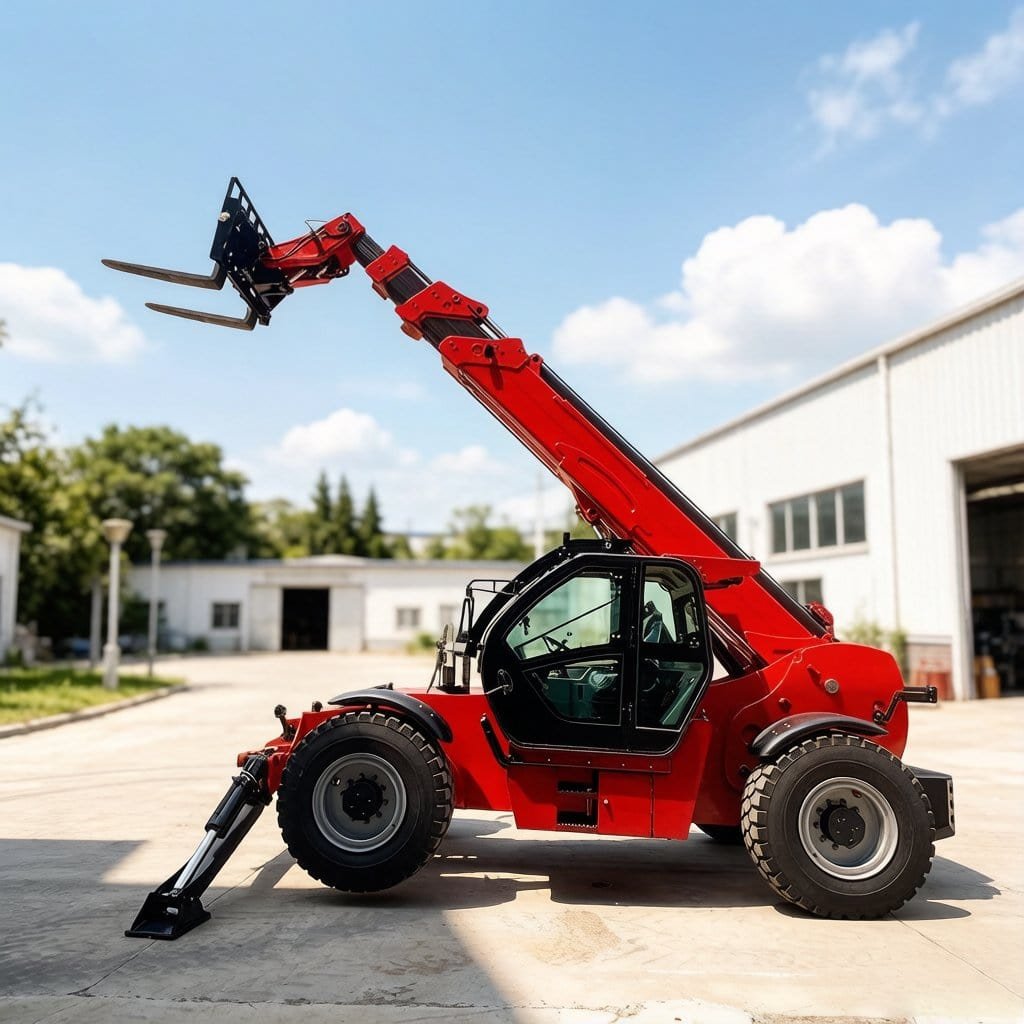
To choose the right telehandler, you must first analyze your most common and most demanding tasks. Determine the maximum weight you need to lift and the maximum height and forward reach you require. Then, carefully review a machine’s load chart to ensure it can handle that weight at that specific position. Finally, select the attachments essential for your primary telehandler application.
Step 1: Analyze Your Core Needs
Before looking at any brochures, answer these questions:
- What is the heaviest single item I need to lift? (e.g., a pallet of block, a super sack of seed, a small engine). This determines your required lift capacity.
- What is the highest point I need to reach? (e.g., a third-story roofline, the top of a grain bin). This determines your required lift height.
- What is the furthest forward I need to place a load? (e.g., to the center of a flatbed truck, over a foundation wall). This determines your required forward reach.
Step 2: Understand the Load Chart
A telehandler’s most important document is its load chart. This chart is not just about maximum capacity at the base of the machine. It shows you how much weight the telehandler can safely lift at different boom angles and extensions. Always remember: as the boom extends further out, the safe lifting capacity decreases significantly. When choosing a machine, make sure it can handle your required weight at your required height et reach.
Step 3: Select Your Essential Attachments
Think about the jobs you do 80% of the time.
- Construction: You will definitely need forks and likely a general-purpose bucket. A work platform or jib might be a good secondary purchase.
- Agriculture: Forks and a bale clamp or large bucket are often the primary needs.
- Logistics: Forks are essential. If you handle loose materials, a bucket is key.
At HIXEN, we help customers walk through this process. Our range includes models from 2.5-ton mini telehandlers for tight spaces all the way up to 7-ton machines for heavy industrial work, with lift heights from 7 to 18 meters. We ensure you get a machine that is perfectly matched to your job, not just the one with the biggest numbers.
7,Why Do Global Customers Choose HIXEN Telehandler Solutions?
Making a major equipment purchase involves more than just specs and prices; it requires trust in the manufacturer. You need a partner who delivers proven quality, reliable support, and genuine value. With so many global brands, why do customers in over 20 countries consistently choose HIXEN?
Global customers choose HIXEN because we deliver robust, high-performance telehandlers with extensive customization options at a direct-from-factory price. Our 15 years of focused manufacturing and export experience mean we provide solutions that are not only reliable and powerful but also perfectly tailored to the unique demands of each customer’s industry.

15 Years of Manufacturing Excellence
We aren’t a trading company; we are the factory. For over 15 years, HIXEN has been designing, engineering, and building telehandlers in our state-of-the-art facility in Shandong, China. This deep experience allows us to control quality at every step, from the raw steel to the final hydraulic test. Our monthly capacity of 1,000 units demonstrates our scale and our ability to meet global demand.
A Comprehensive and Customizable Range
One size does not fit all. We offer a full spectrum of telehandlers to meet diverse needs:
- Capacities: From 2-ton to 7-ton models.
- Lift Heights: From 7 meters to 18 meters.
- Attachments: A vast catalog including forks, buckets, grapples, platforms, jibs, and more.
- Customization: We routinely support custom requests, from specific paint colors to match your company fleet to specialized attachment modifications.
The Direct-from-Factory Advantage
By working directly with HIXEN, you bypass the layers of distributors and dealers that add unnecessary cost. This means:
- Better Value: You get a higher-quality machine for your budget.
- Clear Communication: Your specific needs are communicated directly to our engineering team.
- Responsive Support: Our deep product knowledge ensures you get fast and accurate answers.
Our experience exporting to over 20 countries means we understand the logistics, documentation, and support requirements for international business. We don’t just sell you a machine; we deliver a complete, factory-backed solution to your door.
Frequently Asked Questions
What is the main difference between a telehandler and a forklift?
The main difference is the boom. A forklift has a vertical mast that only moves up and down. A telehandler has a telescopic boom that extends forwards and upwards, giving it significantly more reach and versatility. Telehandlers are also typically better equipped for rough terrain.
Can a telehandler be used as a crane?
While a telehandler equipped with a lifting jib or hook attachment can lift and suspend loads similar to a small crane, it is not a direct replacement for a dedicated mobile crane. It is perfect for many mid-size lifting tasks on a job site but must always be operated according to its specific load chart.
Are telehandlers difficult to operate?
Operating a telehandler requires specific training and certification, similar to other heavy equipment. However, modern telehandlers are designed with user-friendly joystick controls and clear instrumentation. With proper training, operators can become proficient relatively quickly and safely manage the machine’s full range of functions.
How much does a telehandler cost?
The cost of a telehandler depends on its size, capacity, and features. However, the more important financial consideration is its total value. By replacing three or four other machines, a single telehandler can dramatically reduce your total investment in equipment, maintenance, and labor, offering a very strong return on investment.
What maintenance does a telehandler require?
Like any heavy equipment, a telehandler requires regular maintenance to ensure safety and longevity. This includes daily checks of fluid levels and tires, as well as periodic servicing of the engine, hydraulics, and filters according to the manufacturer’s schedule. A well-maintained machine will provide reliable service for many years.
Conclusion
The true value of a telehandler is not simply its ability to lift high, but its power to consolidate your fleet and simplify your operations. By replacing multiple single-purpose machines, a telehandler drives down costs related to purchasing, fuel, maintenance, and labor. From the dynamic construction site to the demanding farm and the bustling logistics yard, the right telehandler application is a force multiplier, boosting productivity and profitability. If your business currently relies on a mix of forklifts, loaders, and rental lifts to get the job done, you are likely ready to make the switch.
Choosing the right equipment is about selecting the machine that creates the most value, not just the one that fills a single need.
Contact HIXEN today to discover how our factory-direct telehandler solutions can transform your operations.
