
Choosing the right parts of telehandler can feel overwhelming. You’re faced with complex spec sheets and a dizzying array of components, making it hard to know what truly matters for performance and reliability. This confusion can lead to a poor investment in a machine that isn’t up to the job, resulting in costly downtime and repairs. The solution is to stop thinking about a parts list and start understanding the machine as a complete, integrated system.
A telehandler is best understood as a combination of six core functional systems: the structural system (frame and boom), the power system (engine), the hydraulic system (pumps, cylinders, valves), the drivetrain system (transmission, axles, wheels), the control system (joysticks, sensors, ECU), and the safety system (ROPS/FOPS, load indicators). These systems work together like the organs of a body to deliver power, reach, and stability.
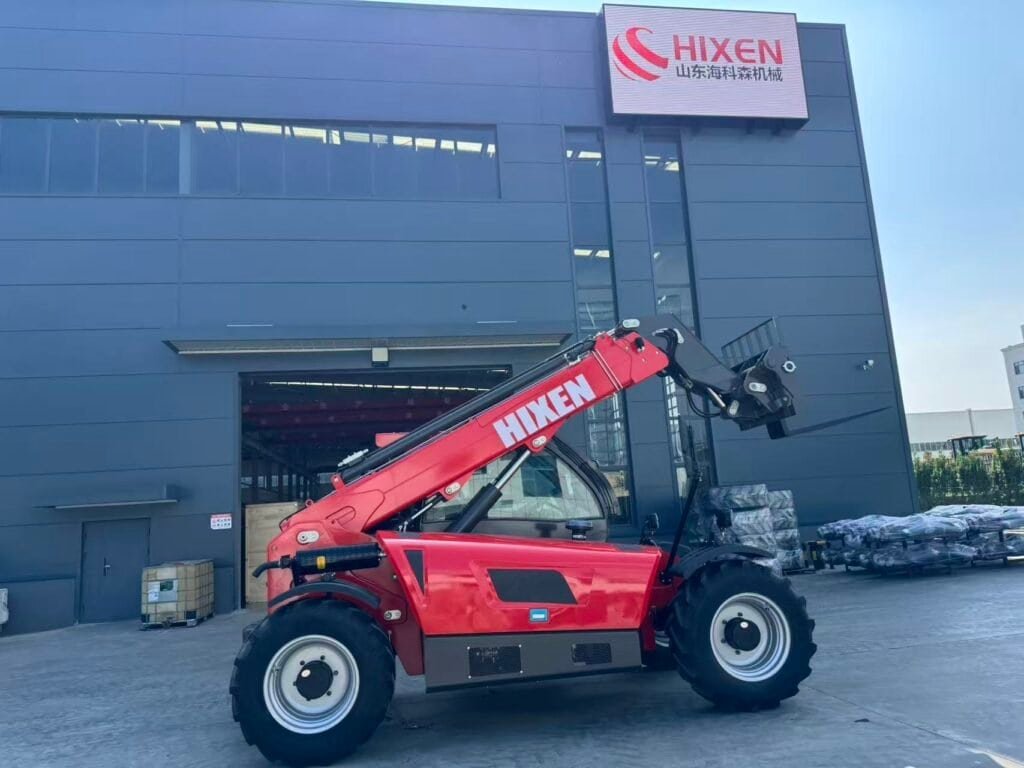
Now that you have the big picture, let’s explore how each of these systems functions. Understanding the role of each component is the key to evaluating a machine’s quality, diagnosing potential issues, and choosing the perfect telehandler for your specific needs.
1,What Are the Main Parts of Telehandler? A Complete Breakdown of Its Key Systems
Thinking about a telehandler as just a collection of individual parts can be misleading. A better approach is to see it as a highly coordinated machine, much like a living organism. Each system has a distinct role, but they all must work in perfect harmony to achieve the machine’s impressive capabilities.
Instead of a simple parts list, we will break down the machine into its core functional systems. This perspective, which I’ve found resonates with engineers and operators alike, makes it easier to understand how the parts of telehandler contribute to overall performance, reliability, and safety.
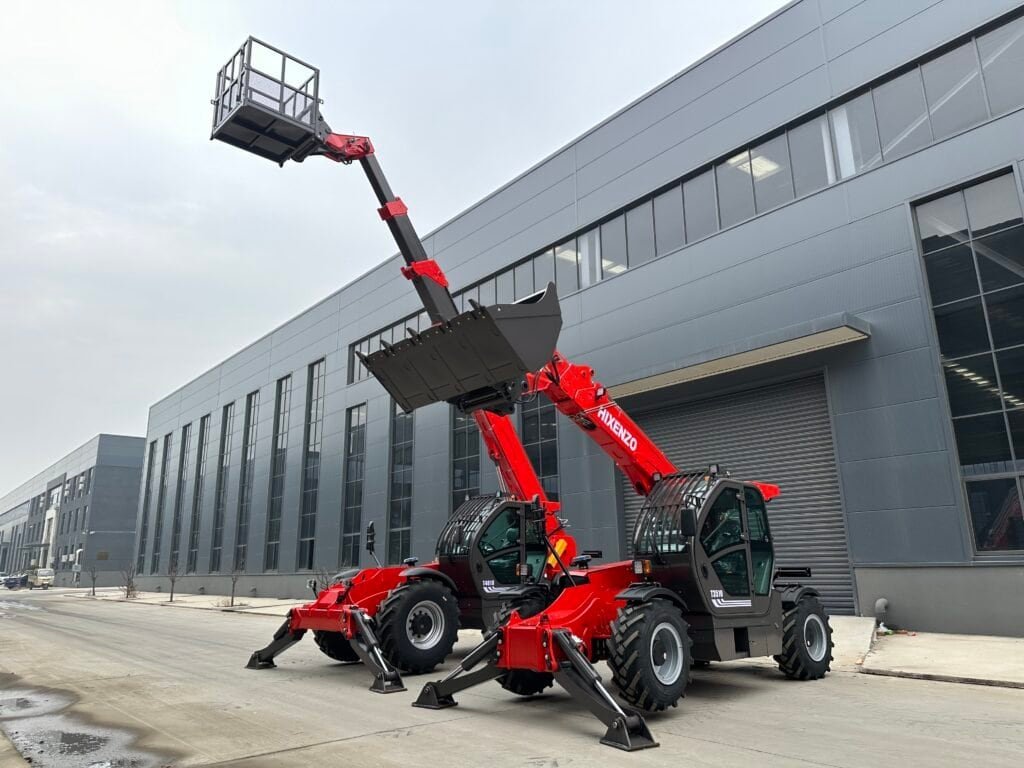
The Structural System: A Telehandler’s Bones
A telehandler’s real value isn’t just how high it can reach, but how much it can safely lift and remain stable when fully extended. This capability is determined entirely by its “skeleton”—the structural system.
This system is the foundation of the machine’s strength and longevity. From our experience exporting machines for demanding jobs, we know that a weak frame or boom will inevitably lead to premature failure under high-stress conditions.
The primary structural components include:
- Main Frame: The chassis that supports all other components.
- Telescopic Boom: The signature multi-section arm that extends and retracts.
- Turret Structure (on rotating models): The rotating platform that connects the boom to the frame.
- Outriggers (optional): Stabilizing legs that extend from the frame to increase the stability footprint.
The Role of High-Strength Steel
The main frame and telescopic boom are almost always fabricated from high-strength steel. This isn’t just about making them “strong.” It’s about engineering a structure that can:
- Withstand dynamic loads: Telehandlers don’t just lift static weights; they move, bounce over rough terrain, and endure shock loads. High-strength steel absorbs these impacts without deforming.
- Resist long-term fatigue: In high-cycle applications like port logistics or busy construction sites, the steel is constantly being stressed and relaxed. Superior steel quality directly translates to a longer operational life.
- Guarantee stability during lifting: A rigid, unyielding frame and boom are essential for keeping the load steady, especially at maximum height and reach.
Why the Telescopic Boom is a Marvel of Engineering
The multi-section, nested design of the telescopic boom is what separates a telehandler from a standard forklift. But how does an arm that extends over 15 meters remain rigid enough to lift several tons?
The answer lies in a combination of factors:
- Boom Section Profile: The shape of each boom section is designed for maximum rigidity-to-weight ratio.
- Wear Pad System: High-durability pads are placed between the boom sections. They ensure smooth extension and retraction while maintaining a tight, stable fit.
- Synchronized Hydraulic Cylinders: Chains and hydraulic cylinders work in unison to extend and retract the sections proportionally, ensuring controlled and stable movement.
- Load Center Design: The entire machine is engineered around a calculated load center. The boom’s design ensures that as it extends, the center of gravity shifts in a predictable way that the chassis is designed to counterbalance.
2,The Power & Hydraulic Systems: A Telehandler’s Heart and Blood?
Struggling with a machine that feels weak or slow? The issue might not be the engine’s horsepower alone, but how that power is converted into useful work. A telehandler’s raw strength comes from the seamless partnership between its power and hydraulic systems.
The engine produces the initial energy, but the hydraulic system is what translates that energy into precise and powerful movements. This energy conversion pathway is critical: Engine → Hydraulic Pump → Control Valves → Hydraulic Cylinders/Motors → Action.
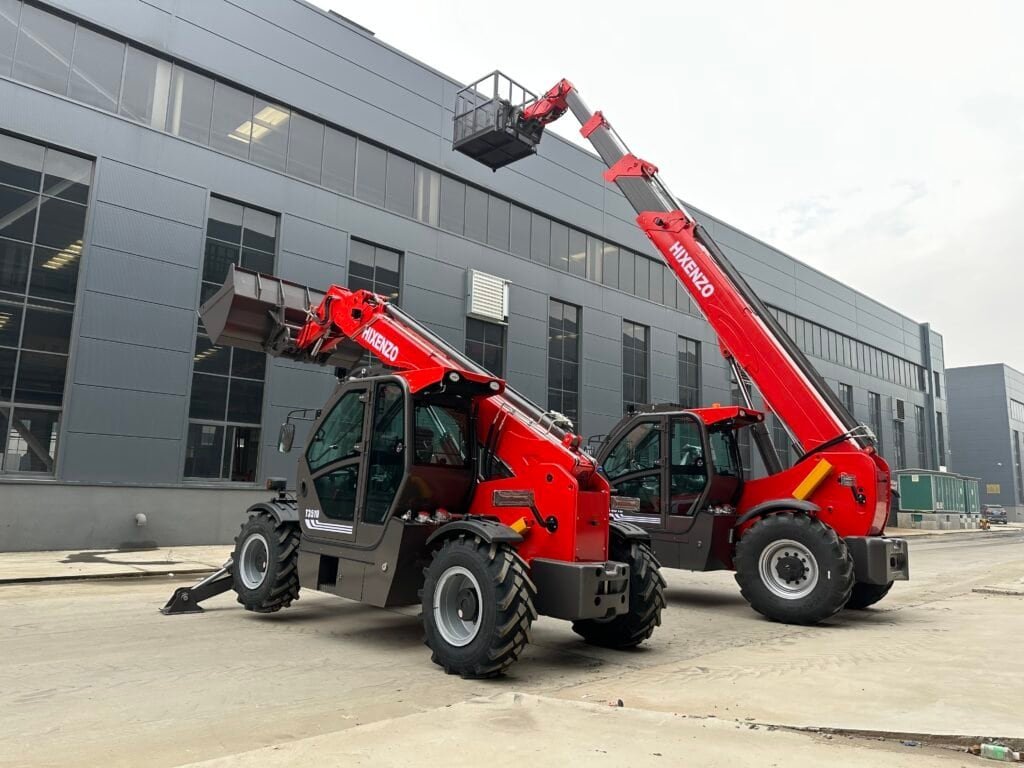
The Heart: The Diesel Engine
Telehandlers rely on diesel engines for a specific reason: low-speed torque. Unlike a car engine designed for high RPMs, a telehandler’s engine is built to deliver strong, consistent power at lower, more efficient speeds. This is perfect for the demands of construction, agriculture, and industrial sites where the machine needs to push, lift, and hold heavy loads for extended periods.
The Bloodstream: The Hydraulic System
If the engine is the heart, the hydraulic system is the circulatory system, pumping pressurized fluid to every corner of the machine to make it move. This system controls nearly every function:
- Lifting and lowering the boom
- Extending and retracting the boom
- Tilting the attachment (forks, bucket, etc.)
- Powering the steering
- Operating attachments like grapples or winches
The key components are the hydraulic pump (creates the pressure), the control valves (direct the flow of oil), hydraulic cylinders (the “muscles” that push and pull), and the network of hoses and lines.
A crucial insight for buyers is that two machines with the same engine horsepower can have vastly different real-world performance. A well-designed hydraulic system with high-quality pumps and precision valves will result in faster cycle times, smoother operation, and greater fuel efficiency. When evaluating the parts of telehandler, pay close attention to the reputation of the hydraulic component manufacturers.
3,The Drivetrain & Steering: A Telehandler’s Legs and Feet?
A machine that can lift high is useless if it can’t get to the job site. A telehandler’s ability to navigate rough terrain, tight spaces, and paved roads is all thanks to its robust drivetrain and versatile steering system.
These “legs and feet” are what make a telehandler a true all-terrain vehicle, far more capable than a conventional forklift. Understanding how these parts of telehandler work is key to choosing a machine that matches your work environment.
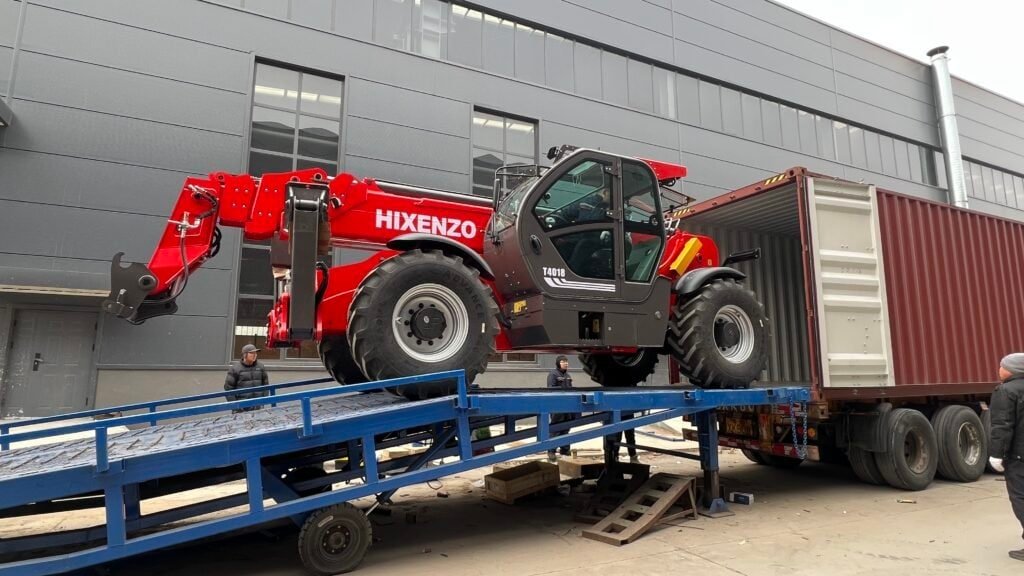
The core components of the drivetrain and walking system are the transmission, drive axles, tires, and the steering system. While the transmission and axles provide the motive force, it’s the steering system that truly defines the machine’s agility.
Three Steering Modes for Ultimate Versatility
Most telehandlers offer three selectable steering modes, each designed for a specific application scenario. I’ve often seen operators new to these machines amazed by the maneuverability they unlock.
| Steering Mode | Description | Best Suited For |
|---|---|---|
| Front-Wheel Steer | Only the front wheels turn, similar to a car. | High-speed road travel, open areas. Provides the most stability at speed. |
| All-Wheel/Four-Wheel Steer | Front and rear wheels turn in opposite directions. | Tight construction sites, warehouses. Drastically reduces the turning radius. |
| Crab Steer | All four wheels turn in the same direction. | Siding along a wall, positioning for curtain wall installation, precise placement in narrow aisles. |
Drivetrain Components to Consider
- Transmission: Telehandlers typically use a hydrostatic or powershift transmission. Hydrostatic transmissions offer smooth, stepless speed control, which is excellent for precise positioning. Powershift transmissions provide distinct gears and are often more efficient for applications involving a lot of “travel” time.
- Axles: Heavy-duty planetary axles are the standard, designed to handle high torque and the stress of carrying heavy loads over uneven ground.
- Tires: The choice of tires—pneumatic (air-filled), solid, or foam-filled—is critical. Large, deep-tread pneumatic tires are best for rough, unprepared terrain like a farm field. Solid or foam-filled tires are ideal for scrap yards or sites with high puncture risks.
4,The Control & Safety Systems: A Telehandler’s Brain and Immune System?
Worried about operator error or pushing a machine past its limits? Modern telehandlers are no longer simple mechanical beasts; they are intelligent machines equipped with a sophisticated “brain” and “immune system” to maximize performance and prevent accidents.
These electronic and safety systems are among the most critical parts of telehandler for ensuring safe and efficient operation. They provide the operator with crucial information and can even intervene to prevent a dangerous situation.
The Brain: The Control System
At the heart of the control system is the ECU (Electronic Control Unit). This onboard computer receives inputs from various components and sends commands to execute actions.
- Joystick: The primary interface for the operator. Modern single-joystick controls allow for simultaneous boom lift, extension, and attachment control, significantly improving efficiency.
- Sensors: The machine is covered in sensors that act as its “senses.” These include:
- Boom Angle Sensor: Measures the angle of the boom.
- Boom Extension Sensor: Measures how far the boom is extended.
- Load Sensor: Measures the weight on the forks or attachment.
- Display Screen: Provides the operator with real-time information, including the load chart, fuel levels, engine diagnostics, and warnings.
The Immune System: Active Safety Features
This is where the machine actively protects itself and the operator.
- Load Moment Limiting Indicator (LLMI): This is arguably the most important safety system. The LLMI uses data from the sensors (boom angle, extension, and load) to continuously calculate the machine’s stability. It compares the current state to the manufacturer’s load chart. If the machine approaches its tipping point, the LLMI will first sound an alarm and flash a warning light. If the operator continues the unsafe maneuver, the system will lock out further movement, preventing an accident.
- ROPS/FOPS Cabin: This is a passive but vital safety feature.
- ROPS (Roll-Over Protective Structure): The cabin is reinforced to protect the operator in the event of a machine rollover.
- FOPS (Falling Object Protective Structure): The cabin roof is designed to withstand impacts from falling objects, crucial on construction and forestry sites.
When purchasing a machine, always verify that its ROPS/FOPS certification is present and valid.
- Stabilizer Interlocks: On models with outriggers, this system prevents the boom from being operated in certain zones until the stabilizers are properly deployed.
Frequently Asked Questions
What are the three main parts of a telehandler’s boom?
The boom consists of multiple nested sections (typically a base section, mid-sections, and a final section), the internal hydraulic cylinders and chains that move them, and the wear pads that ensure smooth, stable movement between the sections.
What is the most important safety feature on a telehandler?
The Load Moment Limiting Indicator (LLMI) system is the most critical active safety feature. It constantly monitors the load, boom angle, and extension to prevent the machine from tipping over by warning the operator and eventually locking out unsafe movements.
How does a telehandler’s hydraulic system work?
The engine powers a hydraulic pump, which pressurizes hydraulic fluid (oil). The operator uses joysticks or levers to open and close control valves, directing the high-pressure oil to hydraulic cylinders. The force of the oil moving the pistons inside the cylinders is what lifts the boom and operates attachments.
What’s the difference between ROPS and FOPS?
ROPS stands for Roll-Over Protective Structure and is designed to protect the operator if the machine tips over. FOPS stands for Falling Object Protective Structure and protects the operator from objects falling on the cabin’s roof. Both are essential safety certifications for the operator’s cabin.
Conclusion
Understanding the parts of telehandler is about more than memorizing a list; it’s about appreciating how integrated systems create a powerful and versatile machine. By thinking in terms of the Structural “Skeleton,” the Power and Hydraulic “Heart and Blood,” the Drivetrain “Legs,” and the Control and Safety “Brain,” you can make a much more informed purchasing decision. This systems-based approach allows you to evaluate a machine’s true quality, anticipate its maintenance needs, and match its capabilities to your specific job site challenges.
Ultimately, the best telehandler is one that is reliable, safe, and perfectly suited for your work. When you’re ready to evaluate your options, consider not just the specs on paper but the quality and design of these core systems. If you need help navigating the choices and finding a machine with the right combination of components for your business, please reach out. We specialize in sourcing and exporting reliable new and used construction machinery and are ready to help you find the perfect fit.
Choosing a reliable telehandler manufacturer is not only about the lifting capacity, but also about the quality of every critical component. HIXEN Telehandler focuses on durable structures, efficient hydraulic systems and reliable control technology to provide solutions from 2.5 ton to 8 ton applications. Contact with us for more information!
