
Struggling to place materials high on a construction site or over an obstacle on the farm? You’re likely wondering if a longer telehandler boom length is the simple solution to your reach problems. While it’s a critical factor, choosing the longest boom available can sometimes create more issues than it solves, from reduced stability to unnecessary costs.
The ideal telehandler boom length is not the maximum length available, but the one that best matches your specific job requirements for reach, height, and lifting capacity. A longer boom offers greater working range but often comes with trade-offs, including reduced capacity at full extension and a higher overall machine weight and cost.
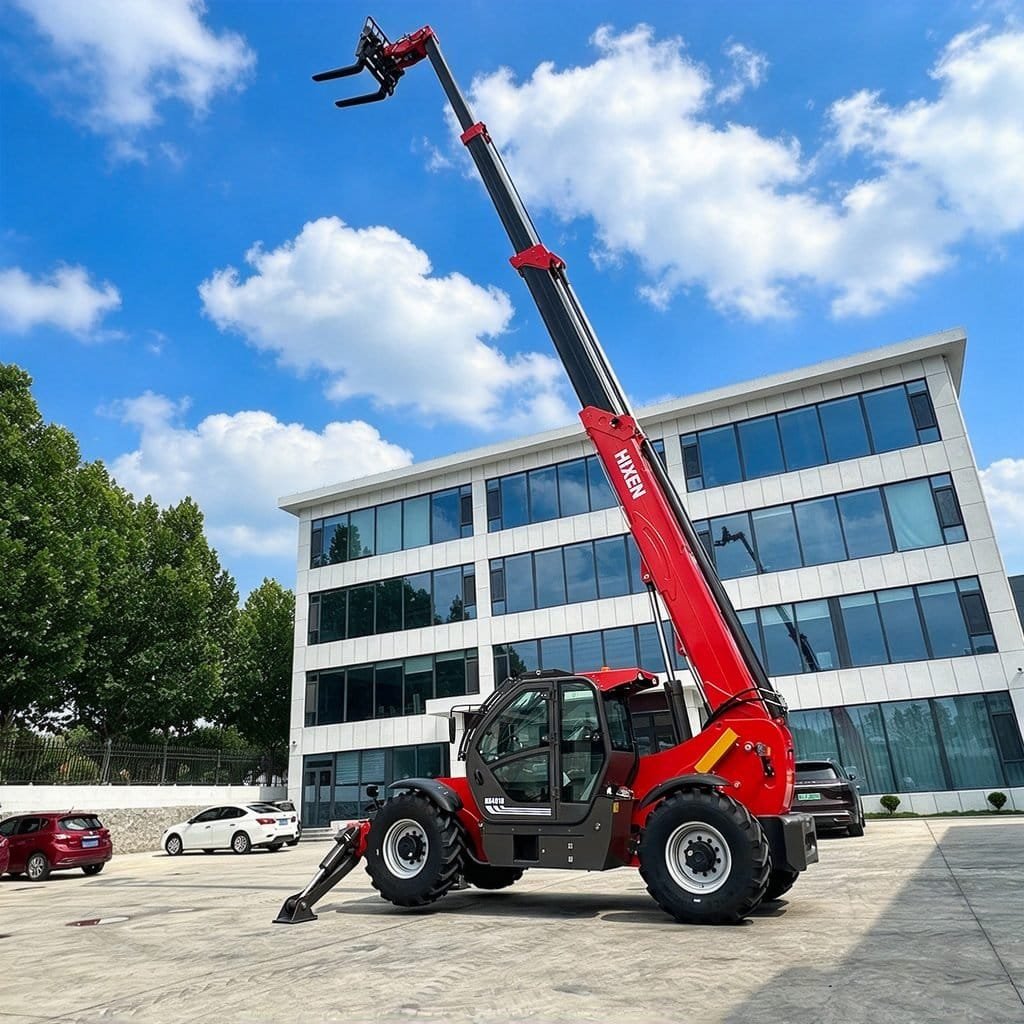
This might seem counterintuitive, but the relationship between reach and performance is more complex than just “longer is better.” Let’s dive into the details to understand how boom length truly affects performance and how you can select the perfect machine for your needs.
1,Why Does Telehandler Boom Length Matter?
Have you ever been on a job site where you need to lift materials to a second story, clear a fence, or place a pallet deep inside a truck, but your machine just can’t get close enough? In these moments, it’s natural to think, “If only I had a telehandler with a longer boom.”
El telehandler boom length is one of the first specifications buyers look at, as it directly influences a machine’s ability to perform these exact tasks. It dictates not just how high you can lift, but how far you can reach, making it a cornerstone of equipment selection for any application.
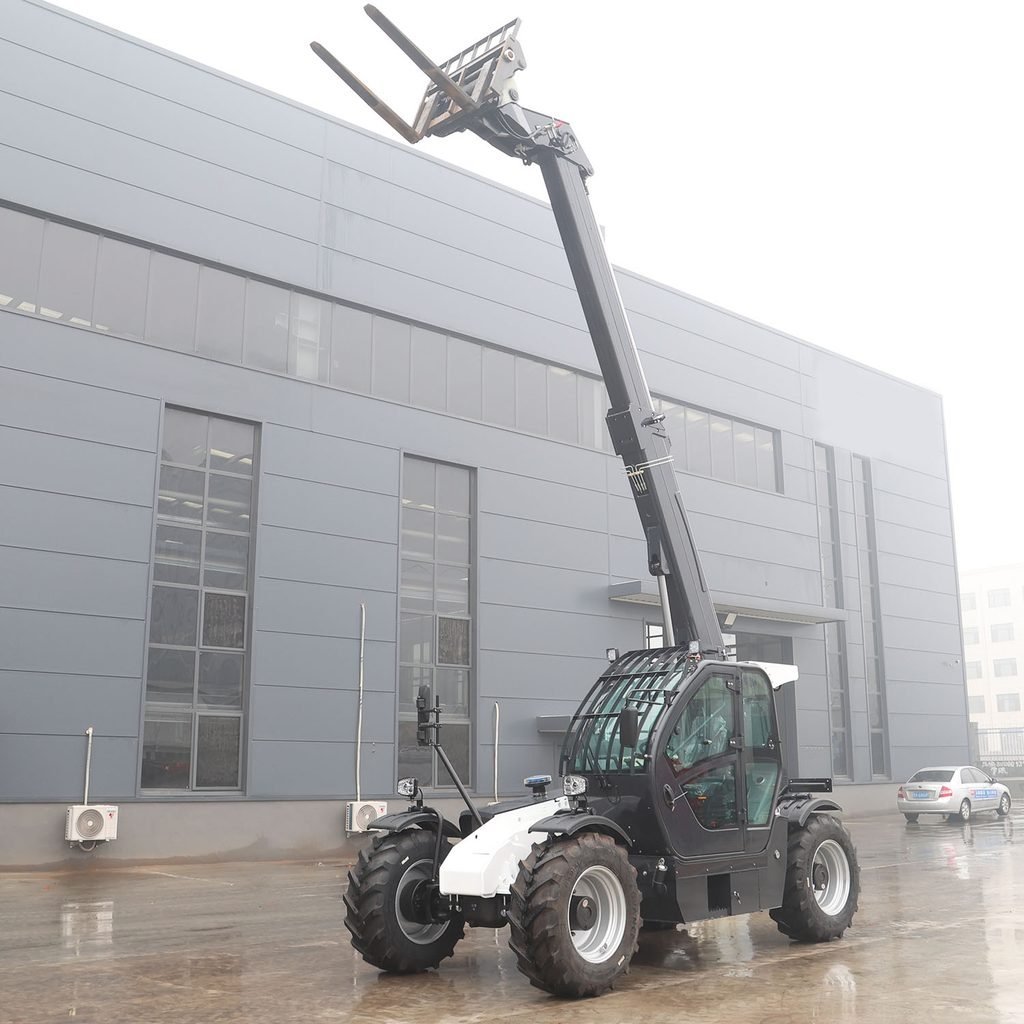
At HIXEN, we frequently work with clients in construction, agriculture, and industrial sectors. Their challenges are often similar: they need a machine that offers the right combination of reach, capacity, and maneuverability. This is why we provide a range of telehandlers with different boom lengths, lift heights, and tonnage options—to ensure you get a machine that is a perfect match for your work, not just a machine with the longest boom. Understanding the nuances of telehandler boom length is the first step toward making a smart investment.
2,What Is Telehandler Boom Length?
Are you finding the technical specifications for telehandlers confusing? Many buyers mix up key terms, which can lead to purchasing a machine that doesn’t fit their needs. Let’s clarify what this critical parameter really means.
Telehandler boom length refers to the maximum extended length of the telescopic boom, measured from the machine’s pivot point to the attachment point at the end of the boom. In simple terms, it determines how far forward the machine can place a load.
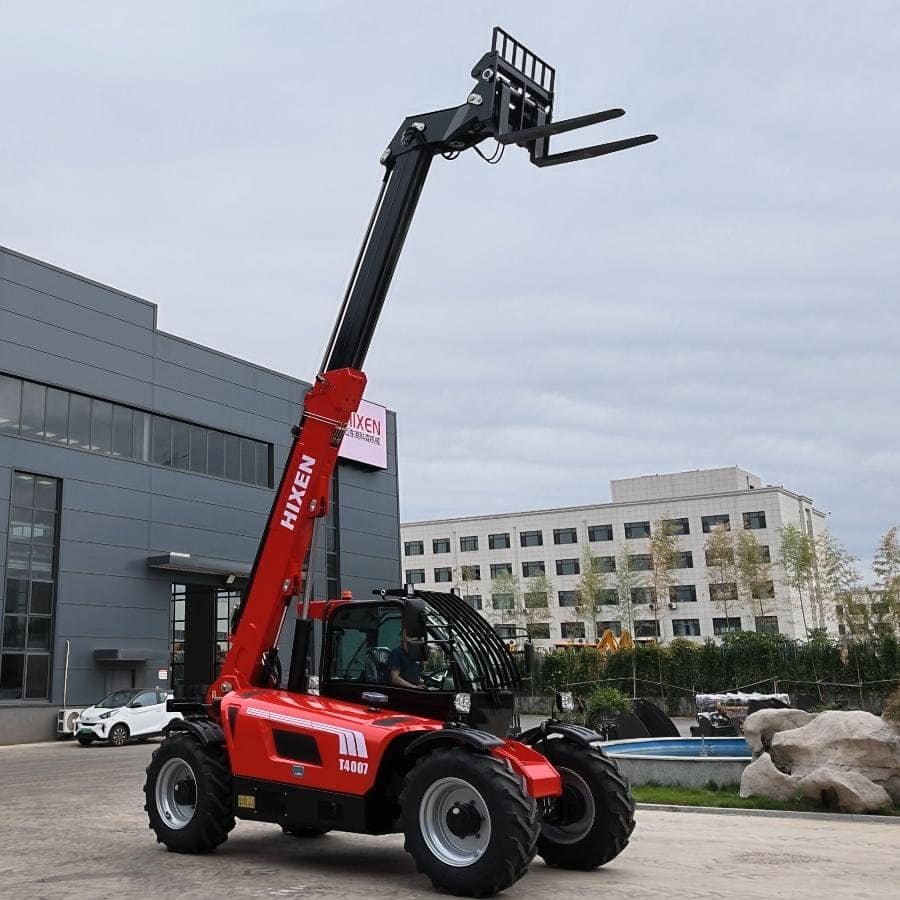
To fully grasp this concept, it’s helpful to understand a few related terms that you’ll encounter on any spec sheet.
Retracted vs. Extended Boom Length
When you look at a telehandler, its boom has two primary states:
- Retracted Boom Length: This is the length of the boom when all its telescopic sections are fully pulled back into the base section. This dimension is crucial for understanding the machine’s transport size, storage requirements, and maneuverability in tight spaces. A shorter retracted length means the telehandler is more compact and easier to navigate around a crowded worksite or farm.
- Extended Boom Length: This is the measurement that gets the most attention. It’s the full length of the boom when all sections are completely pushed out. This figure defines the machine’s maximum forward reach and its overall working envelope. A greater extended telehandler boom length allows you to place materials further away from the machine’s chassis.
Maximum Reach vs. Maximum Lift Height
This is where many new buyers get confused. It is critical to understand that reach y height are two different—though related—specifications.
- Maximum Forward Reach: This is the maximum horizontal distance the boom can extend from the front of the tires to the attachment point. It answers the question, “How far can the machine place a load?” This is dictated by the telehandler boom length and the boom angle.
- Maximum Lift Height: This is the maximum vertical distance from the ground to the attachment point when the boom is raised to its highest angle. It answers the question, “How high can the machine lift a load?”
A machine can have an impressive lift height but a limited forward reach, or vice versa. For example, to place bricks on the third floor of a building, you need both sufficient lift height y enough forward reach to clear the lower floors and scaffolding. Always check both numbers when evaluating a telehandler.
3,How Does Boom Length Affect Telehandler Performance?
Now that you know what telehandler boom length is, why is it considered the most critical factor? Choosing the wrong length can severely limit your machine’s utility, impact safety, and reduce your return on investment. Let’s break down how this single specification affects overall performance.
The length of the boom is directly tied to the machine’s working range, lifting capacity, stability, and suitability for different jobs. Understanding these relationships is key to selecting a machine that is productive and safe.
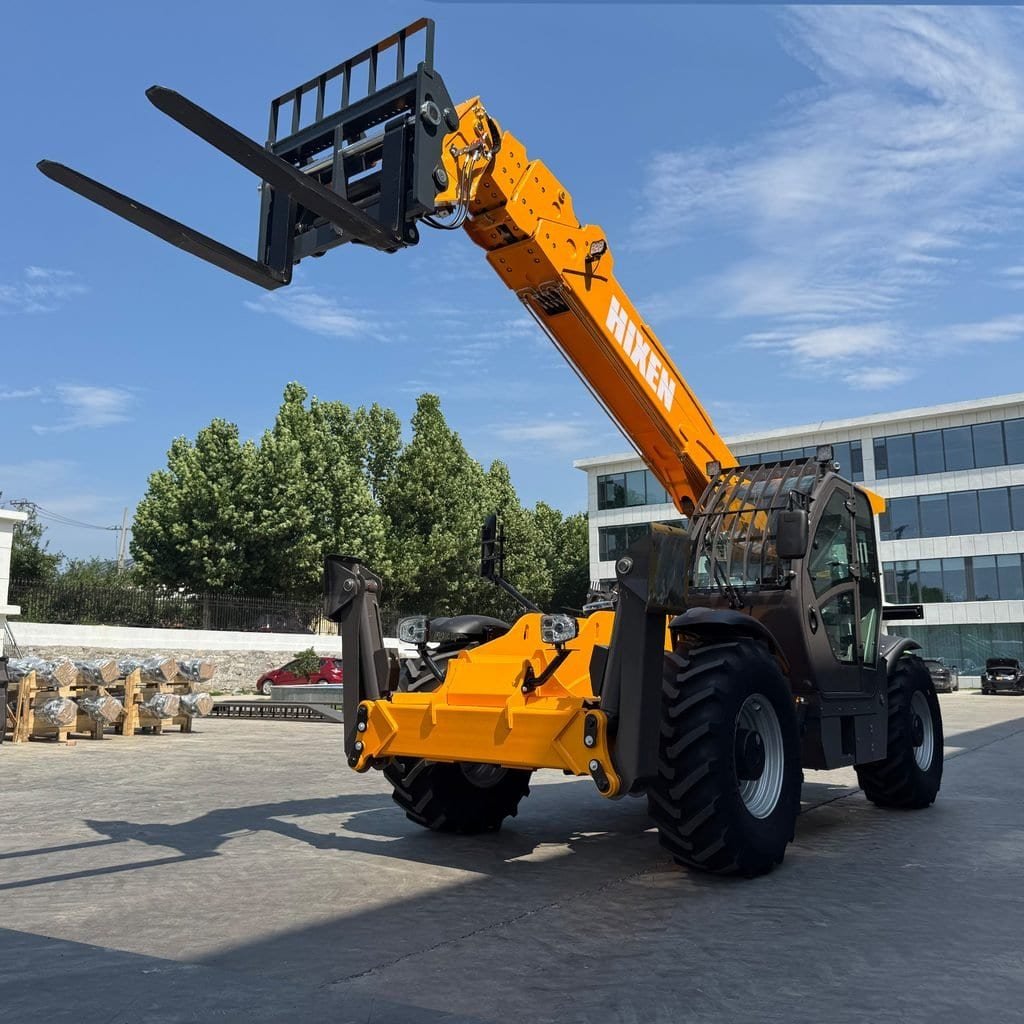
Here are the five primary ways telehandler boom length impacts your machine’s on-the-job performance.
Longer Boom Means Greater Working Range
This is the most obvious benefit. A longer boom provides a larger working envelope, increasing the forward reach and the overall working radius. This allows you to:
- Place materials on upper floors of buildings without repositioning the machine.
- Reach over obstacles like trenches, walls, or landscaping.
- Load and unload trucks or shelves from one side.
- Cover a larger area in industrial installation or large-scale construction projects.
However, a longer boom doesn’t automatically equal higher productivity. If the work doesn’t require extreme reach, a more compact machine with a shorter boom might complete the job faster due to better maneuverability.
The Relationship Between Boom Length and Lifting Capacity
This is perhaps the most critical and misunderstood aspect. A telehandler’s lifting capacity is not a single, constant number. The lifting capacity decreases as the boom extends and the load moves further from the machine.
Every telehandler comes with a load chart (or capacity chart). This chart is your most important tool. It shows you exactly how much weight the machine can safely lift at different boom lengths and angles.
For example, a machine might be rated to lift 4,000 kg (approx. 8,800 lbs). But that rating likely applies only when the boom is mostly retracted and close to the machine. At its maximum telehandler boom length and a low angle, that same machine might only be able to lift 500 kg (approx. 1,100 lbs). Ignoring the load chart and focusing only on the “max capacity” number is a common and dangerous mistake.
How Boom Length Affects Machine Stability
Physics dictates that the further a load is from the machine’s center of gravity, the less stable the machine becomes. A longer telehandler boom length exaggerates this effect. As the boom extends, the machine’s center of gravity shifts forward dramatically.
To counteract this, telehandlers with longer booms require:
- A heavier and wider chassis for a stable base.
- Robust stabilizers (outriggers) that can be deployed to widen the support base.
- Stronger axles and tires designed to handle the immense forces.
Operating a telehandler with a long boom on uneven ground, especially at full extension, requires extreme caution and adherence to the manufacturer’s guidelines to prevent tipping.
Choose Boom Length Based on Your Application
The right telehandler boom length is entirely dependent on your primary work.
| Application | Typical Requirements | Why It Matters |
|---|---|---|
| Agriculture | Hay bale stacking, loading feed, moving materials in barns. | Often prioritizes maneuverability and reliability over extreme reach. A compact or medium boom is usually sufficient. |
| Construction | Placing bricks, lifting steel beams, general material handling on multi-story sites. | Requires a balance of lift height, forward reach, and a strong load chart. A medium to long boom is common. |
| Industrial / Mining | Precise placement of heavy components, maintenance at height, reaching into large facilities. | Demands exceptional reach and stability. Long boom models, often with higher capacities, are preferred. |
| Warehousing / Logistics | Loading/unloading trucks, stacking pallets in high racks. | Compactness and maneuverability are key. A shorter telehandler boom length is often more efficient. |
Boom Length and Attachment Selection
Finally, the telehandler boom length and working range are affected by the attachment you use. Forks, buckets, jibs, and work platforms all have different weights and dimensions, which alters the machine’s effective reach and capacity. When you add an attachment, its weight must be subtracted from the load capacity shown on the chart. Furthermore, an attachment like a jib crane will extend the working point even further from the boom tip, which will further reduce the net lifting capacity. Always consider your complete setup—machine + attachment—when evaluating if a certain telehandler boom length is right for your job.
4,Common Telehandler Boom Length Options and Applications
Feeling overwhelmed by the sheer number of models available? It helps to think of telehandlers in general categories based on their boom length. This allows you to quickly narrow down your options to the machines best suited for your environment.
While exact specifications vary by manufacturer, we can group them into three main classes. Each class offers a different balance of reach, maneuverability, and cost.
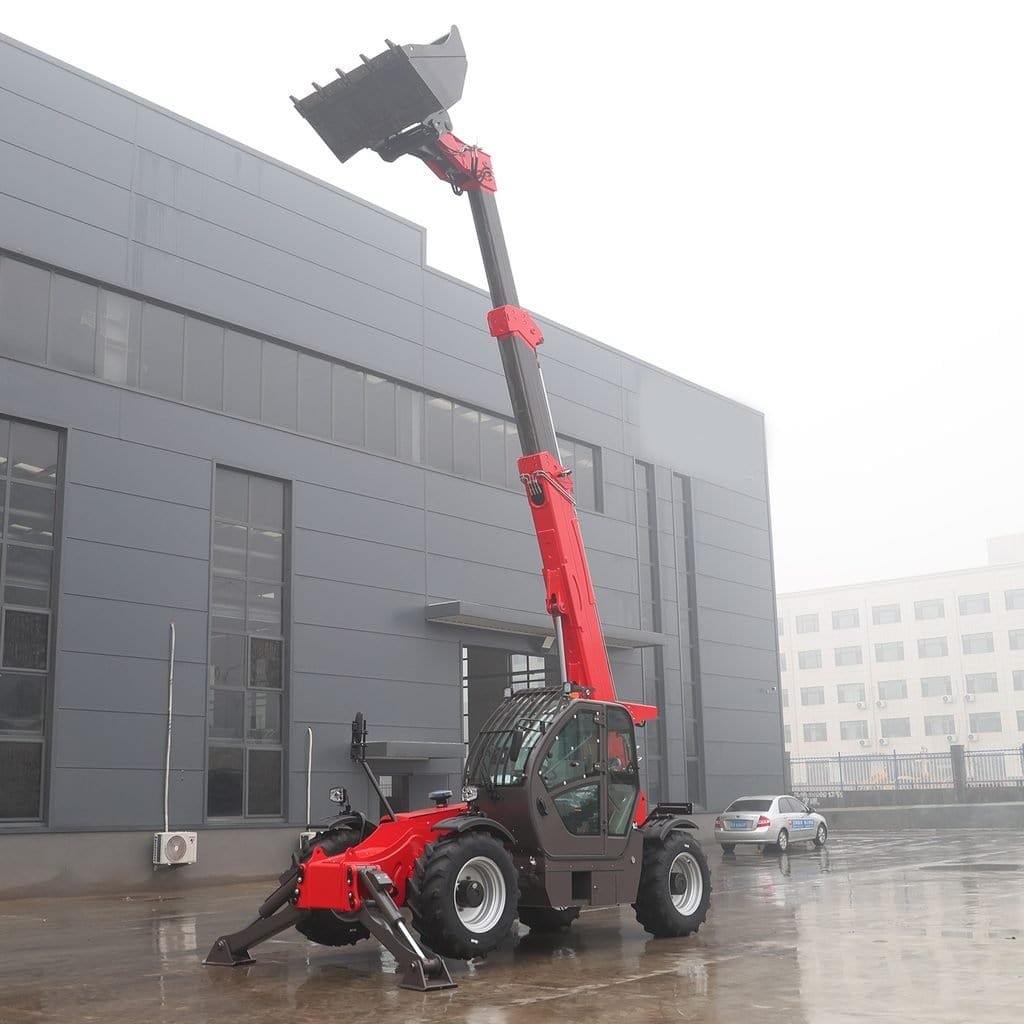
Let’s explore these common categories and see where your application might fit. As a manufacturer serving a global market, HIXEN offers configurations across these classes to meet diverse customer needs.
Short Boom Telehandlers (Compact Models)
- Typical Boom Length: 4 to 7 meters (approx. 13 to 23 feet)
- Characteristics: These are the most compact and agile telehandlers. They are designed for excellent maneuverability in confined spaces. Their shorter wheelbase and overall size allow them to navigate tight corners, narrow aisles, and crowded worksites with ease.
- Best Applications:
- Agriculture: Ideal for work inside barns, poultry houses, and for general yard duties.
- Warehousing: Perfect for loading/unloading trucks and indoor material handling.
- Small-Scale Construction & Landscaping: Excellent for residential projects and sites with limited access.
Medium Boom Telehandlers
- Typical Boom Length: 8 to 12 meters (approx. 26 to 40 feet)
- Characteristics: This category represents the “all-rounders” of the telehandler world. They offer a versatile balance between a useful telehandler boom length and decent lifting capacity, without the large footprint of the biggest machines. They are the most popular choice for general-purpose use.
- Best Applications:
- General Construction: Suitable for most low-to-mid-rise building projects.
- Large Farms: Capable of stacking hay higher and handling more significant material volumes.
- Rental Fleets: Their versatility makes them a popular and profitable choice for equipment rental companies.
Long Boom Telehandlers
- Typical Boom Length: 13 meters and above (approx. 42 feet and up)
- Characteristics: These are the heavy-hitters, designed for maximum reach and height. They typically feature a larger, more robust chassis and standard outriggers for stability. Their primary advantage is their extensive working envelope.
- Best Applications:
- High-Rise Construction: Essential for placing materials on multi-story buildings.
- Industrial Projects: Used in bridge work, factory installation, and large-scale infrastructure projects.
- Mining and Quarries: Reaching high faces or loading large haul trucks.
At HIXEN, we don’t believe in a one-size-fits-all approach. We help our dealers and clients analyze their specific applications to recommend a configuration with the right lift height and telehandler boom length, ensuring they get a machine that is both capable and cost-effective.
5,Telehandler Boom Length vs Lift Height: What Is the Difference?
Do you find yourself using the terms “reach” and “height” interchangeably? This is a common point of confusion for buyers, but making a decision based on one while you actually need the other can be a costly mistake.
The key difference is simple: telehandler boom length primarily determines horizontal reach, while lift height is a measure of vertical capability. Understanding this distinction is fundamental to reading a spec sheet correctly.
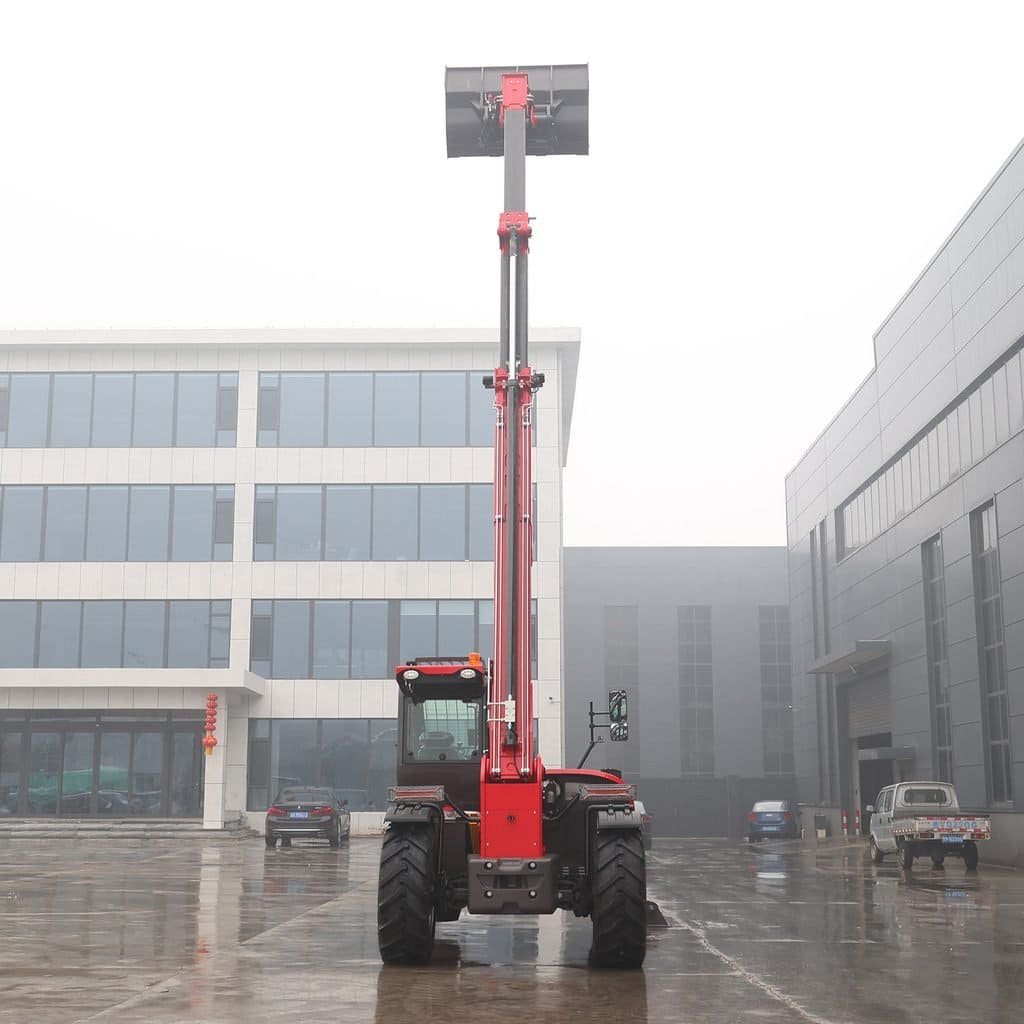
Let’s clarify with a practical example. Imagine you need to place a pallet of roofing materials onto a three-story building.
- Lift Height: You need to get the pallet high enough to clear the roofline. If the roof is 10 meters high, you need a machine with a maximum lift height of at least 10 meters.
- Boom Length / Reach: But you can’t park the telehandler directly against the building wall due to foundations, scaffolding, or uneven ground. Let’s say you have to park 5 meters away. Now, you need a machine that can not only lift to 10 meters high but also reach 5 meters forward at that height.
This scenario requires a combination of both capabilities. A machine with a very long boom might have the required reach but not the capacity at that extension. A machine with great height might not be able to reach far enough forward. This is why you must always consult the load chart, which shows you the machine’s capacity at every point in its working envelope—the combination of height and reach.
6,How to Choose the Right Telehandler Boom Length
Ready to make a decision but want to ensure you get it right? Selecting the correct telehandler boom length doesn’t have to be a guessing game. By following a structured evaluation process, you can confidently choose a machine that will be a productive asset for years to come.
This isn’t about finding the longest boom; it’s about finding the smartest fit. Use this step-by-step guide during your procurement process.
Step 1: Identify Your Primary Working Purpose
What will this machine be doing 80% of the time? Be specific.
- Agriculture: Is it for stacking bales, cleaning stalls, or loading a mixer wagon?
- Construcción: Is it for masonry on a two-story building or steel erection for a large warehouse?
- Industrial: Is it for plant maintenance or yard logistics?
Your primary application is the most important factor in determining the required telehandler boom length.
Step 2: Determine Your Required Reach and Height
Quantify your needs. Measure the typical distances on your job sites.
- Maximum Height: What is the highest point you consistently need to reach? (e.g., roof eaves, top of shelving).
- Maximum Forward Reach: What is the furthest horizontal distance you need to place a load? (e.g., across an excavation, into the center of a truck).
Always add a small buffer (e.g., 0.5-1 meter) to your measurements for safety and flexibility.
Step 3: Check Your Load Requirements
What are the heaviest loads you need to lift, and where do you need to lift them?
- Maximum Load Weight: The heaviest pallet, bundle, or attachment you will handle.
- Load at Max Height/Reach: Crucially, what weight do you need to handle at the furthest points identified in Step 2? This is often much less than the machine’s maximum capacity.
Step 4: Review the Load Chart Diligently
With the data from Steps 2 and 3, you can now properly use a load chart. Do not just look at the maximum lift capacity. Find the intersection of your required height and reach on the chart and see if the machine’s capacity at that point is greater than your required load. If it’s not, you need to consider a machine with a different telehandler boom length or a higher capacity class.
Step 5: Consider Your Attachments
List all the attachments you plan to use (forks, bucket, jib, etc.). The weight of the attachment itself reduces the machine’s net lifting capacity. A heavy attachment on a long boom can significantly impact performance. Ensure the machine’s load chart can handle your load plus your heaviest attachment.
7,Is a Longer Telehandler Boom Always Better?
So, after all this, should you just opt for the longest telehandler boom length you can afford, just in case? The answer is a clear and simple no. While it might seem like a good way to “future-proof” your purchase, choosing an unnecessarily long boom comes with significant downsides.
The best telehandler is not the one with the longest boom, but the one that most efficiently and safely matches your actual, day-to-day working requirements.
The Trade-Offs of a Longer Boom
Here’s a breakdown of the advantages and disadvantages:
| Pros of a Longer Boom | Cons of a Longer Boom |
|---|---|
| ✔️ Greater forward reach and working range | ❌ Lower lifting capacity at full extension |
| ✔️ More flexibility to work around obstacles | ❌ Higher initial purchase cost |
| ✔️ Can serve taller and larger projects | ❌ Increased machine weight and size |
| ❌ More complex transportation and logistics | |
| ❌ Reduced maneuverability in tight spaces |
As you can see, the benefits of extra reach come at a price. A larger, heavier machine costs more to buy, more to transport, and can be less efficient for smaller tasks where agility is key.
8,Choosing the Right Telehandler Boom Length with HIXEN
Navigating these specifications can be challenging, especially for first-time buyers or those expanding into new applications. This is where partnering with an experienced manufacturer like HIXEN makes a difference. We don’t just sell machines; we provide application-based solutions.
Flexible Configurations
Instead of forcing you into a standard model, we offer flexible configurations. We work with you to match the right engine, transmission, lifting capacity, and telehandler boom length to your specific needs. Whether you need a compact machine for a farm in Europe or a long-reach model for a construction project in Southeast Asia, we can build a suitable configuration.
Application-Based Expertise
Our team has extensive experience serving diverse global markets. We understand the unique demands of:
- Farm work in various climates.
- Urban and rural construction projects.
- Industrial material handling.
- Equipment rental fleet requirements.
We use this knowledge to guide you toward the most productive and cost-effective telehandler boom length and machine specifications for your business.
Full Technical Support
Choosing a machine is just the beginning. We provide comprehensive technical support, including detailed specifications, easy-to-understand load charts, operation manuals, and responsive spare parts availability. Our goal is to ensure you can make an informed decision and operate your HIXEN telehandler safely and efficiently for years to come.
9,10 Questions to Ask Before Choosing a Telehandler
To help you in your procurement process, here is a checklist of essential questions to ask any supplier. The answers will give you a complete picture of the machine’s capabilities and long-term value.
- What is the maximum extended telehandler boom length?
- What is the maximum lift height?
- What is the lifting capacity at maximum forward reach?
- Can you provide a clear and detailed load chart for this model?
- What attachments are available, and how do they affect the load capacity?
- What is the total operating weight and transport dimensions of the machine?
- What engine options are available, and do they meet my local emission standards?
- What is the warranty period, and what does it cover?
- How can I get spare parts, and what is the typical availability?
- Is operator training and technical documentation available in my language?
10,Frequently Asked Questions About Telehandler Boom Length
What exactly is telehandler boom length?
Telehandler boom length refers to the maximum length the telescopic boom can extend from its pivot point to the attachment end. It primarily determines the machine’s maximum horizontal or forward reach, which is its ability to place loads far away from its chassis.
Does a longer telehandler boom reduce lifting capacity?
Yes, absolutely. A telehandler’s lifting capacity is highest when the boom is retracted and close to the machine. As the boom extends, the safe lifting capacity decreases significantly due to the principles of leverage. Always consult the machine’s load chart for specific capacities at different boom lengths and angles.
What is the difference between telehandler boom length and lift height?
Boom length primarily defines horizontal reach (“how far”), while lift height defines vertical capability (“how high”). A machine needs the right combination of both to perform a specific task, such as lifting a pallet over an obstacle onto a high shelf. They are not interchangeable terms.
How do I choose the right telehandler reach for my needs?
To choose the right reach, you must first measure the maximum horizontal distance and vertical height you need to access on your job site. Then, identify the weight of the loads you’ll be lifting to those points. Use this information to find a telehandler whose load chart confirms it can safely handle that load at that specific reach and height.
11,Need Help Choosing the Right Telehandler Boom Length?
Choosing the right equipment is a major decision, and the optimal telehandler boom length is at the heart of it. It’s about finding the perfect balance of reach, capacity, maneuverability, and cost for your specific application. The longest boom is rarely the best answer.
As a specialized manufacturer and exporter of telehandlers, we have the expertise to guide you through this process. If you are a dealer, rental company, or end-user looking for a reliable machine configured for your work, we are here to help.
Contact the HIXEN team today for a personalized consultation and let us help you find the telehandler that is perfectly matched to your business needs.
