
Choosing a telehandler booms feels complicated. The wrong choice can cost you money and waste time on the job. This guide makes it simple to understand your options.
The main telehandler booms types are telescopic, available in fixed or rotating chassis configurations. The best one for you depends on balancing your need for reach, stability, maintenance cost, and jobsite efficiency. It’s not about which is best, but which is best for your work.
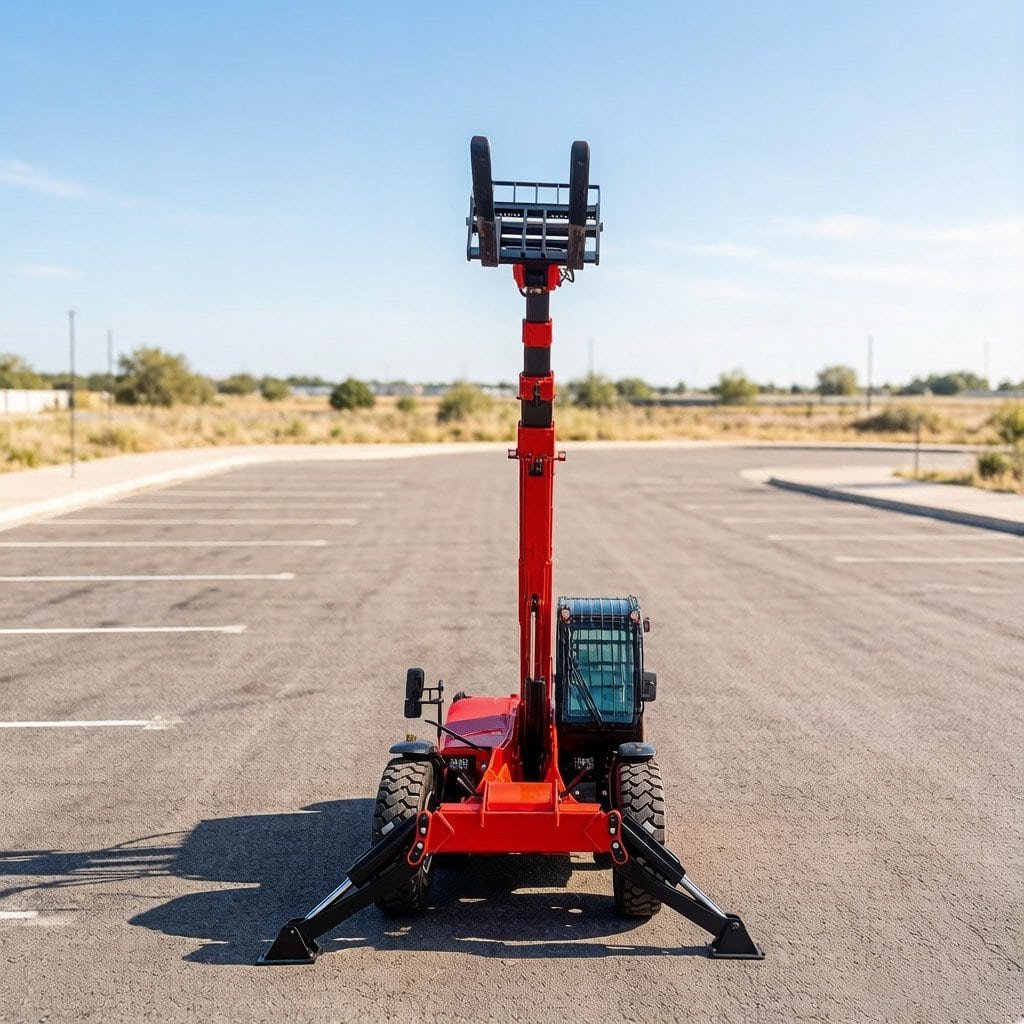
I’ve been exporting telehandlers for 15 years, and I’ve seen customers get confused by all the options. It’s easy to focus only on lifting height, but the real secret to choosing the right machine is understanding the boom’s design. This decision affects everything from daily performance to long-term ownership costs. Let’s break down the fundamentals so you can choose with confidence.
1,What Is a Telehandler, Really?
Are you confused by all the different machines on a job site? They can look similar, but they do very different jobs. Understanding the telehandler’s unique role is key.
A telehandler, or telescopic handler, is a highly versatile machine defined by its telescopic boom. It lifts, moves, and places materials using various attachments like forks, buckets, or winches.
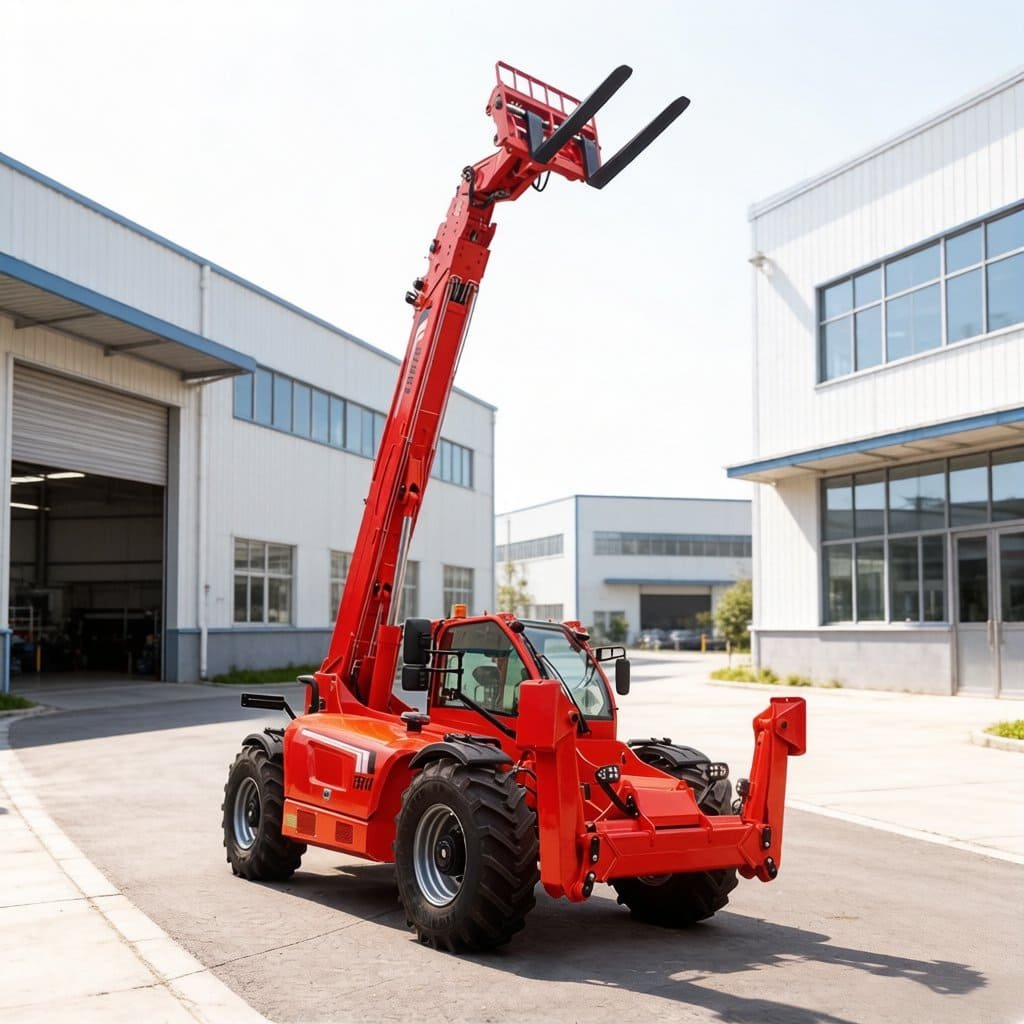
In our factory, we think of the telehandler as the Swiss Army knife of the construction and agricultural worlds. Unlike a standard forklift that only lifts vertically, a telehandler’s boom extends forwards and upwards, giving it incredible reach. This allows it to do the job of several machines. You can use it to place pallets on a high scaffold, like a crane, or scoop and load loose material, like a wheel loader.
I’ve seen our machines do everything from lifting roof trusses on a construction site in Germany to stacking hay bales on a large farm in Brazil. The magic is all in the boom and the attachment you put on the end of it. Its versatility is why it has become an essential piece of equipment for so many of our clients globally.
2,Why Are Telehandler Booms with More Sections Not Always Better?
You need maximum reach for a high job. A straight, telescopic boom seems perfect. But is a longer boom with more sections always the best choice for your operation?
Telescopic booms offer excellent height and forward reach. However, more boom sections add complexity, weight, and higher maintenance costs, especially in dusty or harsh environments. It’s a trade-off between flexibility and long-term reliability.
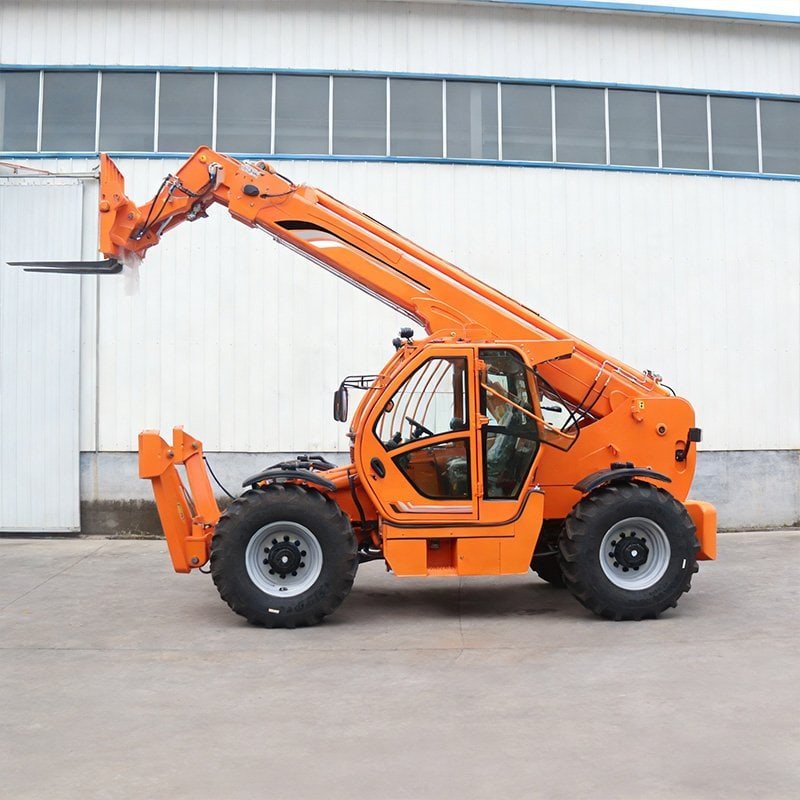
More sections seem more advanced, but I always advise clients to consider their working conditions. I remember a customer running a mining operation in South Africa. Their European machine had a complex, 5-section boom that kept experiencing hydraulic leaks and jamming due to the extreme dust. They switched to one of our simpler, more robust 3-section boom models. Their downtime dropped dramatically. More moving parts and more hydraulic seals mean more potential failure points. In the past, buyers worried about the quality of Chinese steel, but today we use high-strength steel and advanced welding that make our simpler booms incredibly durable.
More Sections vs. More Maintenance
| ميزة | Fewer Sections (e.g., 3) | More Sections (e.g., 5) |
|---|---|---|
| Reach | Good | Excellent |
| Complexity | Low | High |
| Maintenance | Simpler, lower cost | More complex, higher cost |
| أفضل ل | Harsh environments, heavy use | Clean sites, specialized tasks |
Choosing the right number of sections is about matching the machine to the reality of your job site, not just the numbers on a spec sheet.
3,Are Articulating Booms and Telehandler Booms the Same?
Do you need to work “up and over” an obstacle on your site? An articulating boom might seem like the answer. But is it the same as a telehandler? The difference is critical.
No, they are not the same. Articulating booms, or “knuckle booms,” are for Aerial Work Platforms (AWPs) designed to lift people. Telehandlers use telescopic booms designed to lift materials.
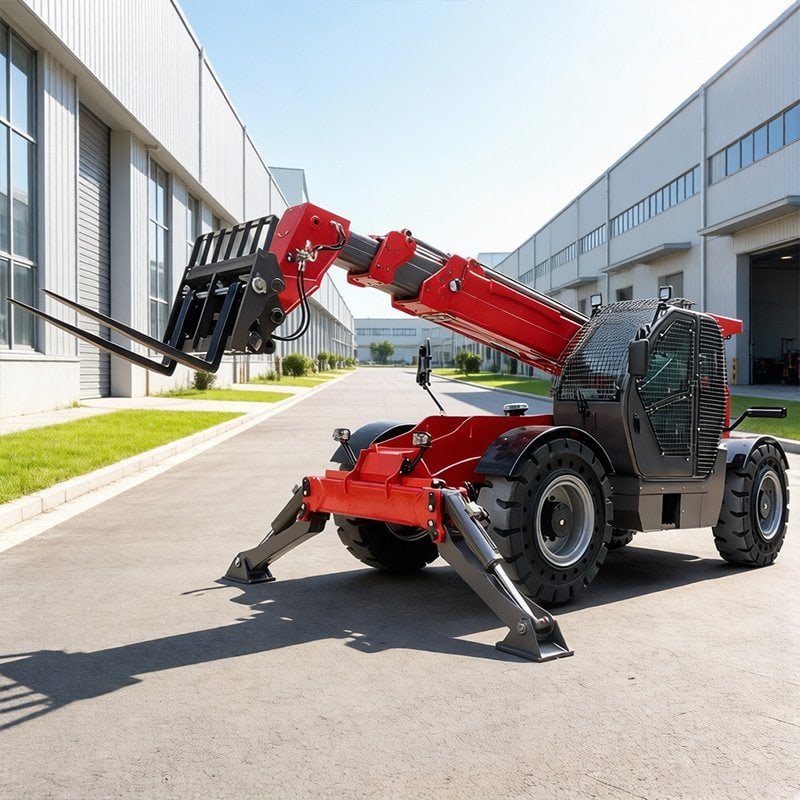
This is one of the most common points of confusion for new buyers. An articulating boom lift is a specialized personnel lift. It’s built to safely position a person in a basket to perform work, like electrical repairs or painting. A telehandler is a material handler. Its strength is in its rigid telescopic boom, which is designed to handle heavy loads with forks or a bucket at a distance. Our factory specializes exclusively in telehandlers because we focus on material handling power and efficiency.
While both machines provide access to height, their core purpose, design, and safety regulations are completely different. Confusing the two can lead to buying the wrong machine for your needs or, worse, creating an unsafe work environment.
Machine Purpose at a Glance
| Aspect | Telehandler (Telescopic Boom) | Boom Lift (Articulating Boom) |
|---|---|---|
| Primary Function | Lift and move materials | Lift people to work at height |
| Typical Load | Pallets, dirt, gravel, tools | One or two workers with tools |
| End Attachment | Forks, Buckets, Winches | Personnel basket |
4,How Do You Choose the Right Boom Type for Your Needs?
Faced with so many options, how do you pick the right one? It can feel overwhelming. Choosing the wrong boom type can seriously limit your machine’s usefulness and your ROI.
The right choice comes from balancing four key factors: lifting height, forward reach, machine stability, and your budget for purchase and maintenance. It’s not about which boom is “best,” but which is best for your application.
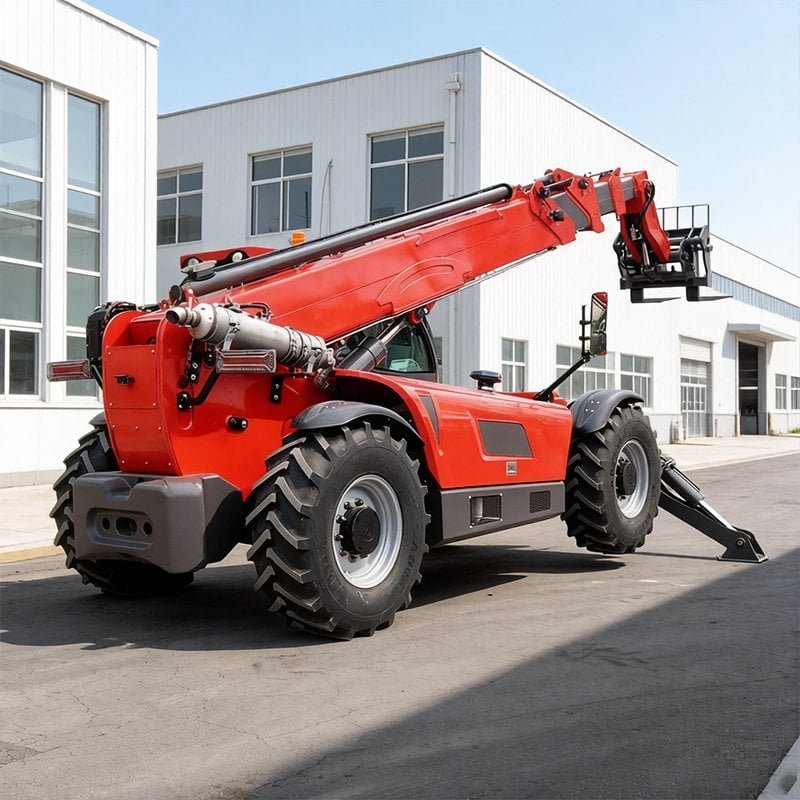
I always tell my customers that choosing the right telehandler boom is not just about lifting height. It is about balancing reach, stability, maintenance cost, and working efficiency. A boom that can reach 18 meters is useless if the machine isn’t stable enough to lift your required load at that height. A highly complex, flexible boom might be too expensive to maintain for a small rental business. You must consider the whole picture. Before you even look at models, ask yourself what your daily tasks look like.
How high do you truly need to go? How heavy are your average loads? How important is speed versus precision? Answering these questions first will guide you to a much more cost-effective and productive machine in the long run.
5,Should You Choose a Fixed or Rotating Telehandler?
You know you need a telehandler for your project. But the biggest decision is next: a fixed or rotating chassis? This single choice greatly impacts your daily efficiency and your bottom line.
Choose a fixed boom telehandler for straightforward, heavy-duty tasks where reliability and low cost are key. Opt for a rotating telehandler for complex, tight job sites where maneuverability is critical and saves time.
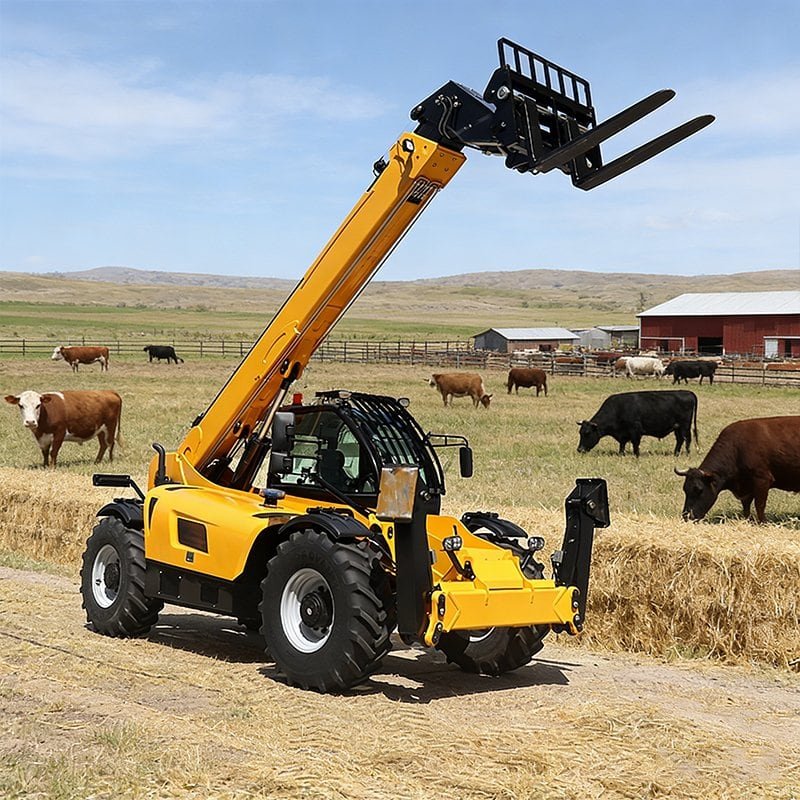
As a manufacturer with a 100-unit monthly capacity, we see very clear buying patterns for these two types. Our customers in the Americas and Africa, who often work on large, open construction sites or farms, overwhelmingly choose fixed boom models. They are simple, powerful workhorses. On the other hand, our European clients, who frequently work in historic city centers with very little space, find that the higher initial cost of a rotating telehandler pays for itself quickly in saved time and labor.
The chassis stays in one place while the entire upper structure, including the boom and cab, spins 360 degrees. The decision really comes down to your job site. Is space open and the work repetitive? Go fixed. Is space tight and the work complex? Go rotating.
6,Why Are Fixed Boom Telehandlers So Popular in Demanding Markets?
Many of our buyers in developing and demanding markets prefer fixed booms. They might seem less advanced. But their popularity is growing for very specific, practical reasons that save owners money.
Fixed boom telehandlers are popular because they are simple, reliable, and easy to maintain. Their robust design and lower operating costs make them the mainstream choice in emerging markets and for heavy-duty applications.
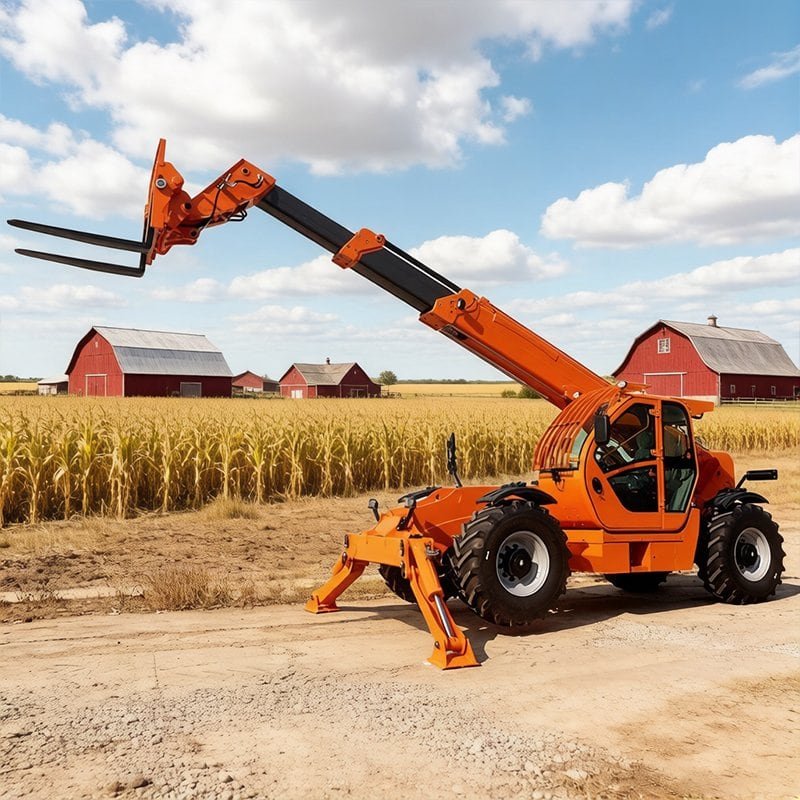
Fixed boom telehandlers are still the mainstream choice in emerging markets because customers prioritize reliability and operating cost over complex functions. For my clients in South America or the Middle East, machine reliability is everything. They can’t afford downtime waiting for a specialized electronic part for a complex system. Our fixed boom models are designed to be workhorses. The hydraulic systems are powerful but straightforward, and their parts are easy to source.
A local mechanic can often diagnose and fix issues without needing a laptop or specialized software. This focus on a simple structure, low failure rate, and ease of maintenance is why they remain our best-selling models for customers who need a machine that works hard, every single day, no matter the conditions.
7,When Are Rotating Telehandlers Most Effective?
Rotating telehandlers come with a higher price tag. Is the 360-degree rotation really worth the extra investment? The answer is a clear yes, but only if your job site demands maximum efficiency in tight spaces.
Rotating telehandlers are most effective in crowded urban construction sites or on multi-story building projects. Their ability to lift and place loads across a wide area without repositioning the machine saves immense time and labor.
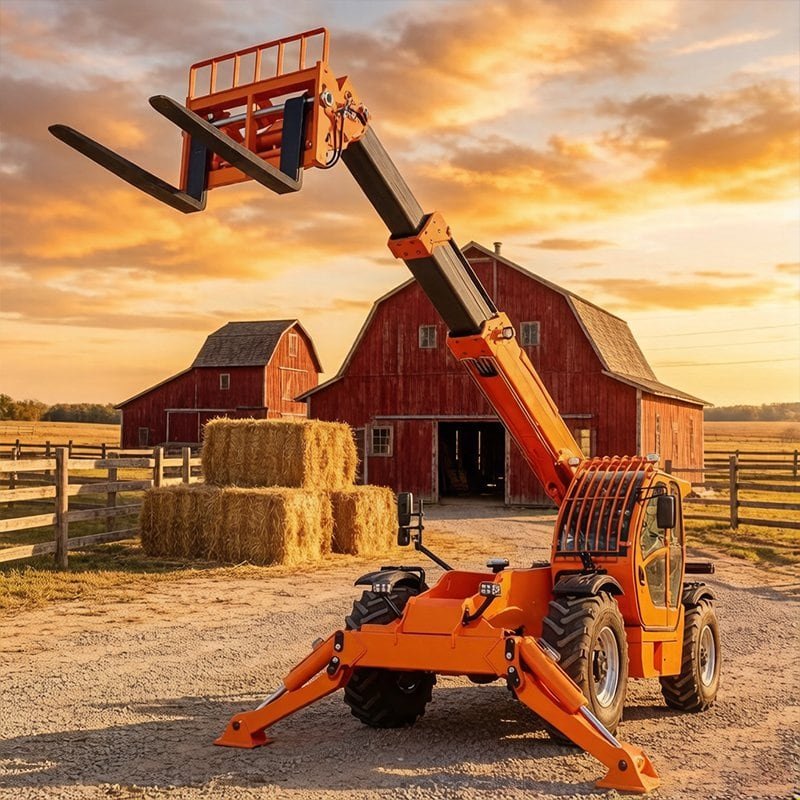
The real value of a rotating telehandler is that they improve jobsite efficiency more than lifting capacity itself. Imagine a project in a narrow city street, which I see often with our European distributors. You have one single spot to park the machine. With a rotating telehandler, the operator can pick up materials from a truck on the street, swing 90 degrees to lift them to the 5th floor, and then swing another 180 degrees to deliver tools to a crew on the other side of the building.
This is all done without moving the chassis an inch. It acts as a telehandler, a rough-terrain crane, and an access platform all in one. For these complex jobs, a rotator can replace two or three other machines, drastically reducing site congestion and boosting productivity.
8,Do Farms and Construction Sites Need Different Telehandlers?
A telehandler is a telehandler, right? Not exactly. Using a construction model on a farm can be inefficient, and vice versa. The boom designs and machine priorities are optimized for very different tasks.
Yes, they need different machines. Agricultural telehandlers prioritize forward reach and fast cycle times for efficient loading. Construction telehandlers focus on maximum lifting height, load stability, and performance on rough terrain.
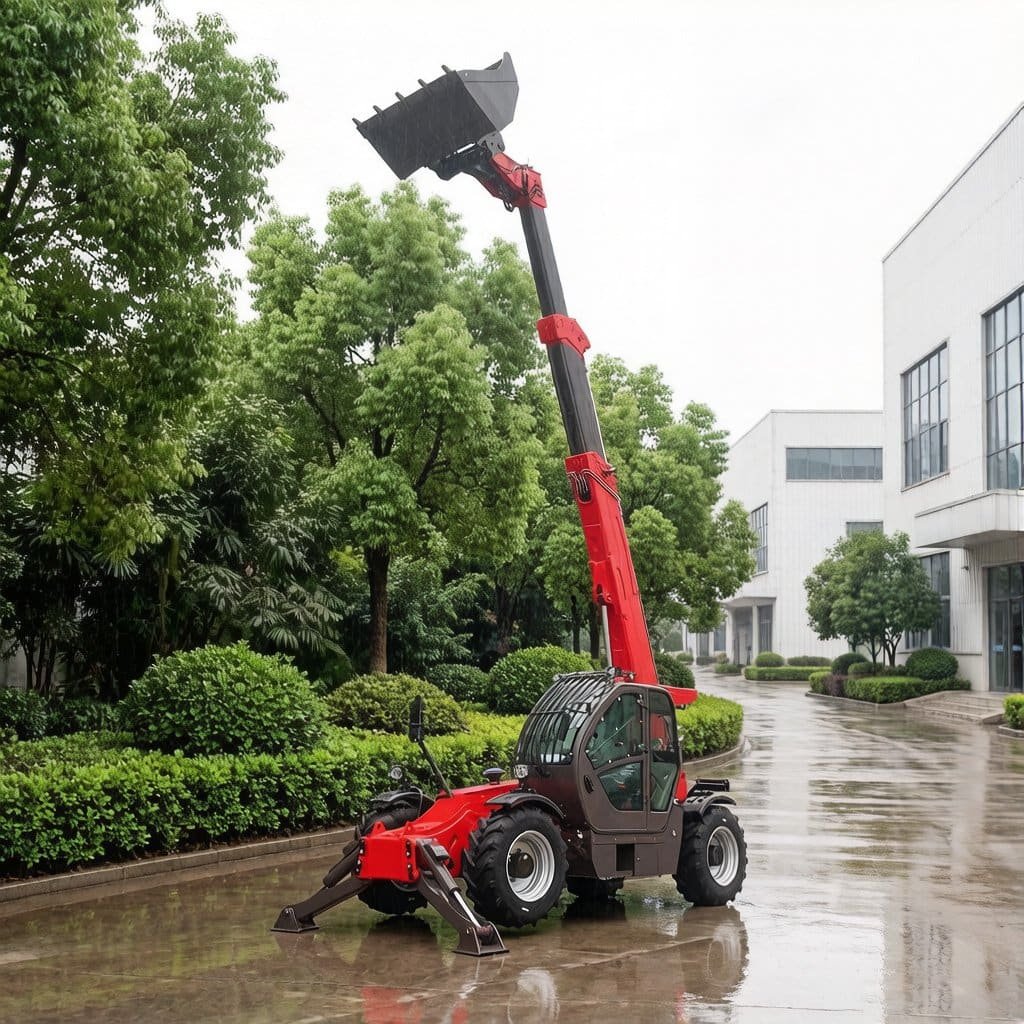
When we design a machine, the intended industry is the first thing we consider. Agricultural telehandlers focus more on loading efficiency, while construction telehandlers prioritize lifting stability and height. For a farmer loading grain or stacking bales, the speed of each cycle—scooping, lifting, extending, and retracting—is critical for productivity. They also need excellent visibility from the cab. For a construction manager lifting heavy steel beams to the top of a building, the primary concern is the machine’s stability and its ability to handle a heavy load at maximum height according to the load chart. These different priorities lead to different boom designs, chassis weights, and hydraulic system tuning.
Agriculture vs. Construction: Key Differences
| ميزة | Agricultural Telehandler | Construction Telehandler |
|---|---|---|
| Primary Goal | Fast Loading & Cycle Speed | Stability & Lifting Height |
| Key Boom Feature | Forward Reach, Visibility | Vertical Reach, Strength |
| Typical Environment | Barns, Flat Yards, Fields | Rough, Uneven Ground, Slopes |
| Core Task | Moving bulk material quickly | Placing heavy loads precisely |
خاتمة
Modern telehandler boom design is no longer only about lifting higher. Customers today are paying more attention to machine stability, maintenance cost, operator comfort, and working efficiency.
Different boom types are designed for different industries and jobsite conditions. Understanding these differences can help buyers choose a more cost-effective and reliable telehandler for long-term use.
As Chinese telehandler manufacturers continue improving boom technology and hydraulic systems, more global buyers are considering China-made telehandlers as a competitive solution for construction, agriculture, and industrial handling applications.
Choosing the right boom is about matching the machine to your work. It’s a balance of stability, reach, and cost. Understanding these differences ensures you get a cost-effective, reliable telehandler. Follow us on يوتيوب for more videos.
