
Struggling to choose the right telehandler? You may spend weeks comparing machine prices, engine brands, and lift heights, but have you calculated the cost of the telescopic handler transport? Many buyers focus intensely on the initial purchase price, only to be surprised by significant shipping and logistics expenses later. The reality is, getting a heavy, oversized machine from a factory in China to your jobsite is a complex task where costs can quickly add up, potentially erasing any savings from a lower sticker price.
The true cost of a telehandler is not just its purchase price—it’s the total delivered cost to get it safely to your jobsite. This includes ocean freight, inland trucking, port handling, and customs fees, all of which are heavily influenced by the machine’s dimensions, weight, and the chosen shipping method. Failing to account for telescopic handler transport costs from the beginning can turn a great deal into a costly mistake.
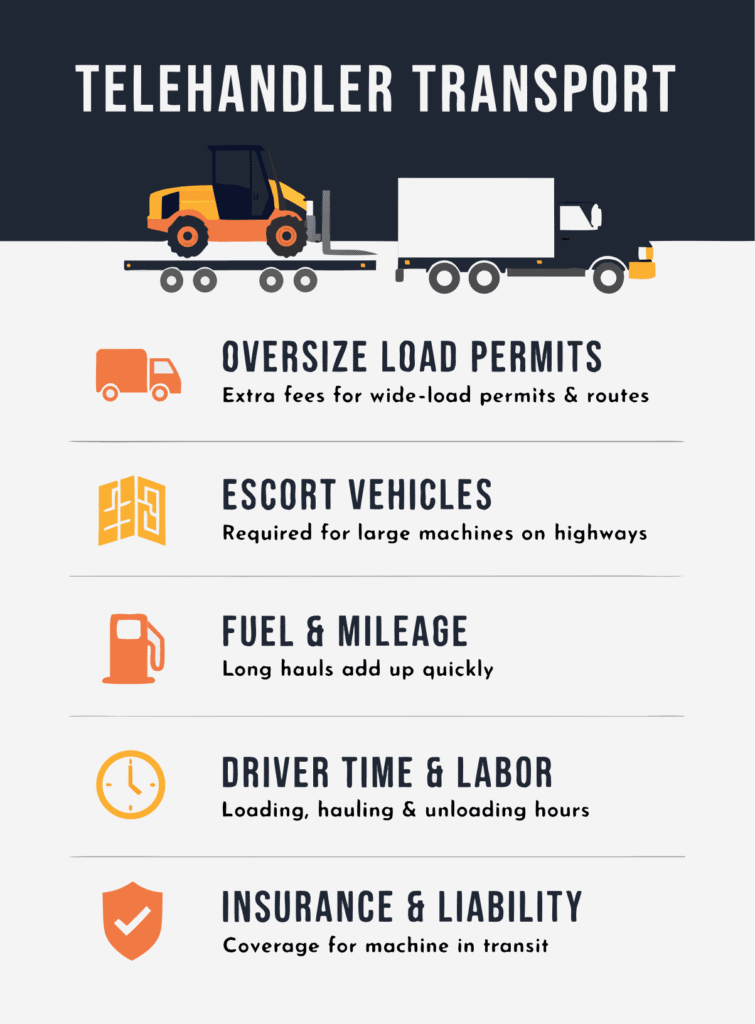
Understanding these variables is key to making a truly informed purchase. The initial price tag is just one piece of the puzzle. This article will break down the hidden costs of telescopic handler transport and explain why the delivered cost, not the factory price, is the number you should be focused on. Let’s dive into what you need to know before you buy.
1,Why Can Telehandler Transport Be More Complicated Than You Think?
Imagine this common scenario: you’ve found two suppliers. Supplier A offers a telehandler for $2,000 less than Supplier B. On the surface, Supplier A seems like the obvious choice. You place the order, pleased with the savings. But then the logistics plan arrives, and the complications begin.
The machine from Supplier A, despite being cheaper, has slightly larger transport dimensions. It’s just a few centimeters too tall to fit into a standard high-cube container. This small difference completely changes the shipping plan. Instead of cost-effective container shipping, you now require a more expensive solution like a flat rack or Ro-Ro (Roll-on/Roll-off) vessel. The result? The final cost of telescopic handler transport is thousands more than anticipated, and the inland journey from the port to your site now requires a special lowboy trailer, adding even more expense. Suddenly, that “cheaper” machine is the more expensive option overall.
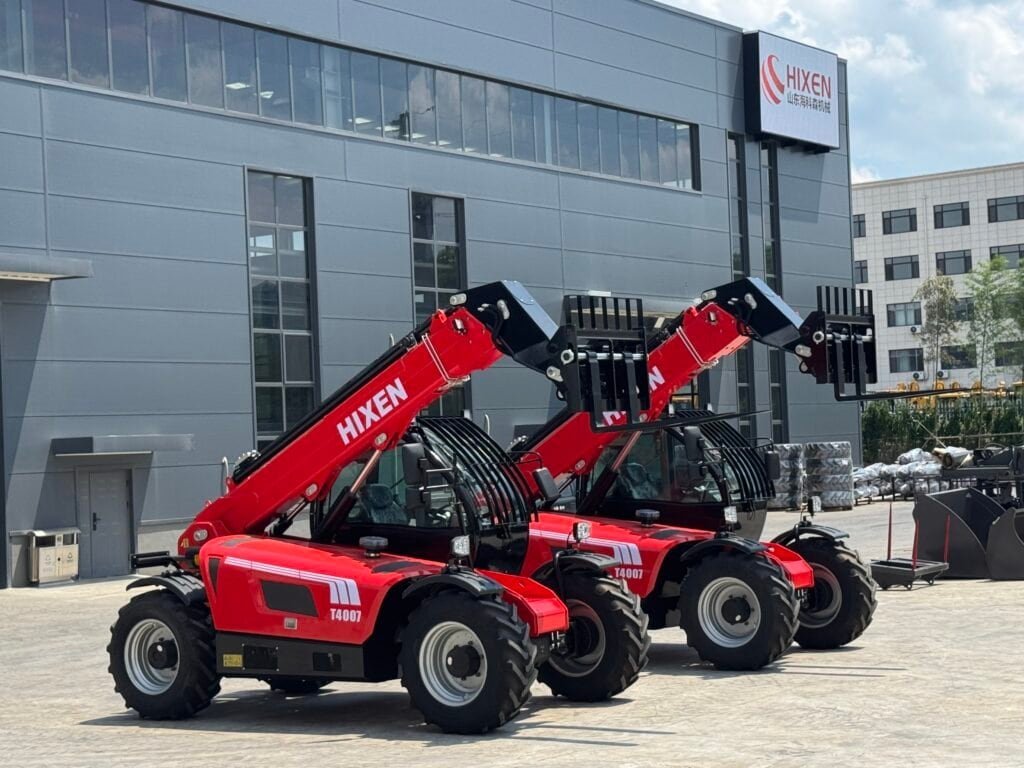
This is a story I’ve seen play out with buyers time and again. When comparing telehandlers, especially from international suppliers, the cheapest machine price does not always mean the lowest delivered cost.
The complexities of telescopic handler transport stem from several factors that buyers often overlook during initial negotiations. These machines are not standard cargo; they are heavy, bulky, and come with their own set of logistical challenges.
Critical Factors Beyond Price
- Dimensions & Weight: The size and weight of the equipment are among the most critical factors influencing shipping costs. Larger dimensions can dictate the need for specialized transport like flatbed or step-deck trailers.
- Disassembly: Some telehandlers may require partial disassembly of attachments or even wheels to meet shipping height and width restrictions, adding labor costs and complexity at both ends of the journey.
- Shipping Method: The choice between container, flat rack, or Ro-Ro shipping isn’t just a logistical detail—it’s a major cost driver. Not all ports can handle all types of shipments, potentially adding further complications.
- Regulations: Transporting oversized loads often requires special permits, route planning, and even pilot cars, with regulations varying significantly between states and countries.
The key takeaway is that a comprehensive evaluation goes beyond the spec sheet. The logistics of telescopic handler transport must be a central part of your purchasing decision, not an afterthought.
2,Machine Price vs. Delivered Cost: Which One Really Matters?
When budgeting for a new machine, it’s easy to fixate on the number on the invoice. However, experienced buyers and fleet managers know that the most important figure is the “Total Delivered Cost.” This is the comprehensive sum of every expense incurred from the moment the machine leaves the factory until it’s ready to work on your site.
The machine price is just the starting point. The real cost includes a long list of additional expenses that are often overlooked in the initial excitement of a low price. The final delivery and freight charges can amount to 5-15% of the machine’s purchase price.
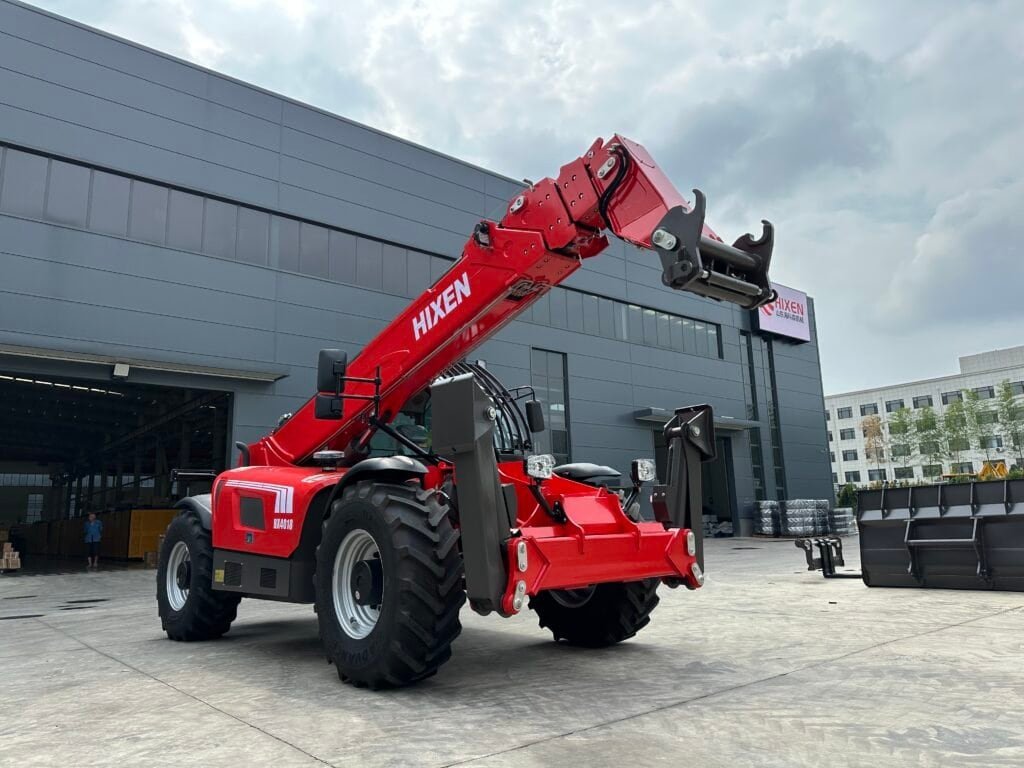
The “Delivered Cost” provides a true “apples-to-apples” comparison between different suppliers and models. A telehandler that is $3,000 cheaper at the factory may not be cheaper once it reaches your jobsite.
Here’s a breakdown of the potential hidden costs involved in telescopic handler transport that you should account for:
- Inland Transport to Port: The cost of moving the machine from the factory to the port of origin.
- Export Handling & Port Fees: Charges for processing the equipment at the port.
- Container Loading or Ro-Ro Preparation: This can include the cost of physically loading, lashing, and securing the machine.
- Disassembly & Reassembly: Labor costs for removing parts like forks, buckets, or even wheels to fit shipping constraints.
- Ocean Freight: The core shipping cost, which varies dramatically based on the method (container, flat rack, Ro-Ro).
- Marine Insurance: Essential protection against damage or loss during transit, often not included by default.
- Customs Clearance & Duties: Import taxes and fees charged by your country’s government, which can be a significant percentage of the machine’s value.
- Destination Port Handling: Fees for unloading the machine at the destination port.
- Inland Transport to Jobsite: The final leg of the journey, which may require specialized trailers and permits.
When you compare suppliers, you shouldn’t just be asking for a machine price. You should be asking for a detailed quote that outlines the Total Delivered Cost. This shifts the conversation from “Which machine is cheaper?” to “Which machine offers the best total value delivered to my door?” As a supplier, we believe in transparency and work with our clients to calculate these costs upfront, ensuring there are no surprises.
3,What Determines the Cost of Telescopic Handler Transport?
The final bill for your telescopic handler transport is influenced by a core set of interlocking factors. Understanding these variables will empower you to ask the right questions and accurately budget for your purchase. The two most significant drivers are the machine’s physical specifications—its dimensions and weight.
The size and weight of your telehandler are the most influential factors in determining your total shipping cost. These physical attributes dictate everything from the type of trailer required for inland hauling to the method of ocean freight.
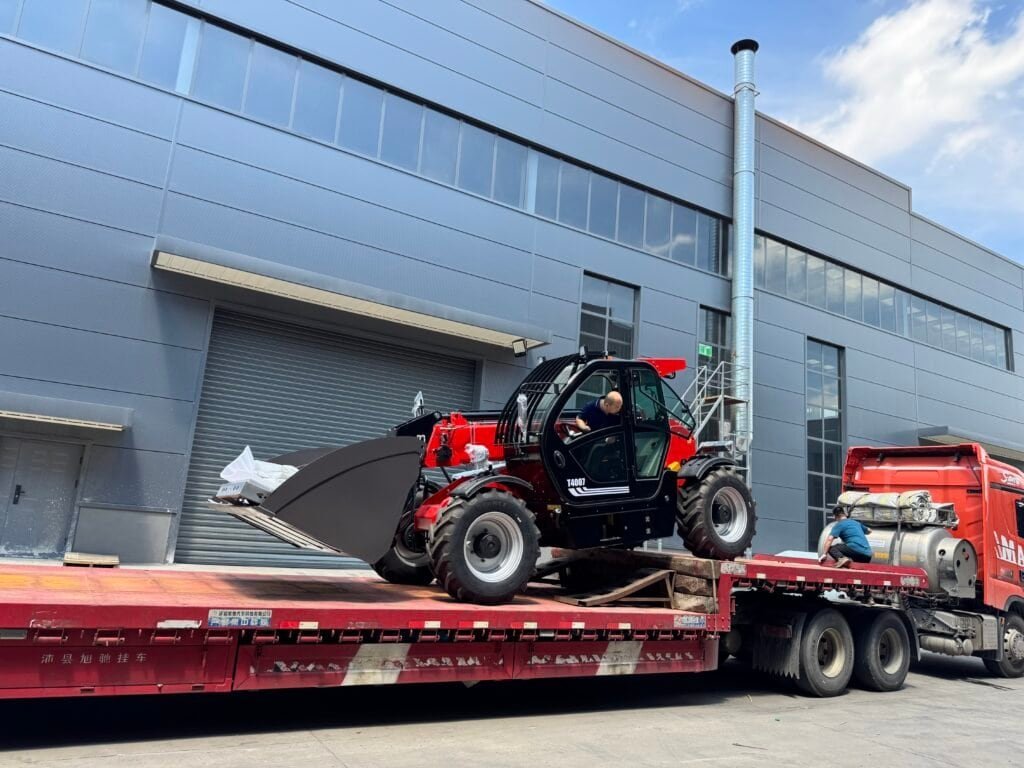
Let’s break down the key elements that determine your total telescopic handler transport expense.
Machine Dimensions
A few centimeters can be the difference between a cost-effective shipment and a logistical headache. When evaluating a telehandler, you must look at its transport dimensions (Length x Width x Height), not just its operational specs.
- Height: This is often the most critical dimension. A telehandler with a stowed height under a certain threshold might fit in a 40-foot High-Cube container, which is typically the most economical option. A machine that is slightly taller may require an Open-Top container or a Flat Rack, both of which are more expensive and offer less protection. Low-profile models are specifically designed for navigating spaces with height restrictions, such as indoor garages.
- Width: Standard shipping containers have a fixed width. A telehandler that is too wide for a container is considered “out-of-gauge” and will automatically require a more specialized solution like a Flat Rack or Ro-Ro shipping.
- Length: While often more flexible, the overall length impacts how the machine is positioned and secured, especially when shipping multiple units.
الوزن التشغيلي
The machine’s weight directly impacts cost at nearly every stage of the telescopic handler transport process.
- Ocean Freight Rates: Carriers often have weight tiers for pricing. Heavier machines cost more to ship.
- Inland Hauling: Weight determines the type of truck and trailer needed. A heavier telehandler may exceed standard road weight limits, requiring special permits, heavy-haul trailers (like a lowboy), and potentially more complex routing to avoid certain roads or bridges.
- Port and Handling Fees: Cranes and other equipment used to load and unload heavy machinery have their own costs, which increase with the weight of the cargo.
Therefore, when you inquire about a machine, don’t just ask, “What is the price?” Instead, ask, “What are the exact transport dimensions and total shipping weight?” This information is far more critical for calculating the true cost of your investment.
4,Container, Flat Rack or Ro-Ro? Understanding Your Shipping Options
Once you have the dimensions and weight of your machine, the next step is determining the best shipping method. The choice between Container, Flat Rack, and Ro-Ro (Roll-on/Roll-off) shipping is one of the most significant decisions affecting the cost and complexity of your telescopic handler transport. Each method has distinct advantages and disadvantages.
Choosing the wrong ocean freight method can lead to budget overruns and delays. The right choice depends on your machine’s size, your budget, and the capabilities of both the origin and destination ports.
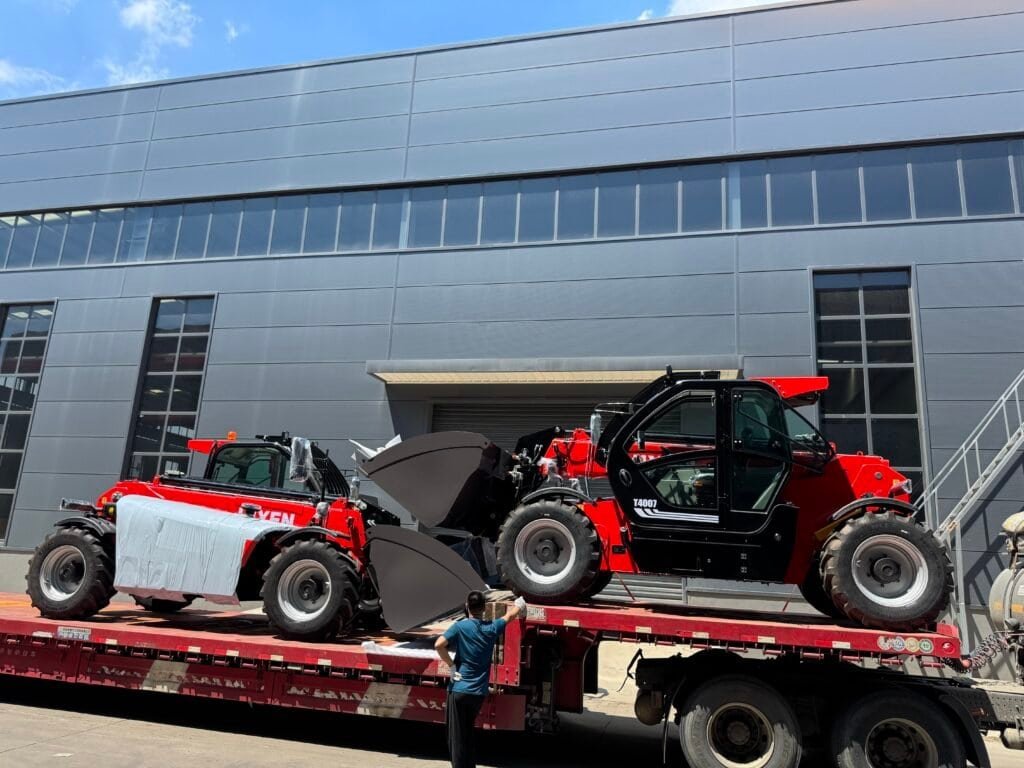
Here is a practical comparison to help you understand your options for telescopic handler transport.
1. Container Shipping
This is generally the most secure and cost-effective method, but it’s only suitable for telehandlers that can physically fit inside.
- Best for: Compact and some mid-size telehandlers with transport dimensions that fit within a standard 20GP, 40GP, or 40HQ container. Many compact models are designed specifically for this purpose.
- الايجابيات: Offers the best protection from weather and salt during ocean transit. Containers are widely available and can be handled at almost any port. It’s often the cheapest option.
- سلبيات: Strictly limited by the internal dimensions of the container. The machine must be meticulously secured (lashed down) inside to prevent movement. Some minor disassembly may be required.
2. Flat Rack Shipping
A flat rack is a container with no sides and no roof, just a floor and end walls. It is used for oversized cargo, known as out-of-gauge (OOG) freight.
- Best for: Mid-size to large telehandlers that are too wide or too tall for a standard container.
- الايجابيات: Offers great flexibility for oversized and heavy machines.
- سلبيات: The cargo is exposed to the elements, requiring protective wrapping. It is significantly more expensive than container shipping due to the need for specialized cranes for loading and complex lashing procedures.
3. Ro-Ro (Roll-on/Roll-off) Shipping
With Ro-Ro, the telehandler is driven directly onto the vessel, much like a car onto a ferry, and secured inside the ship’s hull.
- Best for: Wheeled, operational machinery of all sizes, especially large units.
- الايجابيات: Simple loading and unloading process reduces the need for cranes, which can lower handling costs. The machinery is protected from the elements inside the vessel.
- سلبيات: Service is only available at specialized Ro-Ro ports, which may not be the closest or most convenient option for your final destination. The machine must be in running condition to be driven on and off the ship.
| Shipping Method | أفضل ل | Protection Level | Cost Level |
|---|---|---|---|
| Container | Compact, in-gauge machines | High (fully enclosed) | Low |
| Flat Rack | Oversized, heavy machines | Low (exposed to weather) | High |
| Ro-Ro | Drivable, wheeled machines | High (enclosed in vessel) | Moderate |
As a supplier, we help our clients analyze these options based on their specific machine and destination. The goal is to find the optimal balance between cost, safety, and convenience for your telescopic handler transport needs.
5,How Transport-Friendly Design Can Help Reduce Your Total Costs
While buyers often focus on performance metrics like lift height and capacity, a machine’s design for transport is a critical feature that directly impacts your total cost of ownership. A well-designed machine isn’t just effective on the jobsite; it’s also efficient to ship. Smart engineering can significantly lower the expenses and complexities associated with telescopic handler transport.
A telehandler is designed to lift efficiently on site—but smart design should also make it easier to transport. This foresight in the design phase is a hallmark of a manufacturer who understands the full lifecycle of their equipment, from the factory floor to the construction zone.
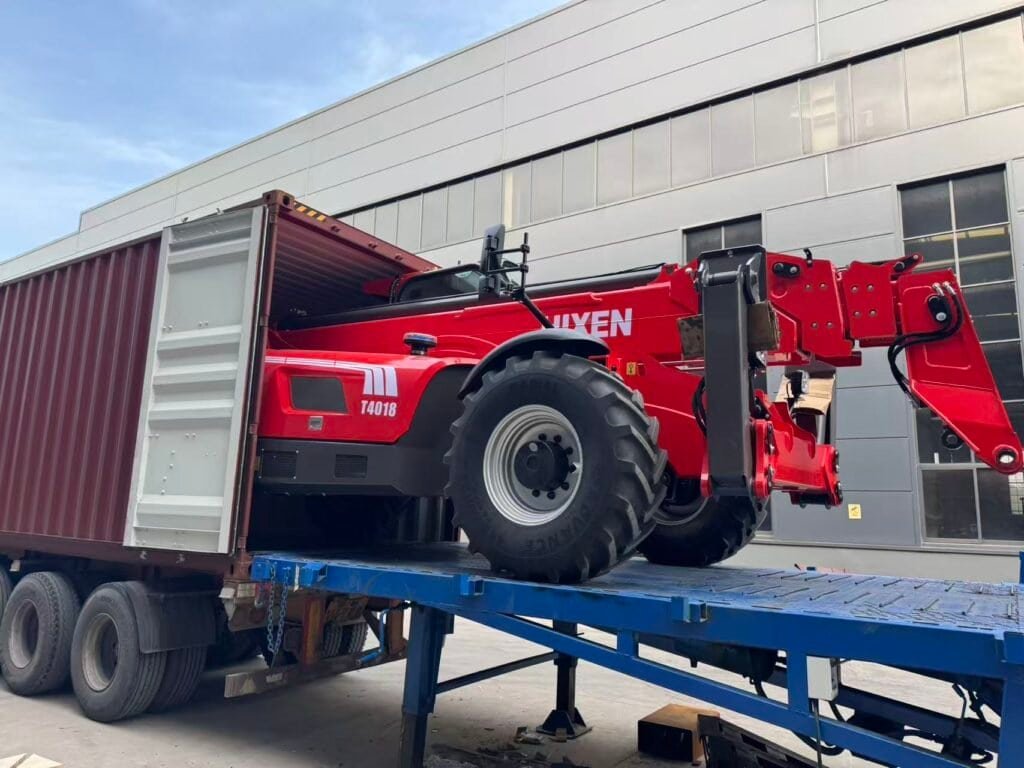
As a manufacturer, we consider telescopic handler transport from the earliest stages of product development. Here are some design elements that can lead to substantial savings for you, the buyer:
- Compact Transport Dimensions: Engineers can optimize the machine’s layout to achieve the lowest possible stowed height and narrowest width. This is the single most important factor for enabling containerized shipping, which can save thousands of dollars.
- Removable or Foldable Components: Features like foldable cabs or easily removable counterweights can reduce a machine’s transport dimensions just enough to fit a more economical shipping class.
- Optimized Boom Transport Position: The ability to lower and securely lock the boom in a low-profile position is crucial. This not only reduces overall height but also improves stability during transit.
- Easy Attachment Removal: A quick-hitch system that allows for fast and simple removal of forks, buckets, and other attachments saves time and labor costs during loading and unloading.
- Integrated Lifting and Lashing Points: Clearly marked, structurally sound tie-down points are essential for safely securing the machine to a trailer or inside a container. This speeds up the loading process and prevents damage that can occur from improper securing techniques, such as attaching chains to axles or hydraulic components.
- Optimized Weight Distribution: A machine with balanced weight distribution is more stable during transport, both on a truck and at sea. This reduces the risk of shifting and simplifies the securing process.
When you evaluate a telehandler, consider asking the supplier about these transport-friendly features. A manufacturer that has invested in smart design for telescopic handler transport is a partner that understands your need to control total costs, not just the initial purchase price. This attention to detail demonstrates a deeper level of engineering expertise and a commitment to the customer’s overall success.
6, 7 Questions to Ask Before Shipping a Telescopic Handler
To avoid surprises and ensure you’re making a sound investment, you need to be proactive. Asking detailed questions about telescopic handler transport before you finalize a purchase is one of the most effective ways to control costs and prevent logistical nightmares. Arming yourself with the right information will help you compare offers accurately and plan your budget effectively.
Before you commit, here are seven essential questions to ask your supplier about telescopic handler transport:
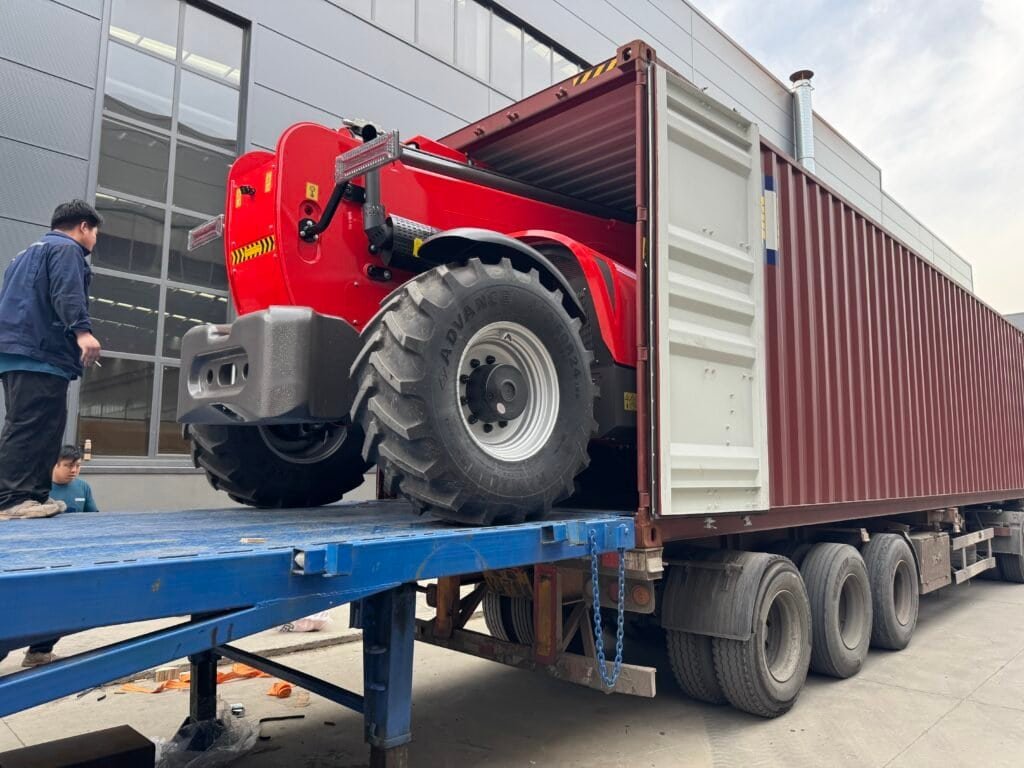
- What are the exact transport dimensions (L x W x H) and total shipping weight?
This is the most crucial question. Don’t accept vague answers. You need precise numbers for the machine in its transport configuration to get accurate shipping quotes. - Can this telehandler fit inside a standard container (20GP, 40GP, or 40HQ)?
A simple “yes” isn’t enough. Clarify which type of container. A 40HQ (High Cube) offers extra height that can make all the difference. If it fits, you’ve likely found the most economical shipping path. - If it cannot be containerized, what is the recommended shipping method and why?
If the machine requires a Flat Rack or Ro-Ro, ask the supplier to explain the reasons. This will help you understand if a slightly smaller, container-friendly model might be a better overall value. - Does anything need to be disassembled or removed for shipping?
Find out if forks, attachments, or even wheels need to be removed. This involves labor at both the origin and destination, which is an added cost you need to factor in. - How is the machine secured during ocean transport?
A professional supplier should be able to describe their lashing and securing process in detail. They should mention the use of designated tie-down points, wheel chocks, chains, and straps to prevent any movement. This question helps gauge the supplier’s experience and commitment to delivering your machine safely. - Can you provide a detailed “Delivered Cost” quote to my nearest port or jobsite?
Ask for a comprehensive quote that breaks down all the associated costs: inland freight, port handling, ocean freight, insurance, etc. This is the only way to truly compare offers from different suppliers. - What documentation will be provided for customs clearance?
Ensure the supplier will provide all necessary paperwork, such as the commercial invoice, bill of lading, packing list, and certificate of origin, to facilitate a smooth customs process in your country. Delays here can result in costly storage fees at the port.
Asking these questions will not only give you a clearer picture of the total cost but also reveal the professionalism and expertise of the supplier you are considering for your telescopic handler transport needs.
7,From Factory to Jobsite: Looking Beyond the Telehandler Purchase Price
The logistics of telescopic handler transport are not a one-size-fits-all problem. The ideal solution depends heavily on who is buying the machine and for what purpose. A contractor buying a single unit has very different needs from a dealer importing a dozen machines or a rental company that needs to move equipment between jobsites constantly.
Understanding these different perspectives is key to optimizing your telescopic handler transport strategy. A savvy buyer looks beyond the initial purchase price and considers the entire journey from the factory to the jobsite, including future transport needs.
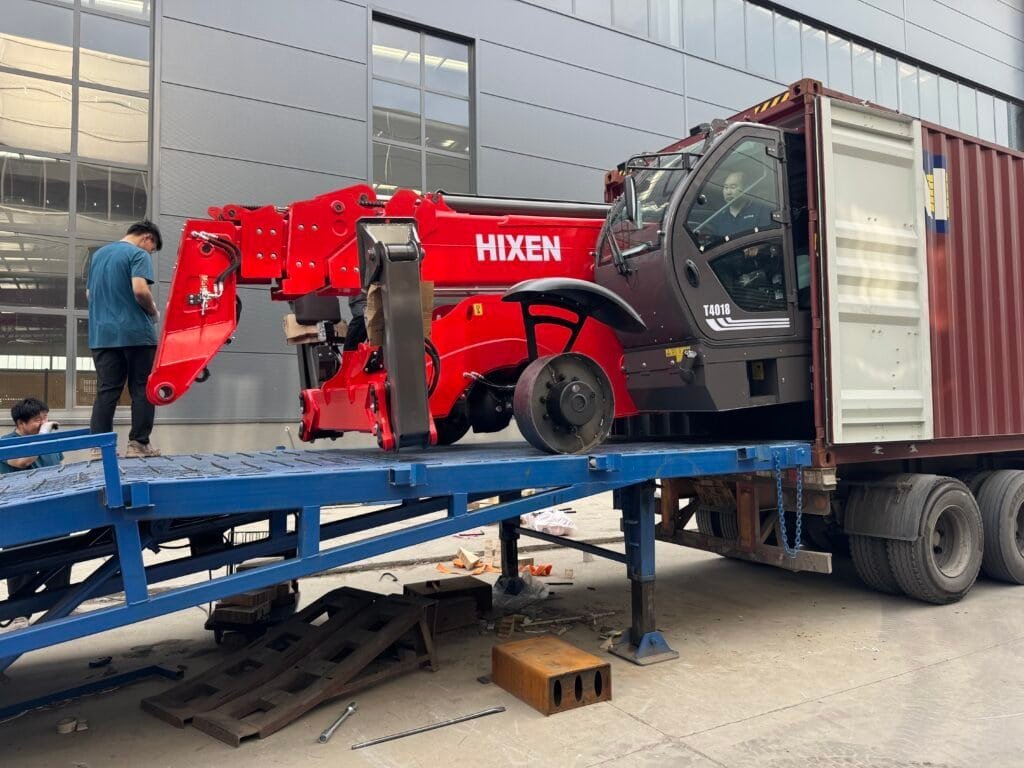
Let’s explore how transport requirements differ for various types of buyers.
The Contractor Buying a Single Machine
For a contractor, the primary focus is on the total delivered cost and the timeline for a single unit.
- Main Concerns:
- What is the most economical and reliable way to get this one machine to my site?
- How quickly can it be delivered to start work?
- What will the final inland transport from the port to my specific jobsite cost? This can be a significant expense, often costing $1.50 to $3.00 per mile.
- Best Strategy: Work closely with the supplier to get a door-to-door delivered cost. Prioritize a machine with transport-friendly dimensions that can potentially ship via container to minimize ocean freight costs.
The Dealer Importing Multiple Telehandlers
A machinery dealer thinks in terms of efficiency and cost-per-unit. Their goal is to maximize the number of machines in a single shipment to reduce the overall freight expense for their inventory.
- Main Concerns:
- How many units can be loaded into a single 40HQ container?
- Can attachments or spare parts be shipped in the same container to optimize space?
- What is the most efficient way to combine different models in one order?
- Best Strategy: The dealer should focus on sourcing models with highly optimized transport dimensions. I once worked with a dealer who switched to one of our slightly smaller models because we could fit three units in a container instead of two, drastically cutting his per-unit telescopic handler transport cost.
The Rental Company
A rental business has a unique, long-term perspective on telescopic handler transport. They are concerned not only with the initial delivery but also with the ease and cost of moving the machine between rental customers’ jobsites frequently.
- Main Concerns:
- How easy is this telehandler to load and unload from a standard trailer?
- Are the tie-down points easily accessible for quick securing?
- Does its weight and size allow for transport without needing constant oversized permits?
- Best Strategy: The rental company should prioritize models known for their robust, transport-friendly design. Compactness, low transport height, and clear securing points are more valuable than a slightly higher lift capacity if the machine is difficult to move. The cost of frequent local transport can quickly add up.
By considering these different needs, you can see that telescopic handler transport is a strategic decision that extends far beyond the initial international shipment. It’s an integral part of the machine’s total cost of ownership and operational efficiency.
Frequently Asked Questions
What is the cheapest way to ship a telehandler internationally?
For machines that can fit, container shipping is almost always the cheapest and most secure method. Compact telehandlers are often designed specifically to fit into a 40-foot High-Cube (40HQ) container to take advantage of these lower costs. If a machine is too large, Ro-Ro can sometimes be more economical than a Flat Rack, but it depends on port availability and handling fees.
Does a heavier telehandler always cost more to ship?
Generally, yes. Weight is a primary factor in calculating freight costs for both ocean and inland transport. Heavier machines require more fuel to move, may necessitate stronger cranes for handling, and can trigger special “heavy haul” permits for road transport, all of which increase the total cost of telescopic handler transport.
How many telehandlers can fit in one shipping container?
This depends entirely on the model’s transport dimensions. For ultra-compact models, it might be possible to fit two or even three units into a single 40HQ container. For most standard compact models, the goal is often to fit two. Larger machines will only fit one per container, if at all. This is a critical question for dealers looking to minimize cost-per-unit.
Do I need special permits for telescopic handler transport?
You might. For international shipping, the logistics provider handles most permits. However, for the inland portion of the journey from the port to your jobsite, you may need oversized or overweight permits if the machine exceeds local road regulations for width, height, or weight. This varies significantly by state and country.
How do you secure a telehandler for transport?
Properly securing a telehandler is critical for safety. The process involves driving the machine onto the trailer or into the container, lowering the boom completely, and engaging the parking brake. Then, using a minimum of four high-quality chains and binders, the machine’s frame is fastened to designated tie-down points on the transport platform. Attachments must also be secured, and wheel chocks are used to prevent any rolling.
خاتمة
Buying a telescopic handler is a major investment, and it’s about much more than choosing the right lifting capacity and boom height. As we’ve seen, you must also consider how efficiently—and economically—the machine can be transported. The hidden costs of telescopic handler transport can quickly turn a seemingly good deal into an expensive logistical challenge. From machine dimensions and weight to the specific shipping method chosen, every detail matters.
The best telehandler is not necessarily the one with the lowest factory price. It is the machine that delivers the right performance with the right total cost—from our factory to your jobsite. By focusing on the “Total Delivered Cost” and asking the right questions upfront, you can avoid costly surprises and make a truly informed decision. Understanding the nuances of telescopic handler transport empowers you to select a machine that is not only productive but also economical to own and operate.
If you are looking for a reliable telehandler and a partner who understands the complexities of international logistics, هيكسن can help. We provide not only high-quality new and used machinery but also transparent, all-inclusive quotes that cover every aspect of the telescopic handler transport process. اتصل بنا today for a complete delivered cost analysis for your next machine.
