
Telehandler for farming is Secret?Are you still using old-school tractors and manual labor? You might be losing the race against time and cost without even realizing it. A telehandler could change your entire operation.
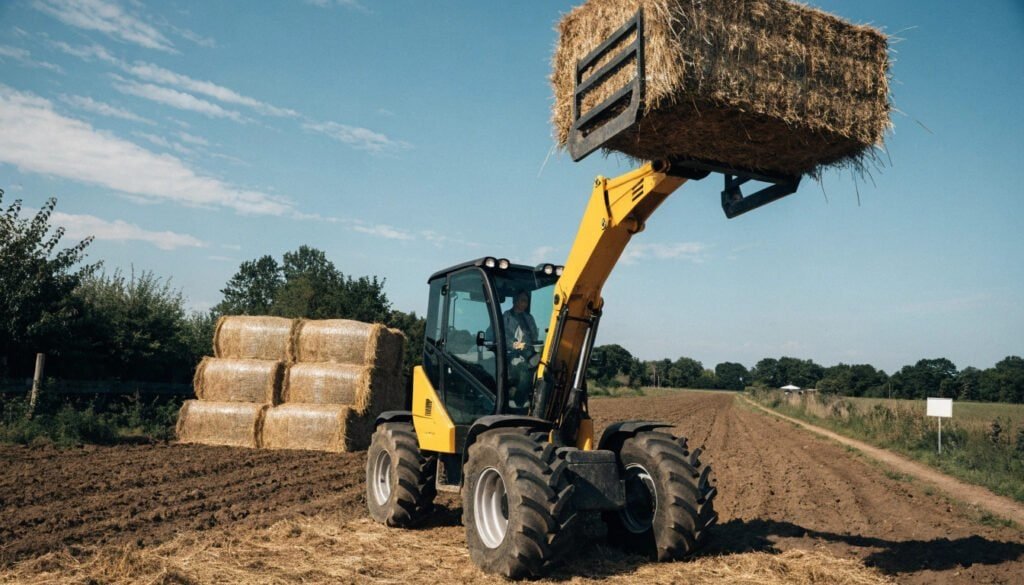
A telehandler redefines farm efficiency by combining the functions of a forklift, a loader, and a crane into one versatile machine. It streamlines tasks like stacking bales, loading feed, and moving materials, which saves significant time, labor, and operational costs on the modern farm.
I’ve spent over 15 years in the heavy equipment industry, and I’ve seen countless farms transform. The story is always the same. They focus on crops and livestock, but they miss the real profit killer: inefficient movement. The competition today isn’t about who grows the most, but who gets the work done fastest. This is where the game changes, and it’s why we need to talk about a machine that’s becoming essential. We are going to dive deep into why this machine is not just an upgrade, but a complete re-imagining of how a farm can and should operate.
1,Why Are Farms Replacing Tractors with Telehandler for Farming?
Is your tractor’s front-end loader feeling slow and limited? Switching between attachments is a hassle that costs you precious minutes every single time. A telehandler is designed to overcome this.
Farms are replacing tractors because telehandlers offer far superior reach, lift height, and specialized maneuverability. They handle tasks like high stacking and loading trucks much faster and more efficiently than a tractor with a loader attachment.
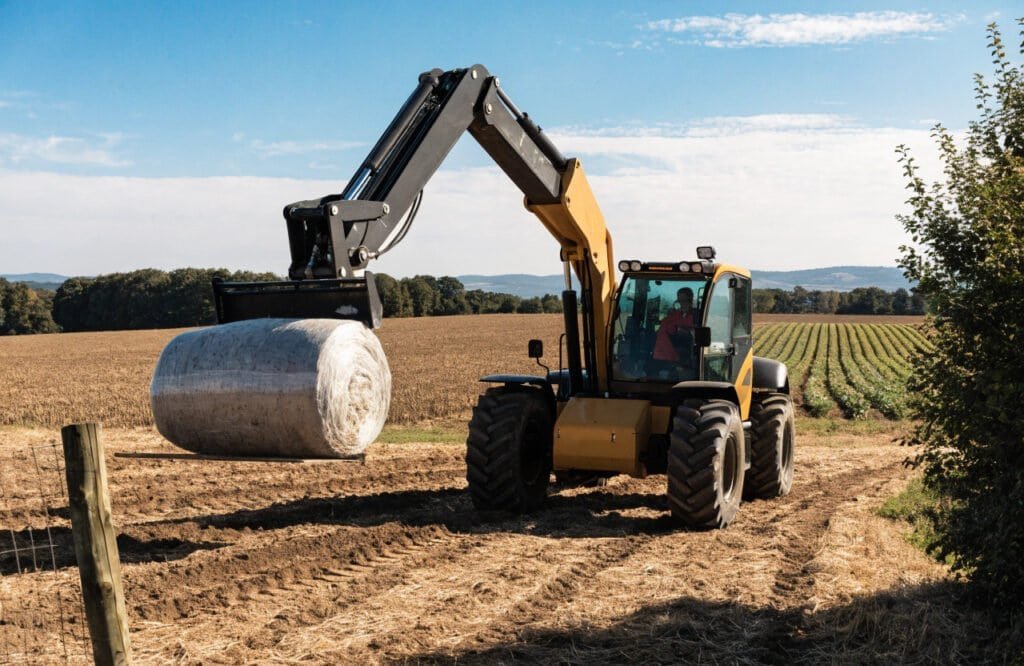
Let’s get specific about why a purpose-built machine makes such a difference. A tractor is a fantastic machine for pulling implements across a field. That’s its primary design. Adding a front-end loader is a great feature, but it’s an add-on. A telehandler, on the other hand, was born to lift and reach. This fundamental design difference creates a huge gap in performance for all handling tasks.
Key Performance Differences
I once visited a farm where the owner, Mark, was frustrated. He spent nearly 30 minutes trying to stack wet hay bales with his large tractor. The visibility was poor, the reach was just a bit too short, and the ground was getting torn up. We brought in a telehandler, and the same job was done in less than 10 minutes. The difference was immediately clear.
| Feature | Tractor with Loader | Telehandler |
|---|---|---|
| Reach | Limited, fixed arm | Telescopic, extends far and high |
| Lift Height | Typically 3-4 meters | 7 to 18 meters or more |
| Visibility | Often blocked by engine/hood | Side-mounted engine, clear view |
| Maneuverability | Standard steering | 2-wheel, 4-wheel, & crab steer |
| Attachments | Limited, slow to change | Quick-hitch system, wide variety |
A telehandler isn’t just about being “better” at one thing. It’s about being fundamentally more suited to every task that involves lifting, moving, and placing materials on a farm. That’s why so many are making the switch.
2,What is the hidden cost of inefficient farm handling?
You track your expenses for fuel, seed, and feed. But what about the cost of wasted time? That is the invisible number that quietly eats away at your profits every day.
The hidden cost of inefficient farm handling is the accumulated wasted time from switching equipment, slow manual labor, and machines waiting for each other. This lost time directly translates into lower productivity and lost profit.
Let’s break down where this money disappears. It’s not in big, obvious chunks. It’s in the small, repeated delays that happen all day long. Think about your daily routine. How much time is spent on activities that don’t directly contribute to production? That’s where the inefficiency lies. I call it “operational drag.” It’s the force that holds your farm back from its true potential.
Where Your Profit Disappears
These small moments of inefficiency add up to a significant financial drain over a year.
- The Cost of “Just a Minute”: That “minute” it takes to get out of the tractor to open a gate, or the five minutes to switch from a bucket to forks, happens multiple times a day. If you waste just 30 minutes a day, that’s over 180 hours a year. That’s more than a full work week lost forever.
- The Cost of Equipment Juggling: You have a tractor waiting for a loader, which is waiting for a person to move a pallet out of the way. This domino effect of delays is common on farms that rely on multiple, single-purpose machines. A telehandler, by doing multiple jobs, eliminates much of this waiting time.
- The Cost of Physical Strain: Manual labor isn’t just slow; it’s also inconsistent and leads to worker fatigue and potential injuries. An exhausted worker is an inefficient and unsafe worker. The cost of one injury can be far greater than the cost of the machine that could have prevented it.
By viewing time as a direct cost, you start to see why a machine that saves 15 minutes here and 20 minutes there isn’t a luxury; it’s a core business tool.
3,How are telehandlers transforming farming?
Imagine one machine doing the work of three different vehicles in your yard. That is not a vision of the future. It is happening right now, and it is completely changing how farms operate.
Telehandlers are transforming farming by consolidating the roles of a forklift, a wheel loader, and a small crane into one machine. This consolidation streamlines the entire workflow, saving massive amounts of time and operational cost.
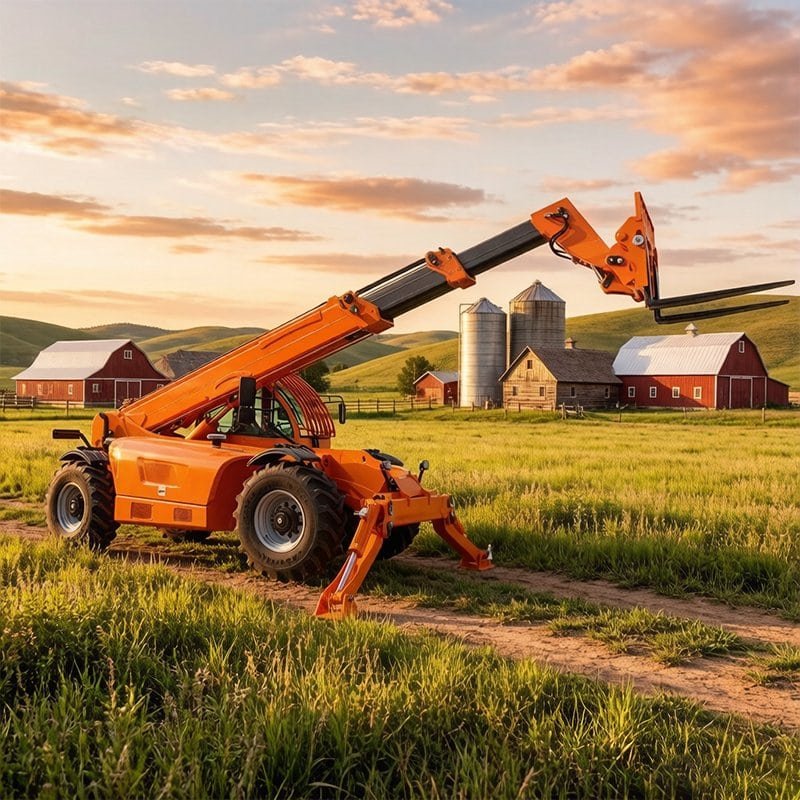
The biggest mistake I see people make is thinking of a telehandler as just a “better forklift.” This completely misses the point. It’s not an upgrade to one machine; it’s a replacement for an entire system of inefficient work. The real transformation happens when you stop thinking about individual tasks and start thinking about the entire farm workflow.
Beyond a Single Machine
A telehandler’s value comes from its ability to connect different parts of your operation seamlessly.
- From Field to Storage: After harvesting, a telehandler can quickly load and transport bales or bins from the field. Its rough-terrain capability means it goes where trucks and forklifts can’t.
- High-Density Stacking: Once at the barn, its incredible reach allows you to stack bales, pallets, or crates higher and tighter than ever before. This maximizes your storage space without needing to build a new barn. I’ve seen farms double their storage capacity in an existing building just by using a telehandler.
- Daily Operations: The same machine can then be used the next day with a bucket to load feed into a mixer wagon, clean out barns, or move snow in the winter.
This isn’t about replacing a tractor. It’s about replacing the tractor, the skid steer, the old forklift, and the need for two extra workers during harvest time. It transforms your farm from a place of disconnected tasks into a smooth, integrated operation.
4,Why are telehandlers becoming a farm standard?
What was once considered a special piece of equipment for large operations is now becoming a necessity for farms of all sizes. The most successful farms already know this. Are you falling behind?
Telehandlers are becoming a farm standard because of rising labor costs, expanding farm sizes, and shorter work windows. They provide the reliable, versatile efficiency required to remain profitable in modern agriculture.
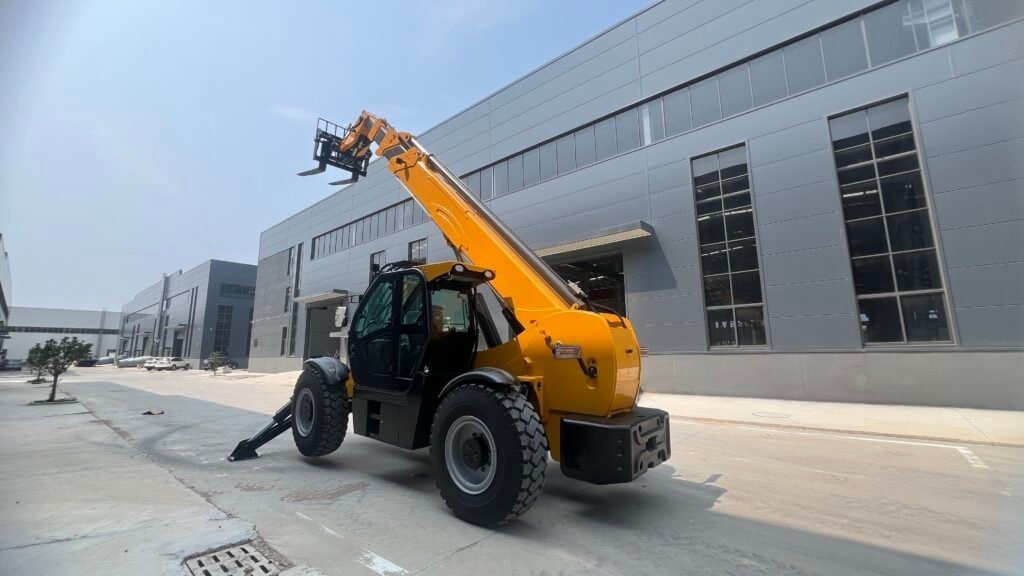
The economics of farming have shifted. Margins are tight, and every ounce of efficiency counts. Relying on old methods is no longer just inefficient; it’s a financial risk. Several powerful trends are pushing telehandlers from the “nice-to-have” category to the “must-have” list for any forward-thinking farm. I speak with farmers every day, and they all point to the same pressures.
The Forces Driving the Change
The reality of the modern farm environment makes a compelling case for this machine.
- The Labor Problem: Finding skilled and reliable farm labor is harder and more expensive than ever. A telehandler acts as a force multiplier, allowing one person to do the work that used to take three. It’s not about replacing people; it’s about making your team more powerful and effective.
- The Scale Problem: Farms are getting bigger. With more acres to manage, you need to move more material—more seed, more fertilizer, more bales, more feed—in the same amount of time. A telehandler is built for this kind of high-volume work.
- The Weather Problem: Climate change means work windows are often shorter and less predictable. You might only have three dry days to get all your bales in from the field. In that situation, the speed of a telehandler isn’t just convenient; it’s the difference between success and failure.
A telehandler isn’t just a tool to improve efficiency anymore. For many farms, it’s becoming a tool for survival, ensuring they can get the job done no matter the challenges.
5,Should you stop wasting time on manual farm handling?
You would never consider harvesting a 100-acre field by hand. So why do you still accept moving hundreds of bales or tons of feed with slow, manual methods? It’s time for a change.
Yes, you should absolutely stop wasting time on manual handling. It is slow, dangerous, and a major bottleneck for your farm’s productivity. A telehandler automates these tasks, doing them faster and more safely with less manpower.
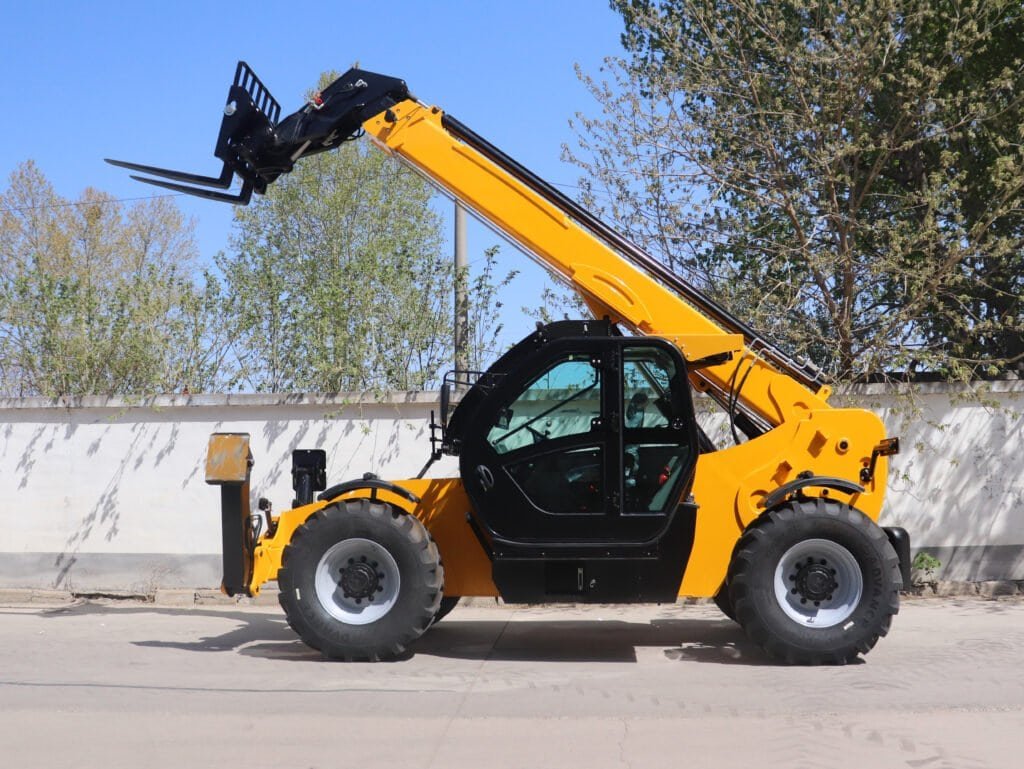
The most valuable asset on your farm isn’t your land or your equipment; it’s your time and the time of your people. Every moment spent on a task that a machine could do better is a moment wasted. Manual handling is the prime example of this waste. I’ve seen the toll it takes, not just on the schedule, but on the people themselves.
The True Cost of Manual Work
Let’s put aside the obvious slowness and look at the deeper costs. The comparison is stark and shows why automation in handling is so critical.
| Metric | Manual Handling (e.g., stacking bales) | Telehandler Handling |
|---|---|---|
| Time per Unit | Several minutes per bale | Seconds per bale |
| Physical Strain | High, leads to fatigue and injury | Almost zero for the operator |
| Safety Risk | High (strains, slips, falls) | Low (done from a safe cabin) |
| Consistency | Varies with worker fatigue | Perfectly consistent all day |
When you automate handling with a telehandler, you aren’t just moving faster. You’re creating a safer work environment. You’re reducing the risk of costly injuries and worker burnout. Most importantly, you are freeing up your people to focus on more valuable tasks that require human intelligence and skill, like equipment maintenance, animal care, or crop management, instead of just being human forklifts.
6,Why do large farms use telehandlers?
Large farms and agricultural businesses run on incredibly thin margins. They cannot afford any inefficiency. The equipment they choose is a direct reflection of what is necessary to survive and profit at scale.
Large farms use telehandlers to manage the massive scale of their operations. The machine’s ability to move huge volumes of material quickly, stack high to save space, and switch jobs instantly is essential for maintaining workflow and profitability.
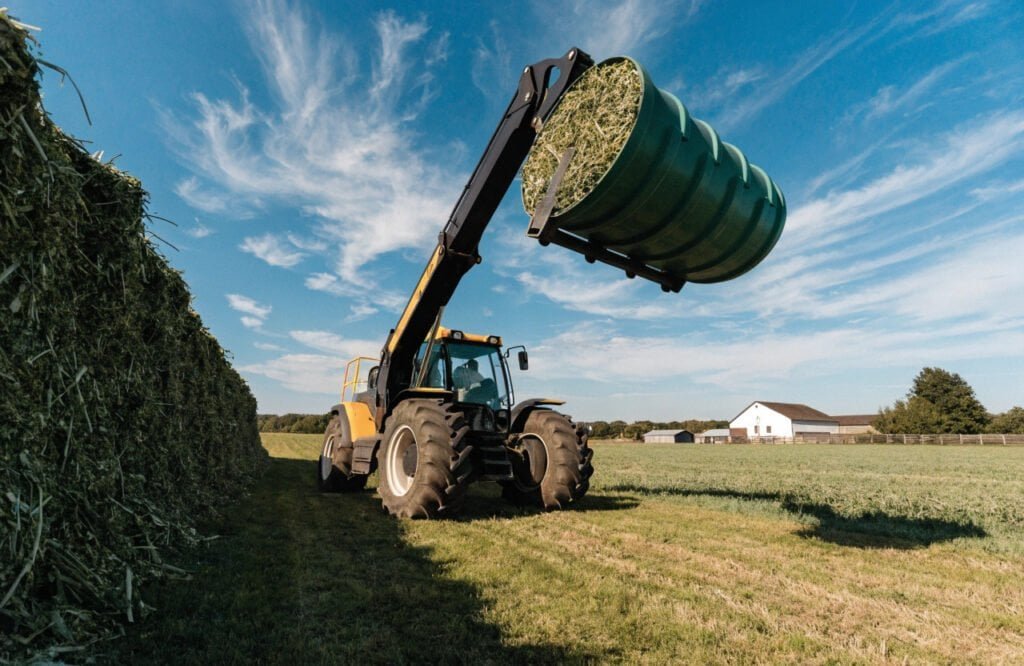
When I visit a large commercial farm, the first thing I notice is the constant motion. There is always something being loaded, unloaded, or moved. There is no time for a machine to sit idle. The logistics are as complex as a small warehouse, and the key to making it all work is a central, versatile machine: the telehandler. It becomes the hub around which the entire farm’s daily logistics revolve.
The Pillars of Scalable Operations
The challenges of a large farm are different, and a telehandler directly addresses them.
- Managing Volume: Moving hundreds of tons of feed or silage a day requires speed and capacity. A telehandler with a large bucket can load a mixer wagon in just a few passes, a task that would take a smaller loader much longer.
- Maximizing Storage Density: Large operations need to store vast quantities of hay, straw, or feed. The ability of a telehandler to reach up 10, 12, or even 17 meters allows them to build taller, more compact stacks, saving a huge amount of ground space, which is often at a premium.
- Continuous Workflow: The biggest killer of efficiency at scale is stopping. A telehandler ensures a continuous flow. The same machine can unload a delivery of fertilizer, then immediately move to stack pallets of seed, and then go clear a ditch, all with quick attachment changes. This eliminates the “waiting game” between different specialized machines.
For large farms, a telehandler isn’t an option; it’s the core of their logistical system.
7,Is farming’s real bottleneck just movement?
You spend so much time optimizing your soil, your seeds, and your harvest techniques. But what if the biggest limit to your profitability is simply getting things from point A to point B?
Yes, for many modern farms, the real bottleneck is movement. After optimizing primary production, the inefficient handling of feed, bales, supplies, and waste is what slows down the entire operation and consumes profit.
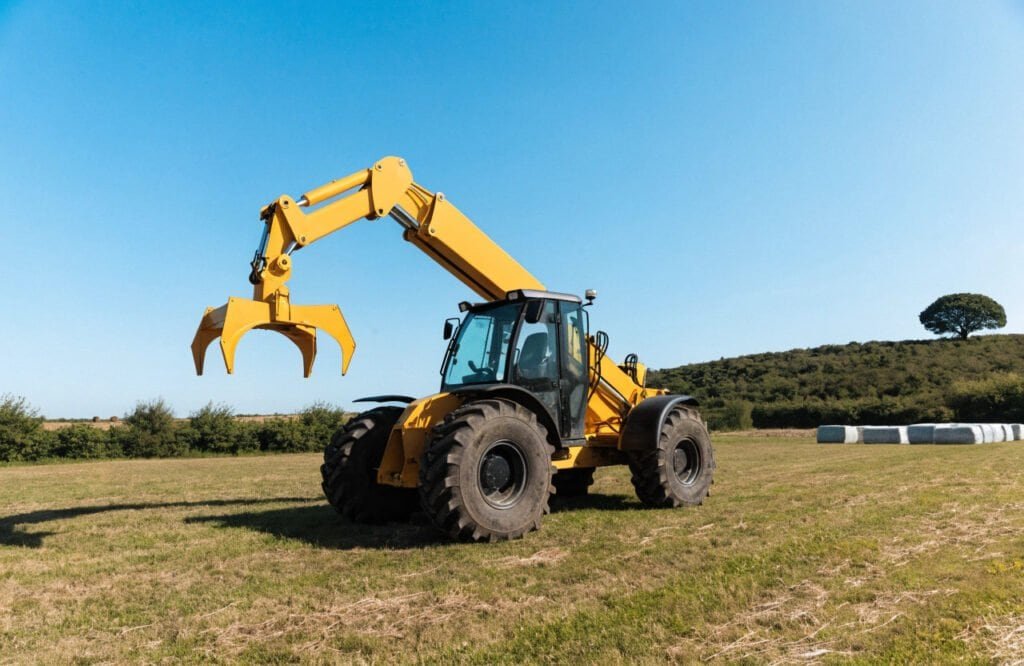
This is a concept that took me years to fully appreciate. We are trained to look at yield per acre or milk per cow. But I’ve seen high-yield farms that are not very profitable because their internal logistics are a mess. They are “production rich and efficiency poor.” The profit they create in the field is lost in the yard. These are the invisible drains on your business.
Unclogging Your Farm’s Arteries
Think of your farm as a system of flows. Anything that stops or slows that flow is a bottleneck, or a “clog.”
- Identifying the Clogs: A clog is any time a task has to stop and wait. Waiting for someone to help lift something. Stopping to change from a bucket to forks. Driving a tractor all the way back to the workshop to get the right tool. These are all clogs.
- The Journey from Field to Market: Every product on your farm goes on a journey. A bale of hay is cut, raked, baled, moved from the field, stacked in the barn, un-stacked, and loaded onto a truck. A telehandler streamlines every single step of that journey. It reduces the number of machines, people, and steps involved.
- Creating a Smooth Flow: A telehandler is the ultimate “un-clogging” tool. Its versatility means it can transition from one task to the next almost instantly. It keeps the materials, and therefore your operation, constantly moving. This smooth flow is what defines a highly efficient and profitable farm.
Your farm’s potential isn’t just in the soil. It’s in the smooth, uninterrupted flow of work from sunrise to sunset.
8,Is the future of farming platform-based?
In the past, the rule was simple: you bought one machine to do one job. The future of farm equipment is different. It is about buying one powerful platform that can be adapted to do many jobs.
Yes, the future of farm equipment is platform-based. Farmers need versatile tools like telehandlers that can adapt to many different tasks through attachments. This offers a much higher return on investment than a fleet of single-purpose machines.
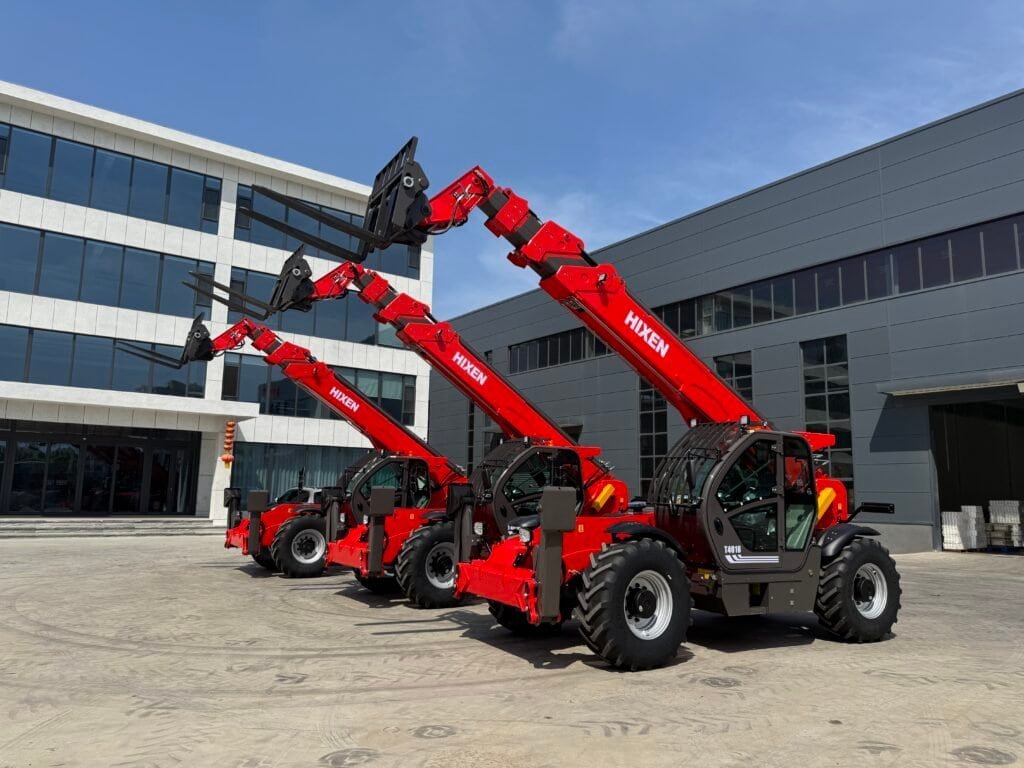
This shift in thinking is happening everywhere, from our phones (which are platforms for apps) to our farm equipment. A machine that only does one thing is a liability when it’s not being used. A machine that can do twenty things is an asset all year round. The telehandler is the perfect example of this platform-based approach. Its power doesn’t just come from the machine itself, but from its incredible adaptability.
The Power of the Platform
As a manufacturer, we don’t just build telehandlers; we build a platform and a toolbox of solutions.
- The Core Platform: The base machine—with its powerful engine, robust chassis, and telescopic boom—is the core platform. It’s designed for stability, power, and reach.
- The Toolbox of Attachments: The real magic comes from the attachments. With a quick-change system, you can switch from forks to a bucket to a bale grab in under a minute.
| Attachment | Common Farm Use |
|---|---|
| Pallet Forks | Moving seed, fertilizer, pallets, bins |
| Grain Bucket | Loading grain, feed, dirt, snow, cleaning barns |
| Bale Grab/Spike | Stacking and transporting round or square bales |
| Man Basket | Building maintenance, trimming trees, checking silos |
| Jib Crane | Lifting engines, pumps, heavy equipment parts |
This platform approach future-proofs your investment. As your farm’s needs change, you don’t need a whole new machine. You just need a new attachment. It’s the smartest, most cost-effective way to equip your farm for the challenges of today and tomorrow.
9,How do you find the right telehandler options?
You are convinced. A telehandler is the right move for your farm. But with so many models and options, how do you choose the right one? Let’s simplify the process.
To find the right telehandler, first, identify your main tasks. This will tell you the two most important numbers: the maximum lift height and the maximum weight capacity you will need for your operation.
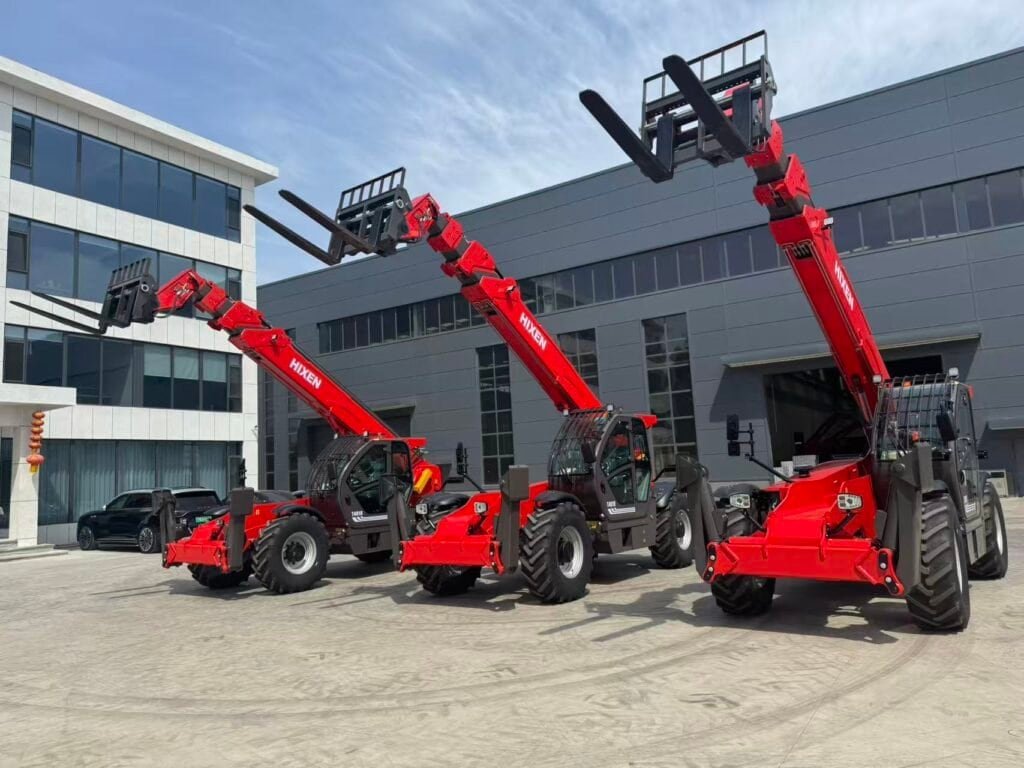
Choosing a telehandler doesn’t have to be complicated. It’s about matching the machine’s capabilities to your farm’s specific jobs. Don’t get sold on features you don’t need. Focus on the core requirements of your daily work. As a manufacturer with 15 years of experience exporting to over 20 countries, we’ve helped thousands of customers through this exact process. It boils down to a few simple steps.
A Simple Guide to Choosing Your Machine
- Step 1: Define Your Heaviest and Highest Tasks. What is the heaviest thing you need to lift regularly (e.g., a full pallet of seed, a wet bale)? What is the highest point you need to reach (e.g., the top of your barn, stacking bales 5 high)? Write these two numbers down.
- Step 2: Match the Specs. Look for a telehandler that exceeds your numbers with a bit of a safety margin. If you need to lift 2 tons, look for a 2.5 or 3-ton machine. If you need to reach 9 meters, look at a 10-meter model.
| Your Task | Potential Spec Needed |
|---|---|
| Stacking large square bales 6 high | ~10-12 meter lift height |
| Loading grain into high-sided trucks | 7-9 meter lift height, 3-ton capacity |
| General pallet and feed bag work | 7-meter lift height, 2.5-ton capacity |
| Large-scale silage and material moving | 4-7 ton capacity, large bucket attachment |
- Step 3: Consider Your Future. Think about where your farm will be in five years. Will you be expanding? Building a new barn? Choose a machine that not only meets your needs today but also has the capacity to support your future growth. Here at HIXEN, we offer a full range from 2-ton to 7-ton models with lift heights from 7 to 18 meters, and we can even customize them to ensure you get the perfect fit.
Conclusion
Inefficient movement is costing you money every day. A telehandler is not just another machine; it’s a strategic investment in your farm’s future profitability. The time to upgrade is now.Contact with us for more information!
